

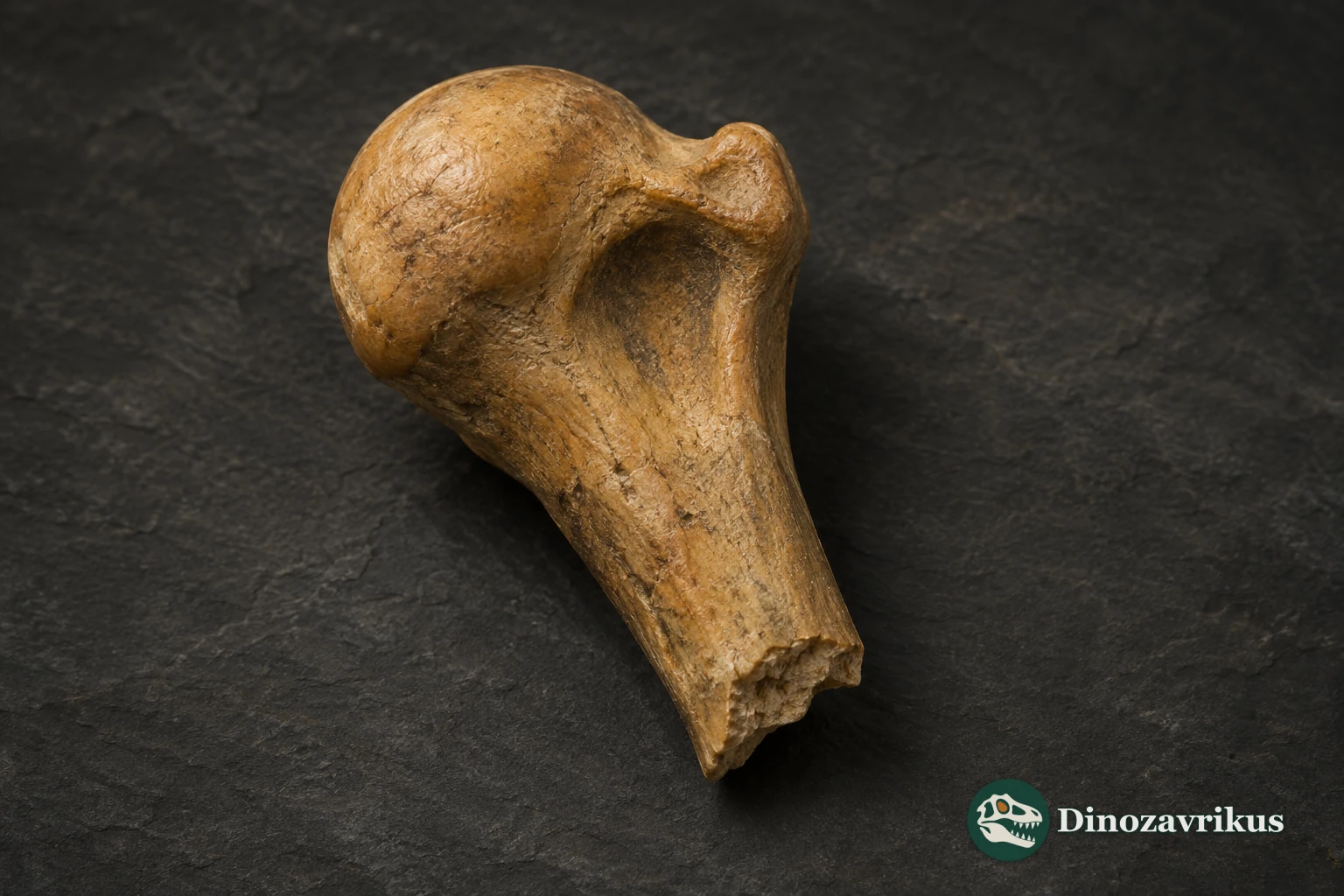
Protomelanitta was a genus of small Miocene diving ducks. The type species from western Mongolia was described from the shoulder end of a wing bone. The narrow articular head and nearby projections led Nikita Zelenkov to compare the fossil with the early relatives of living sea ducks.
Quick facts
| Type species | Protomelanitta gracilis |
|---|---|
| Family | Anatidae |
| Age of the type | Middle Miocene |
| Type locality | Sharga, Gobi-Altai, Mongolia |
| Holotype | PIN 4869/151 |
| Type material | Proximal left humerus |
What can the fossils tell us?
Viewed from behind, the head is narrow. The ventral tubercle does not overhang the adjacent fossa as it does in some living sea ducks.
A nearly complete left tarsometatarsus and the distal end of another were referred to the type species. They were separate finds.
Wing and shin fragments established a species from Nevada. The French duck was provisionally referred to the genus, as the fossils preserve different parts of the skeleton.
Several diving ducks at Sharga
Zelenkov named Protomelanitta gracilis in 2011 from the Oshin Formation in the Sharga basin. The holotype is held by the Borissiak Paleontological Institute in Moscow. A distal right humerus and two left tarsometatarsi, one of them fragmentary, were also assigned to the species.
Sharganetta and Nogusunna were two other diving ducks from the same locality. Differences in the head, tubercles and fossae of the humerus helped distinguish them. The original description estimated the Mongolian Protomelanitta to be slightly larger than a living smew, without deriving a body mass.
A fossil record beyond Mongolia
Thomas Stidham and Zelenkov described Protomelanitta bakeri from the Esmeralda Formation of Nevada. Their specimens preserve the top of a humerus and the lower end of a tibiotarsus. The discoveries document similar Miocene diving ducks on either side of the Pacific. The bones alone cannot establish which way they dispersed.
In 2023 Zelenkov provisionally moved “Anas” velox from Sansan, France, to Protomelanitta. The French duck preserves a coracoid and bones from the hand. Some features resemble the living harlequin duck and fossil Manuherikia. Confidently identified shoulder girdles from the other species would allow a more direct comparison.
Frequently asked questions
Which fossil established the genus?
PIN 4869/151, the shoulder end of a left humerus from Sharga in western Mongolia.
Did the genus include modern sea ducks?
The type species was interpreted as an early relative of modern sea ducks.
Does the Nevada material belong to the Mongolian species?
It was described as a separate species, Protomelanitta bakeri.
Why is the French identification provisional?
The coracoid is especially informative in the French material. No confidently identified coracoid of the Mongolian species is available for a direct comparison.