

Protopanderodus is a conodont genus known chiefly from tiny phosphatic elements of its feeding apparatus. Its story is not one of a complete skeleton, but of carefully assembling scattered evidence: researchers compare shape, proportions and frequency to infer which elements may have belonged to one animal. A detailed apparatus model uses thousands of Middle Ordovician elements from Sweden.
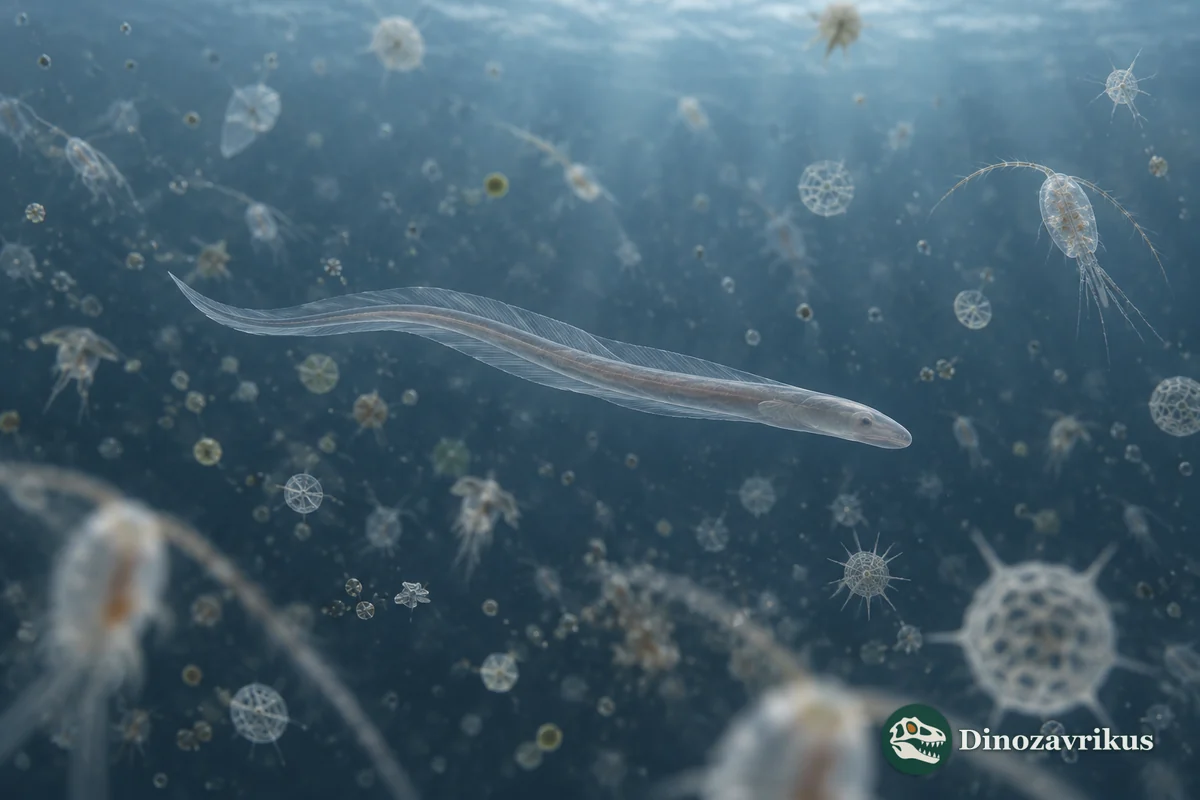
Conodonts are early vertebrates, but the material assigned to Protopanderodus does not reveal its body. An eel-like reconstruction can only be comparative, based on rare body fossils of other conodont genera. It is not a specimen photograph and does not establish this genus's exact shape, length or ecology.
The early animal catalogue brings together marine fossil taxa; it does not change the Ordovician age of the detailed Protopanderodus study.
Quick facts
| Scientific name | Protopanderodus Lindström, 1971 |
|---|---|
| Type species | Acontiodus rectus Lindström, 1955 |
| Group | Conodonts, early vertebrates |
| Material | Isolated mineralised feeding elements |
| Detailed sample | 4,202 elements from five Middle Ordovician Swedish species |
| Modelled apparatus | At least 21 elements in the 2006 study |
| Body fossil | No articulated body is known for this genus |
| Limit | Elements do not establish exact body size or diet |
What can the fossils tell us?
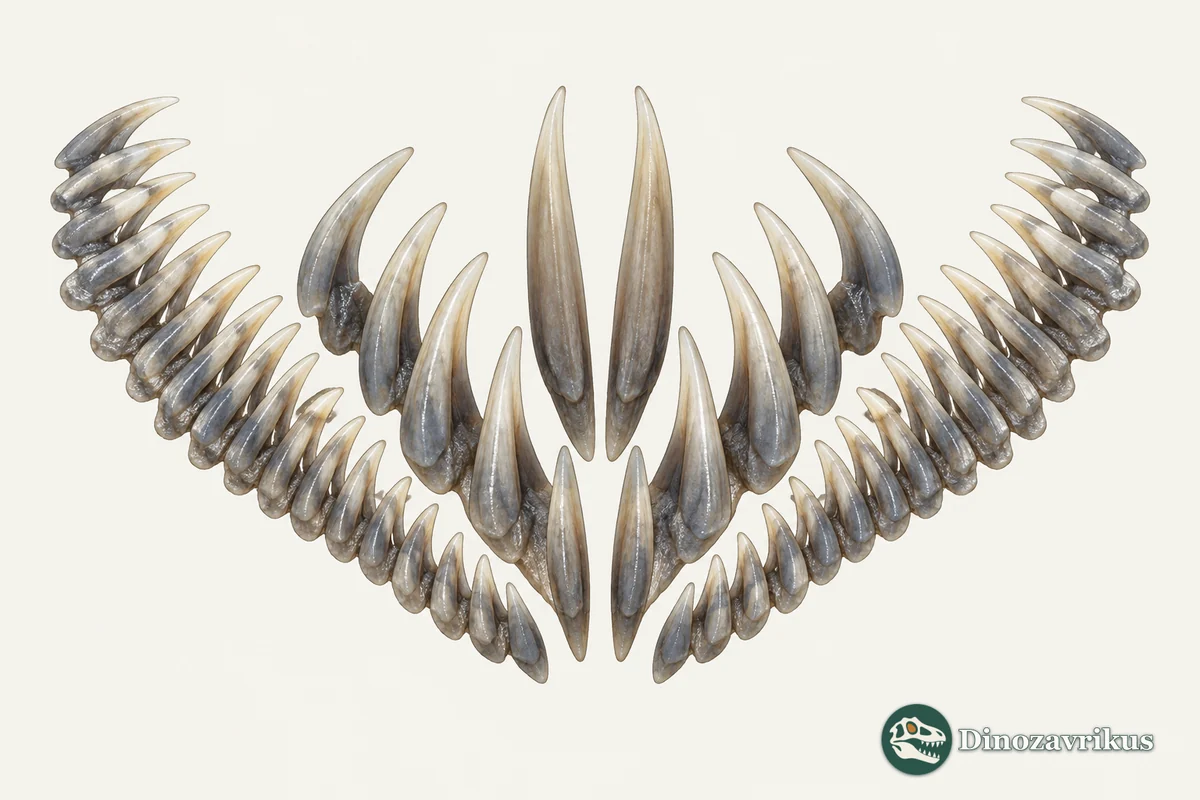
Conodont elements are phosphatic microfossils with cones, costae, grooves and different symmetries. These are the directly observed remains; they are not automatically separate teeth from one known skeleton.
A study of five Swedish Middle Ordovician species compared 4,202 elements and recognised M, S and P groups. Their proportions supported a minimum of 21 elements per apparatus, while morphotype patterns varied among species.
Protopanderodus is identified from elements rather than an articulated body with soft-tissue traces. Exceptional body fossils of other conodont genera inform comparison, not a direct reconstruction of this genus.
Name and changing species concepts
In 1955, Einar Lindström described the element Acontiodus rectus, later designated as the type species of Protopanderodus, a genus he established in 1971. This naming history is common among conodonts: isolated elements once received separate names, and only later studies of their combinations could associate them with an apparatus.
The contents of the genus have changed as researchers compared diagnostic traits and proposed positions for the elements. A 2006 study of Middle Ordovician Swedish material examined P. rectus, P. parvibasis, P. graeai, P. robustus and P. calceatus. The authors considered the first four morphologically similar and possibly part of one evolutionary lineage. The multiribbed P. calceatus differed in its proposed apparatus and might merit a separate genus. That was a hypothesis in the paper, not an established later renaming.
Older descriptions may place individual elements under names such as Acontiodus or Scandodus. The precise synonymy depends on type material and subsequent revision; a resemblance between one cone-shaped element is not enough to merge all such names.
How the apparatus was reconstructed
The researchers sorted elements by shape, checked symmetry and variation, and compared how frequently different forms occurred. Their ratios supported several morphological groups and a minimum number of elements in one apparatus. This is more constrained than guessing from a few similar cones, but it remains a reconstruction because most elements are found separately, not preserved in their original positions in a mouth.
For four bicostate species, the 2006 model included M, Sa, Sb1, Sb2, Sc, Pa and Pb elements. P. calceatus received a different arrangement with two M forms and multiple P forms. These codes describe comparative morphotypes, not bones of the animal's body. The differences among species are why one universal illustration of the apparatus should be treated cautiously.
Age, collections and distribution
The detailed 2006 sample comes from Middle Ordovician deposits in Sweden. It contains thousands of elements considered across five named species, not thousands of individuals or five complete animals. Its value lies in comparing the shapes and frequencies of elements within a defined regional and stratigraphic sample.
Species of Protopanderodus appear in studies of Ordovician conodont faunas from multiple regions, where their assemblages help correlate strata. Each record must be dated from its formation and associated fauna. A compiled genus range is not a precise date of evolutionary origin or extinction. The Ordovician overview gives the broader geological setting.
Conodont elements have phosphatic mineralisation and are often recovered apart from the rest of the body. Their small surface details require magnification and careful orientation. This separation limits reconstruction: numerous diagnostic pieces may be available without a preserved backbone, muscle blocks, finfold or internal organs.
Size, feeding and what remains unknown
The length of an isolated element cannot be converted directly into body length because its original position and the completeness of the apparatus are unknown. A reliable length or mass estimate for Protopanderodus is therefore unavailable. Measurements of individual elements belong to a named sample, not to the whole animal.
Apparatus shape can constrain possible feeding mechanics, but it does not reveal a menu by itself. Predatory feeding has been discussed for other conodonts; that is comparative context, not direct proof of what Protopanderodus ate. Wear patterns, functional models of its own elements or a specimen connecting apparatus and body would strengthen the case. The 2006 study focused on element types and their evolutionary relationships, not on diet.
Swimming speed, depth, seasonal movement and reproduction cannot be confidently reconstructed. A conodont body in open water can help visualise the group, but the scene is not directly established by a fossil of this genus.
Direct evidence and inference
Direct evidence consists of element shape and microstructure, element frequencies in samples and their geological context. The minimum apparatus of 21 pieces is a quantitative reconstruction from the 2006 study. The possible separate lineage of P. calceatus is an interpretation of differences among species. A fish-like body and its ecology are comparative hypotheses based on other conodonts, not body fossils of Protopanderodus.
Frequently asked questions
What are conodont elements?
They are small phosphatic structures from a conodont feeding apparatus. Their shape helps distinguish taxa, but one element is not a complete skeleton.
How was the apparatus reconstructed?
A study compared 4,202 elements from five Middle Ordovician Swedish species, grouped their forms and inferred a minimum apparatus of 21 elements.
Is the body of Protopanderodus known?
No articulated body of this genus is known. Exceptional body fossils of other conodonts allow cautious comparison only.
Can its size and diet be stated precisely?
No. Isolated elements do not establish body length, and their shape alone does not demonstrate a specific diet.