

Protoreodon was an oreodont, an extinct group of even-toed mammals, from Eocene western North America. The genus is known from a patchwork of skulls, jaws, teeth and limb bones collected in different places and geological intervals. That patchwork is useful: researchers can compare anatomy across species, but they must keep each specimen's name and context attached to it.
The history of the genus also shows how a scientific name can change as old collections are re-examined. Protoreodon belongs in the ancient mammal catalogue; its fossils do not establish a simple ancestor-to-descendant line leading to a living animal.
Quick facts
| Scientific name | Protoreodon Scott & Osborn, 1887 |
|---|---|
| Type species | P. parvus |
| Group | Oreodonta; Agriochoeridae |
| Age | Middle Eocene, with species from different Uintan intervals |
| Range | Western North America |
| Key material | Skulls, jaws, teeth and associated postcranial remains |
| Named specimen | P.U. 10398, portions of skull and left jaw of the type species |
| Diet | Herbivory inferred from teeth; exact menu is not known |
What can the fossils tell us?
Gazin's review consolidated several names applied to Uinta oreodonts and reassessed species boundaries. Historical synonymy reflects later anatomical comparison; it does not make every old specimen identification certain.
The name P. parvus is tied to P.U. 10398, portions of a skull and left jaw from Uinta B. It anchors the species name, not every feature shown in a complete-life reconstruction.
Material referred to P. walshi includes well-preserved postcranial bones and closely appressed metapodials. These observations inform limb anatomy, but do not yield a measured gait or speed.
Protoreodon records come from multiple formations and levels in western North America. Locality and stratigraphic position matter; a genus-level range should not be collapsed into a single herd or one exact age.
A name refined through museum collections
William B. Scott and Henry F. Osborn introduced Protoreodon in 1887. In the following decades, several Uinta oreodonts received names that later authors reconsidered. C. Lewis Gazin's 1955 Smithsonian monograph compared the material across a broad sample and brought multiple historical genus names into synonymy with Protoreodon. Such revisions depend on direct comparison of teeth, skulls and other anatomy, rather than on the age of a label in a drawer.
The type species, P. parvus, is anchored by P.U. 10398, portions of a skull and left jaw from Uinta B in Utah. Other species are represented by different specimens and localities. A museum record for a maxilla or isolated tooth can document where a fossil came from, but it should not be silently treated as the type or as a complete skeleton.
What teeth and jaws can reveal
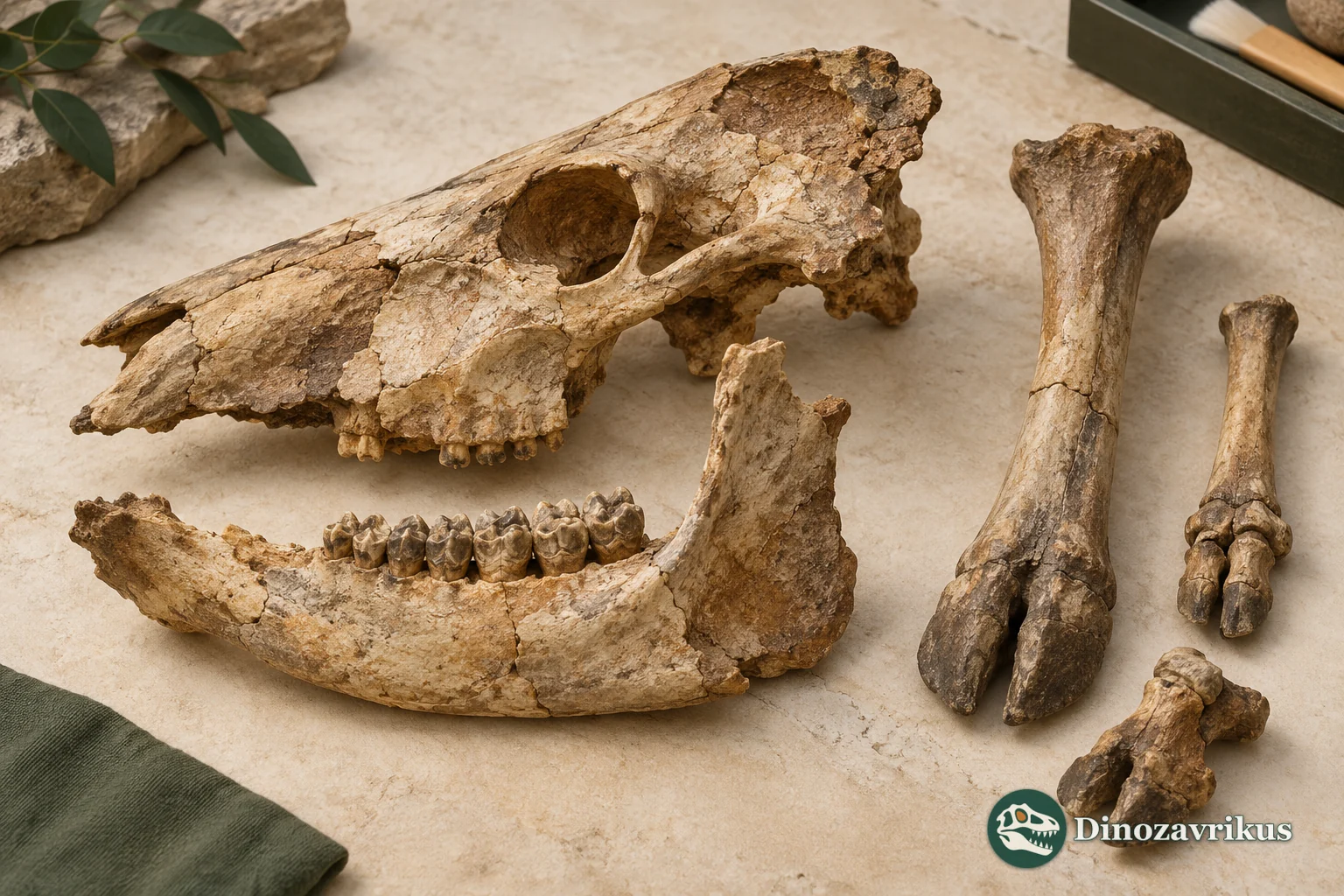
Protoreodon fossils include cheek teeth and jaw material that permit comparisons of crown form, wear and proportions. These features help distinguish taxa and support a plant-eating interpretation. They do not recover an exact menu. Tooth wear can reflect food properties as well as dust or grit taken in while feeding, and different species or localities need not have eaten in precisely the same way.
Specimens assigned to P. pumilus are comparatively abundant at Myton, and the sample shows variation in size and dental features. This is a reminder that a difference between two fossils can represent age, individual variation or wear rather than a new species. A well-sampled series is more informative than a single tooth, but it still does not preserve a diary of feeding behaviour.
Species, beds and the Eocene landscape
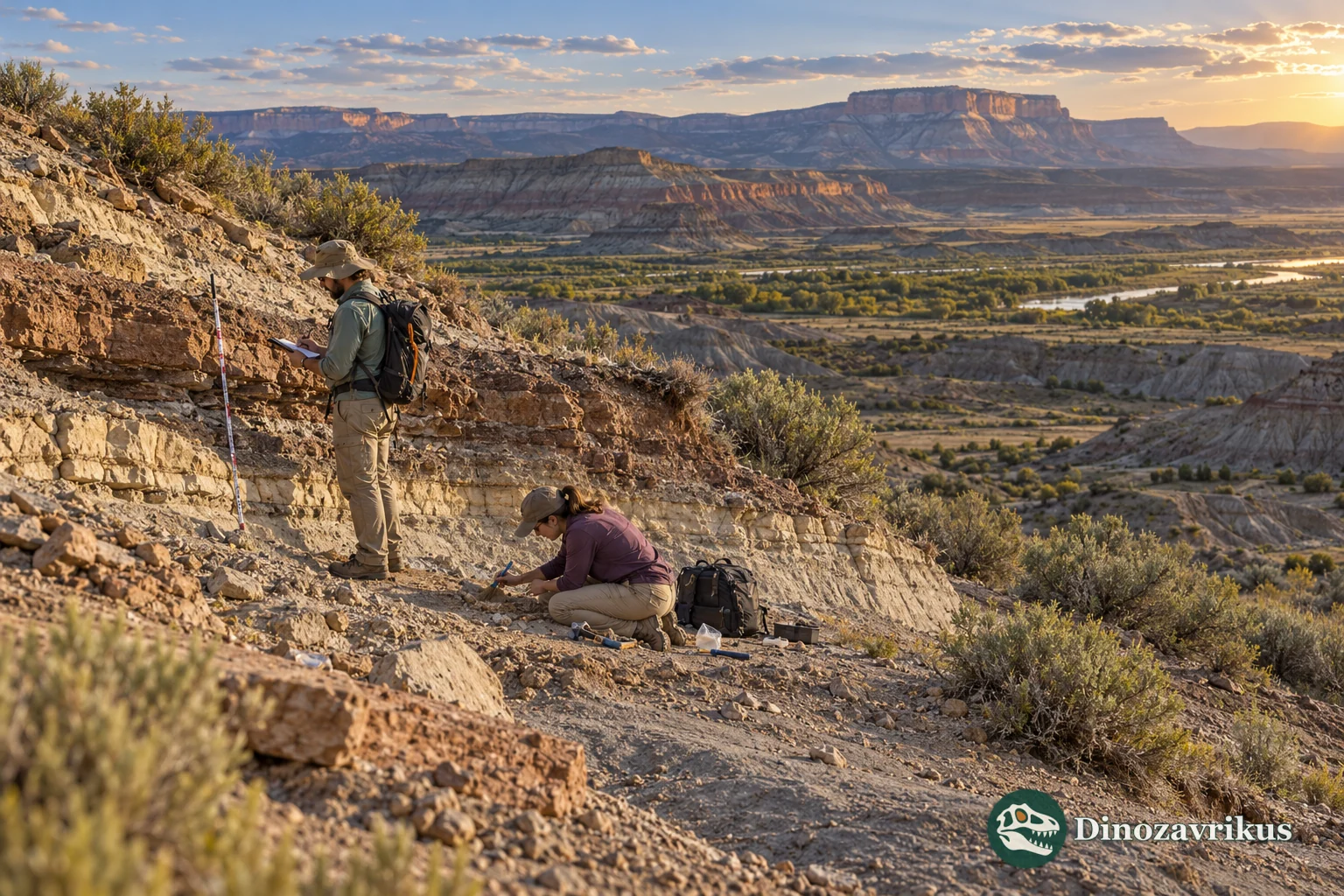
Protoreodon species occur in more than one part of the western North American Eocene record. Uinta localities preserve changes in sedimentary settings, including deposits associated with lakes and later floodplain or river environments. The environmental history of a particular bed is not automatically the habitat of every animal whose fossils were later grouped in the same genus.
Work on P. walshi from the late Uintan of San Diego County describes abundant, well-preserved postcranial material. Closely appressed metapodials and hoofed terminal phalanges are anatomical observations that help reconstruct the limbs. They do not tell us a precise speed or prove that the species moved exactly like a modern hoofed mammal. Nor should the California fossils be merged with Utah samples as if they came from one population.
What remains uncertain
The genus is sometimes described as a small browsing mammal, but the strength of each claim differs. Teeth support a herbivorous diet broadly; the vegetation eaten in one season is unknown. Postcranial material constrains limb structure in particular species; it does not by itself establish habitual speed, social behaviour or a single preferred terrain. The animal's coat, ears and precise body outline are reconstructions.
Protoreodon is best understood as a revised taxonomic group assembled from evidence with different levels of completeness. Type material fixes names, comparative anatomy tests them, and geological context separates fossils that did not coexist. The broader Palaeogene Period sets the time frame, while the specimens themselves determine what can be said about the animal.
Frequently asked questions
What kind of mammal was Protoreodon?
It was an oreodont, an extinct even-toed mammal in the group Agriochoeridae.
What fossil anchors the name Protoreodon parvus?
The type species is based on P.U. 10398, portions of a skull and left jaw from Uinta B in Utah.
Can its teeth tell us exactly what it ate?
They support herbivory and allow comparisons of wear, but they do not identify a complete or fixed menu.
Did all Protoreodon species live at the same time?
No. Fossils assigned to the genus come from different formations and stratigraphic intervals; each specimen needs its own geological context.