

Protoselene was a Paleocene mammal recorded from western North America. Its importance lies less in a complete portrait of its body than in the small dental samples that let researchers compare early mammal species across widely separated fossil faunas. No complete skeleton is known, so locomotion and body proportions remain poorly constrained.
The genus belongs in the ancient mammal catalogue. Older literature grouped many early ungulate-like mammals as ‘condylarths’, a grade-based label that does not define one uncontested natural clade in current classifications.
Quick facts
| Scientific name | Protoselene Matthew, 1897 |
|---|---|
| Type species | P. opisthacus, first described under another genus |
| Group | Paleocene eutherian; family assignments have varied |
| Age | Paleocene, including Torrejonian and Tiffanian faunas |
| Range | Western North America |
| Main material | Isolated teeth and jaw fragments |
| Body size | No secure genus-level mass estimate |
| Key limitation | No complete skeleton is known |
What can Protoselene fossils show?
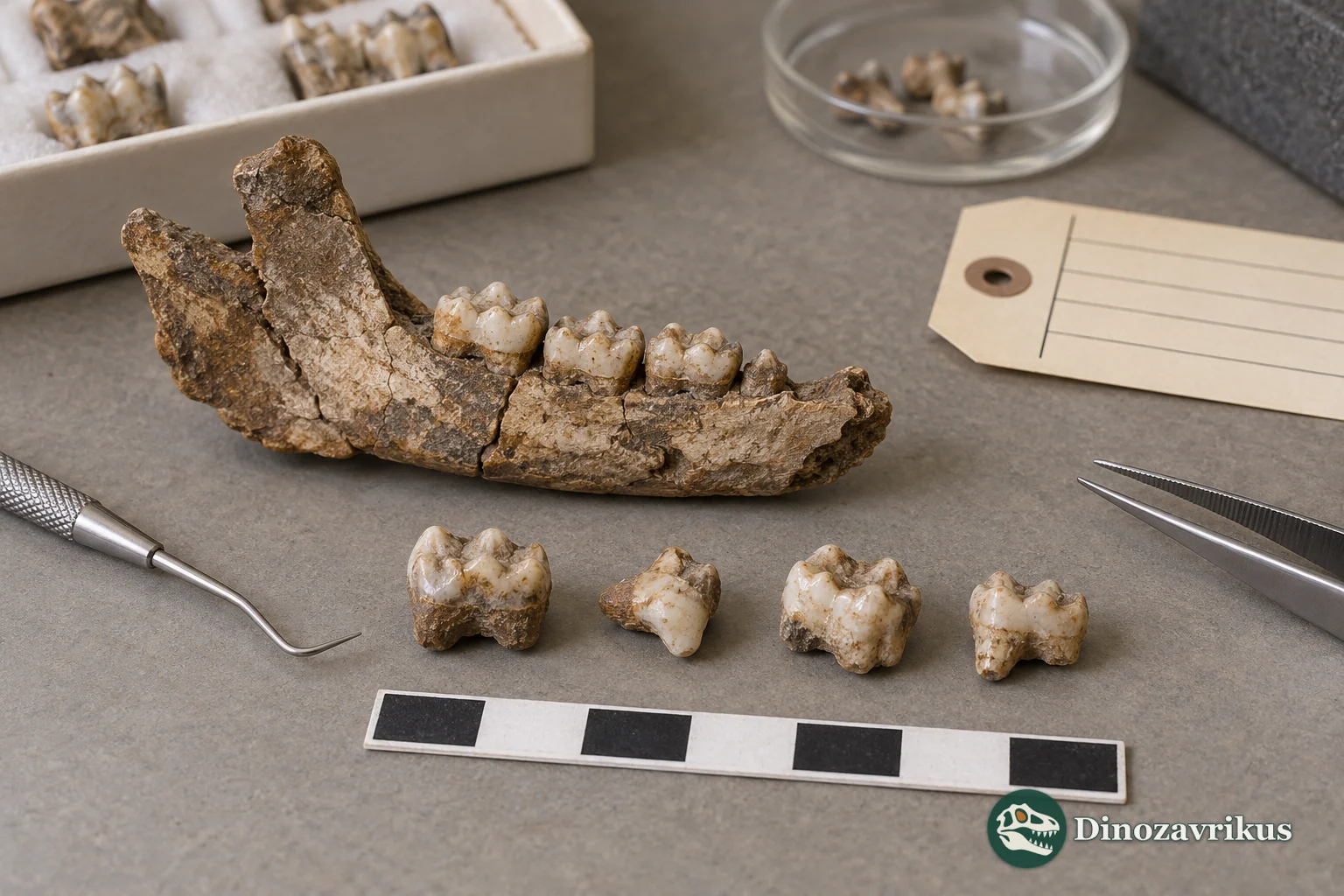
Published descriptions compare tooth-crown proportions, cusps and crests. These features can help distinguish jaws and isolated teeth, but they do not preserve the animal’s limbs, body outline or soft tissues.
The name Protoselene? novissimus retained a question mark because its author considered the generic referral uncertain. Later authors also emphasized that several named forms are represented by very few specimens.
The holotype RAM 9047 is a left dentary fragment with a partly erupted p4 and m1. Published measurements permit tooth-level comparisons, not a reliable body-mass estimate.
The known fossils do not establish coat, colour, gait or a precise menu. Dietary interpretations from cheek teeth remain comparative inferences rather than direct records of consumed plants.
A name with a changing classification
Edward Drinker Cope named opisthacus in 1882 under a different genus. William Diller Matthew established Protoselene in his 1897 revision of the Puerco fauna. That history explains the combination now used for the species; it does not mean that the genus’ relationships have remained settled.
Material attributed to the genus is dominated by jaws and teeth. Museum records for referred specimens add locality and collection information, but a catalogue entry for a specimen does not make it a type or settle every identification.
A short and uneven species list
Published discussions include P. opisthacus, P. griphus, P. ashtoni and less secure referrals. P. opisthacus is among the better represented species, yet its record remains chiefly dental. Other names rest on a handful of teeth or fragments, which limits comparisons among populations.
Gazin described Protoselene? novissimus from the Bison Basin of Wyoming but retained a question mark because the material did not securely establish the genus. A 2014 review likewise noted that the genus was rare in Torrejonian and Tiffanian faunas and that some species were known from few specimens. The list therefore records an evolving taxonomic discussion, not a set of equally well-supported biological species.
Family placement has also varied. Some museum and research sources use Mioclaenidae, while older classifications relied on broader groupings of early ungulate-grade mammals. The useful comparison is the evidence and diagnosis in each revision, rather than a family label copied without its historical context.
Localities and geological age
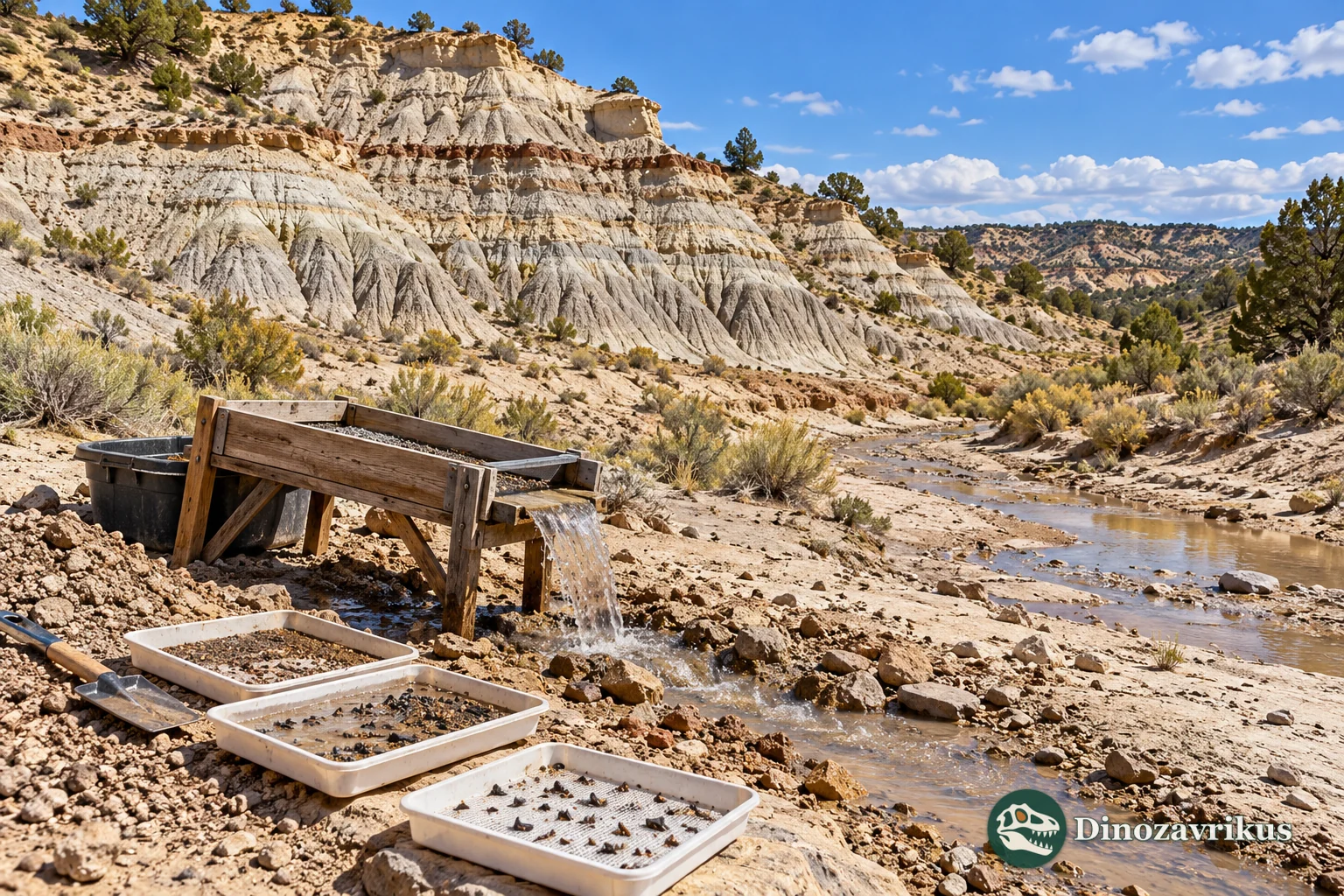
The best-known records of P. opisthacus come from Torrejonian beds of the Nacimiento Formation in New Mexico’s San Juan Basin. Other referred material has been discussed from Utah, Wyoming, California and Texas. These records span more than one North American land-mammal interval, but uncertain referrals should not be converted into a precise, continuous range for the genus.
In 2014, Donald Lofgren and colleagues described P. ashtoni from the Goler Formation of California. Its holotype, RAM 9047, is a left jaw fragment bearing a partly erupted fourth premolar and first molar. The paper gives measurements for those teeth and compares their shape with other species. The measurements sharpen a dental diagnosis; they do not directly reveal the animal’s mass or full anatomy.
What teeth can and cannot tell us
Tooth crowns preserve traits such as cusp arrangement, proportions, wear and position in the row. Paleontologists use them to compare isolated finds with jaw fragments and to test whether old species names reflect distinct anatomy or different stages of wear and growth.
Cheek teeth can support broad hypotheses about food processing, but they do not identify particular plants. No gut contents or direct feeding traces are known for Protoselene. A confident account of its gait, coat, colour or social behaviour would go beyond the evidence presently described.
Reconstruction and uncertainty
Any life reconstruction must supply a body that the fossils have not preserved. A small terrestrial mammal with fur is a reasonable artistic choice, but the genus’ known teeth and jaws do not directly establish its coat, proportions or movement. The most defensible portrait remains a Paleocene mammal whose dental record is more informative than its whole-body biology.
Frequently asked questions
When did Protoselene live?
It is known from Paleocene faunas of North America, including Torrejonian and Tiffanian records. The genus should not be assigned one precise first or last date from referrals of mixed certainty.
Where have its fossils been found?
Published material comes from western North America, including New Mexico, Utah, Wyoming, California and Texas. The San Juan Basin and Goler Formation are among the better documented contexts.
Is a complete skeleton known?
No complete skeleton is known in the published material reviewed here. Teeth and jaw fragments dominate the record.
Why is there a question mark in Protoselene? novissimus?
Gazin considered the specimen similar to Protoselene but not securely assignable to it. The question mark signals uncertainty about its genus, not a separate diagnostic character.