

Pseudophillipsia was a Permian genus of trilobites with an elongated tail shield covered by transverse rings. Japan's Kamiyasse Formation preserves outstretched specimens, tightly enrolled shells and isolated pieces. Those differences help reconstruct burial and possible transport.
Quick facts
| Group | Trilobita, Proetida |
|---|---|
| Age of the main material | Permian |
| Genus named | Gaetano Gemmellaro, 1892 |
| Type species | Pseudophillipsia sumatrensis |
| Shell character | About 20–27 pygidial axial rings in several species |
| Well-studied material | Kamiyasse Formation, northeastern Japan |
What can the fossils tell us?
The rings belong to the fused tail shield. Described complete shells have nine free thoracic segments.
P. spatulifera is common in both rock types. Sediment and associated fossils help distinguish their settings.
Some outstretched specimens appear to have been buried in place. Some enrolled shells may have been moved by storms.
The name and its Permian record
Ferdinand Roemer described the Sumatran species as Phillipsia sumatrensis in 1880. Gaetano Gemmellaro established Pseudophillipsia in 1892. The Sumatran species is its type. Late Permian fossils attributed to the genus are documented in several regions, including the North Caucasus.
Some classifications divide the genus into subgenera. A recent revision of Late Permian material proposes a narrower concept. A detached tail shield alone may leave the assignment uncertain, so the mix of species varies between treatments.
Nine free segments and a long pygidium
In several species, paired lobes and deep lateral grooves mark the glabella, the elevated central part of the head. Nine movable thoracic segments precede the long pygidium. In one diagnosis of the genus the pygidial axis has roughly 20–27 rings, flanked by broader pleural ribs.
The Japanese P. spatulifera has flattened, spoon-shaped ends to the cheek spines. The heads of some forms resemble those of Ditomopyge. The head and tail shields together are more useful for classifying such fossils.
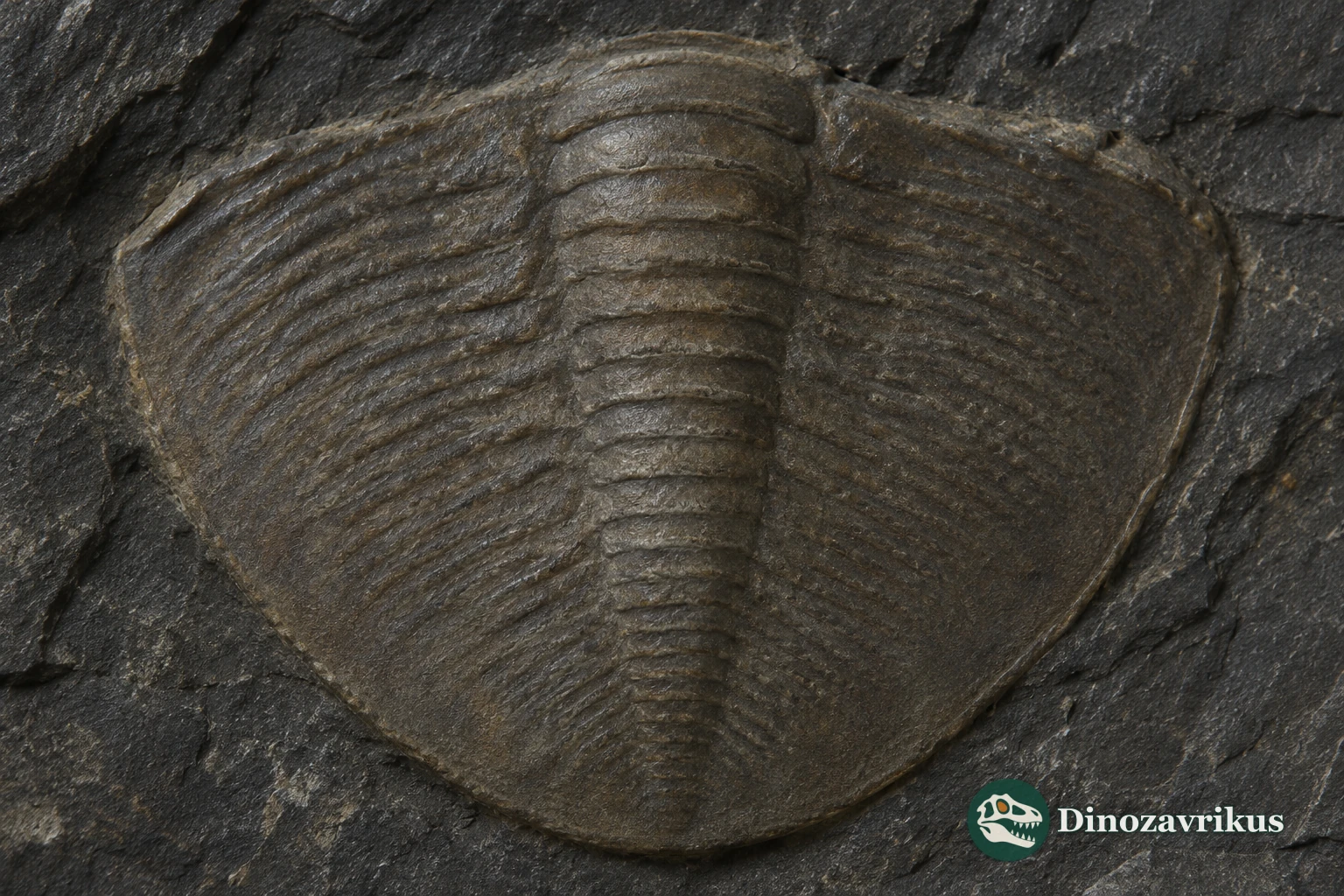
How the shells were buried in Japan
A study of the Middle Permian Kamiyasse Formation used 236 specimens and shell parts for taxonomic comparisons. P. spatulifera is common in sandstone and mudstone. The sandstone records shallower water, whereas mudstone accumulated farther offshore and shows evidence of intermittent storm flows.
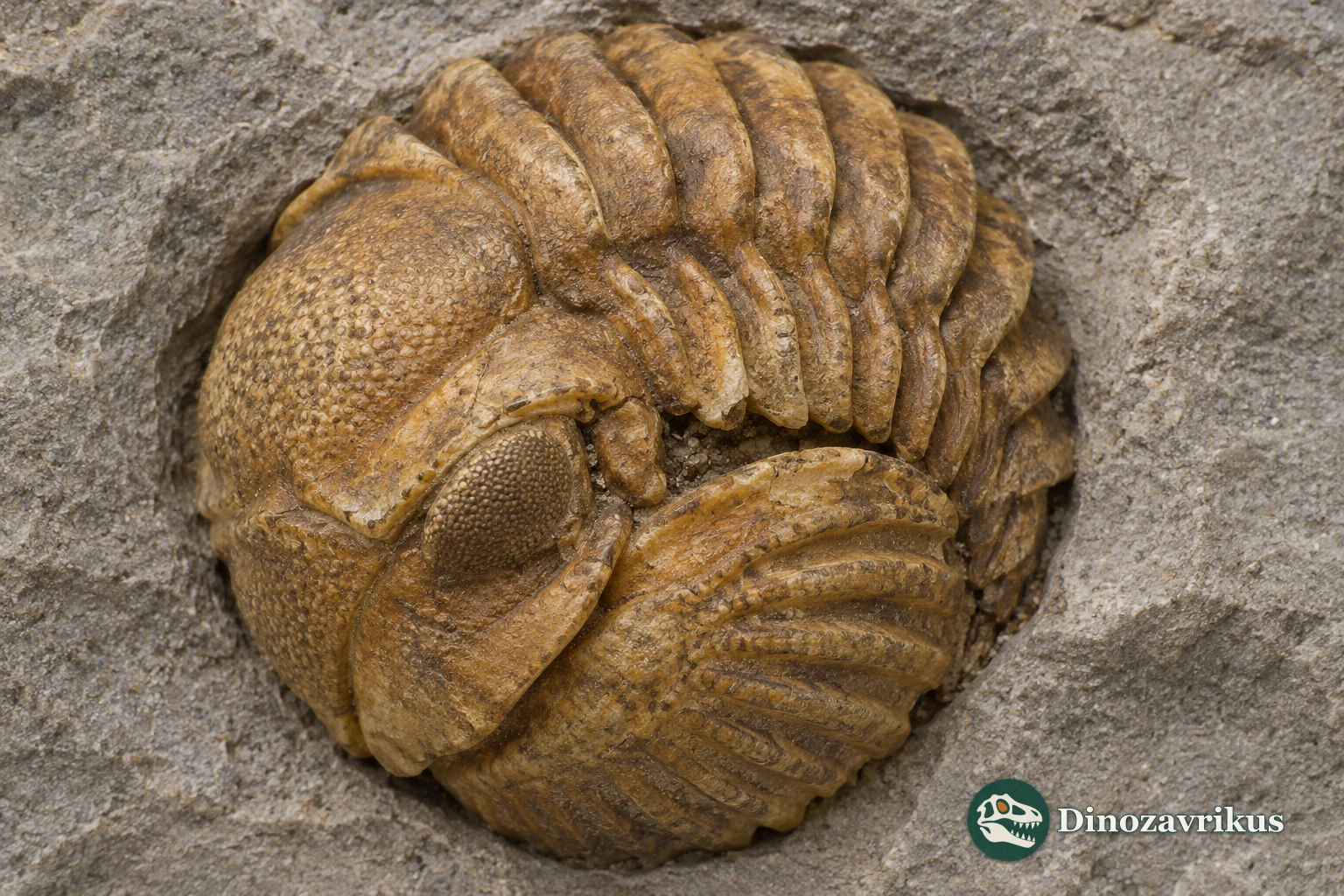
The authors interpreted some outstretched, convex-up shells as buried where they lay. They suggested that some enrolled shells could have been moved by storm currents. Disarticulated remains are more frequent in mudstone, where burrowing animals may have disturbed the sediment. The material informs burial history and leaves the diet uncertain.
Frequently asked questions
Where was the type species found?
On Sumatra. Roemer described it as Phillipsia sumatrensis in 1880.
How many thoracic segments did it have?
The described complete shells have nine. The numerous rings on the tail axis are part of a fused shield.
Why were some Japanese specimens enrolled?
The fossils preserve the posture at burial. The study suggests that storm currents may have transported some enrolled shells.
Which rocks preserve P. spatulifera?
It occurs in both sandstone and mudstone in the Kamiyasse Formation, representing different settings on the sea floor.