

Ptychoparia was a trilobite genus that lived in Cambrian seas. Articulated Czech specimens preserve enough of the body to count its thoracic segments. Old museum labels also reveal how one species name came to cover animals now assigned to three genera.
Quick facts
| Group | Trilobites, Ptychopariidae |
|---|---|
| Age | Middle and Late Cambrian |
| Region | Europe: Czechia and Sweden |
| Type species | Ptychoparia striata |
| Scientific name | Ptychoparia |
| Diet | Unknown |
What can the fossils tell us?
Czech fossils include articulated exoskeletons. The Swedish material includes heads, tails and an incomplete exoskeleton.
The outline of the front rim, the arrangement of furrows and the structure of the tail shield help distinguish species and revise older identifications.
The external skeleton does not establish what the animal ate.
A name used too broadly
Heinrich Emmrich described the type species as Conocephalus striatus in 1839. Ignaz Hawle and August Corda established Ptychoparia in 1847. Later workers used P. striata for several similar trilobites from central Bohemia. A 2006 revision by Vratislav Kordule distributed that material among Ptychoparia, Ptychoparioides and the newly named Mikaparia.
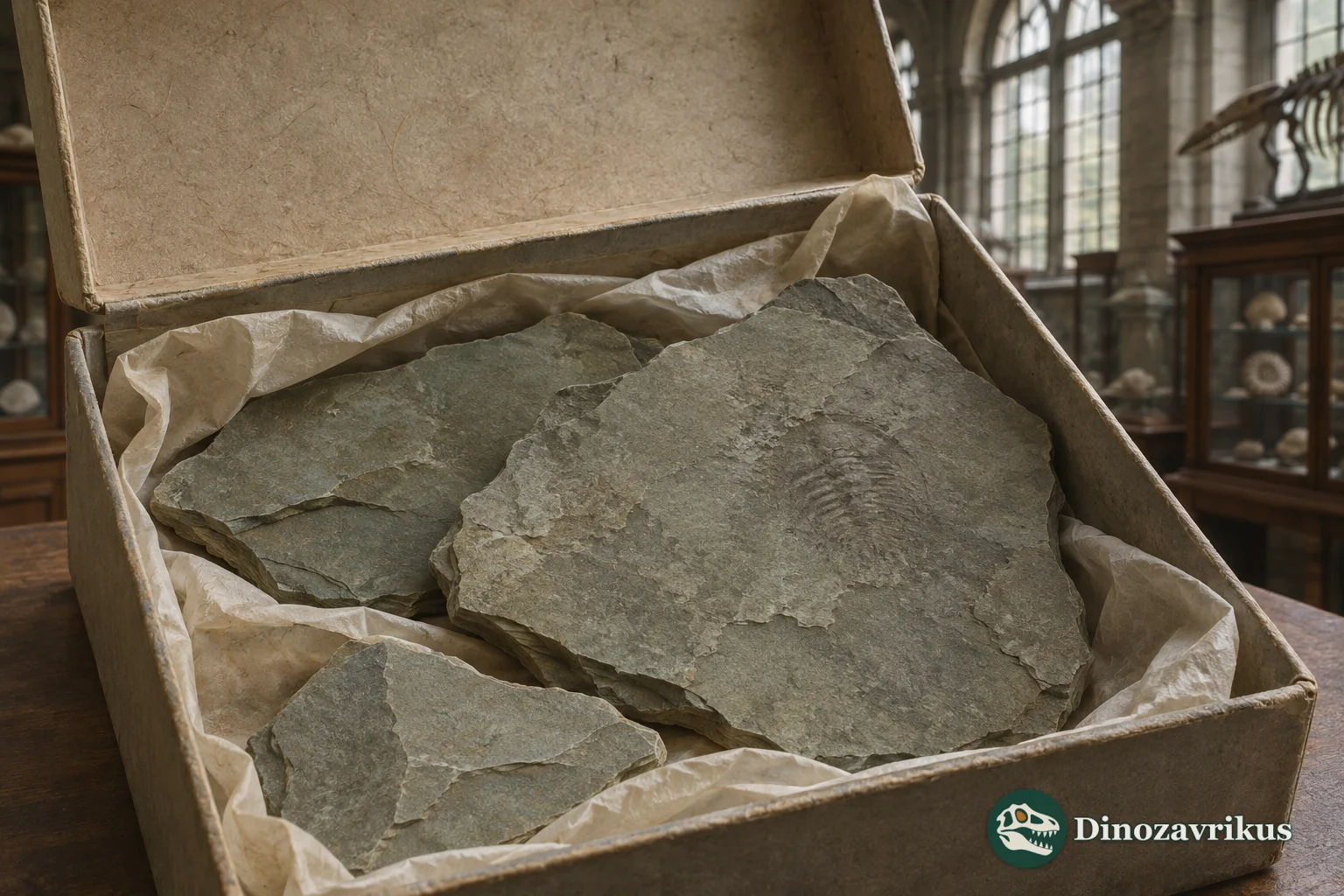
Two specimens in the Natural History Museum in Lille illustrate the change. The pair, numbered MGL 204 640, was collected at Pod trním near Týřovice in 1903 and went into the collection as P. striata. The fossils are now identified as P. dubinka from the Buchava Formation.
Thirteen thoracic segments in the type species
Adult P. striata had 13 articulated thoracic segments. Short spines at the back corners of the head shield extended to about the third segment. Paired furrows marked the rounded central lobe of the head, known as the glabella. The small tail shield was rounded. P. dubinka had 14 thoracic segments.
Czech and Swedish fossils
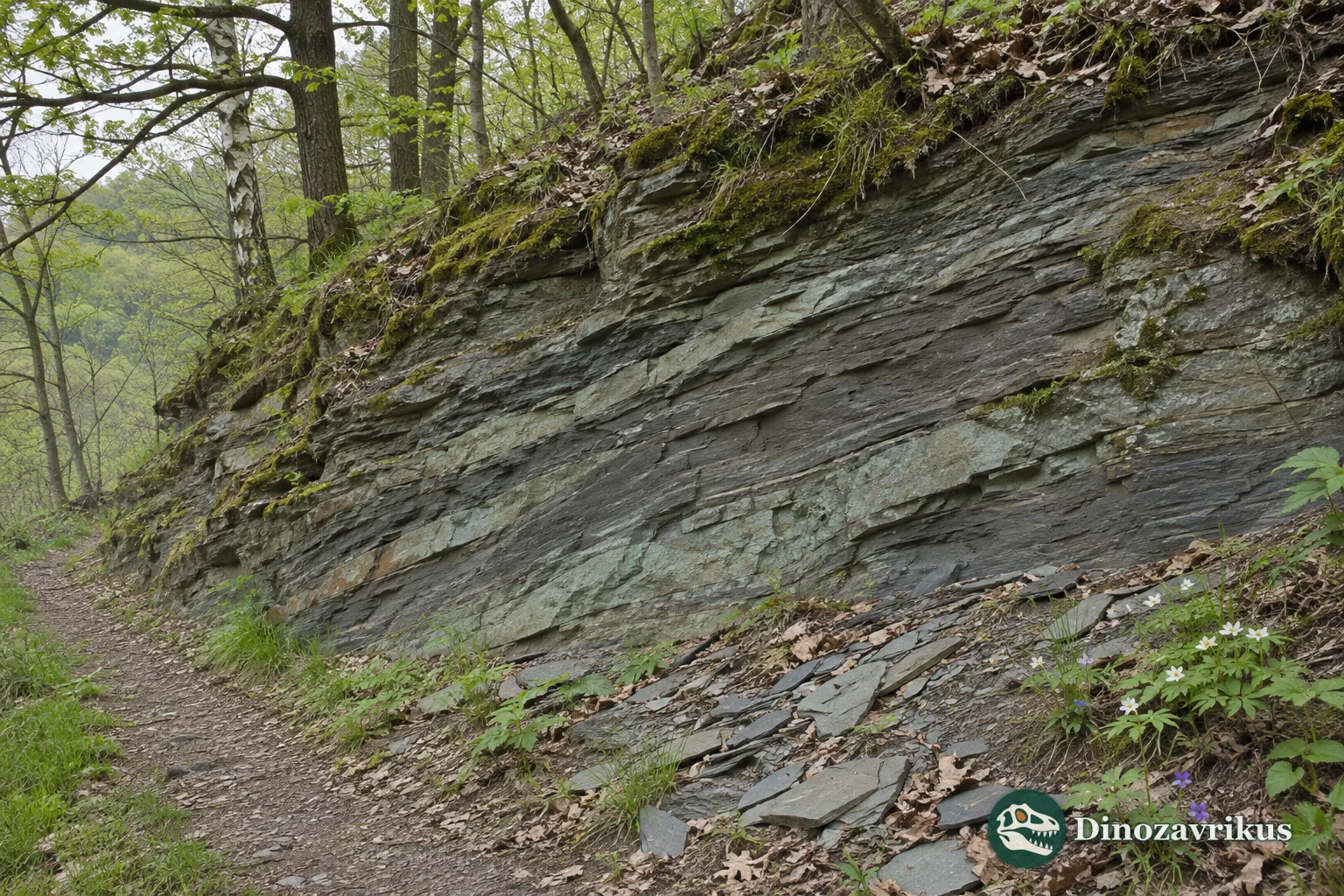
The Czech species lived during the middle Cambrian. The type species occurs in the Jince Formation, which also yields large Paradoxides-group trilobites. In southern Sweden a later species, P. pusilla, occurs in late Cambrian beds at Andrarum. Its lectotype, SGU 149, is a cranidium, the central part of the head shield. An incomplete cranidium has also been described from a glacial erratic collected in Denmark. The ice moved the rock from its original bed, so its collection site does not establish where the animal lived.
Frequently asked questions
Why do some old labels give a different species name?
The name P. striata once covered several similar forms. A revision used features of the head and tail to separate them into several species and genera.
Did all species of Ptychoparia have thirteen thoracic segments?
Adult P. striata had thirteen. The Czech species P. dubinka had fourteen.
Where was the Swedish species found?
The Swedish specimens of P. pusilla, including lectotype SGU 149, come from late Cambrian beds at Andrarum in Scania.
What did Ptychoparia eat?
The exoskeleton records the animal’s anatomy, but provides no direct evidence of its diet.