

Razanandrongobe sakalavae lived in what is now Madagascar in the Middle Jurassic. Its massive jaws place it among notosuchians, an extinct branch of crocodyliforms. Large serrations and conspicuous wear on the thick tooth crowns give clues to the loads its jaws could withstand.
Quick facts
| Group | Crocodyliformes, Notosuchia |
|---|---|
| Age | Bathonian, Middle Jurassic |
| Locality | Near Ambondromamy, Mahajanga Basin, Madagascar |
| Rock unit | Isalo IIIb subunit |
| Holotype | MSNM V5770, fragment of the right maxilla |
| Measured tooth | About 15 cm including the root, measured by CT |
What can the fossils tell us?
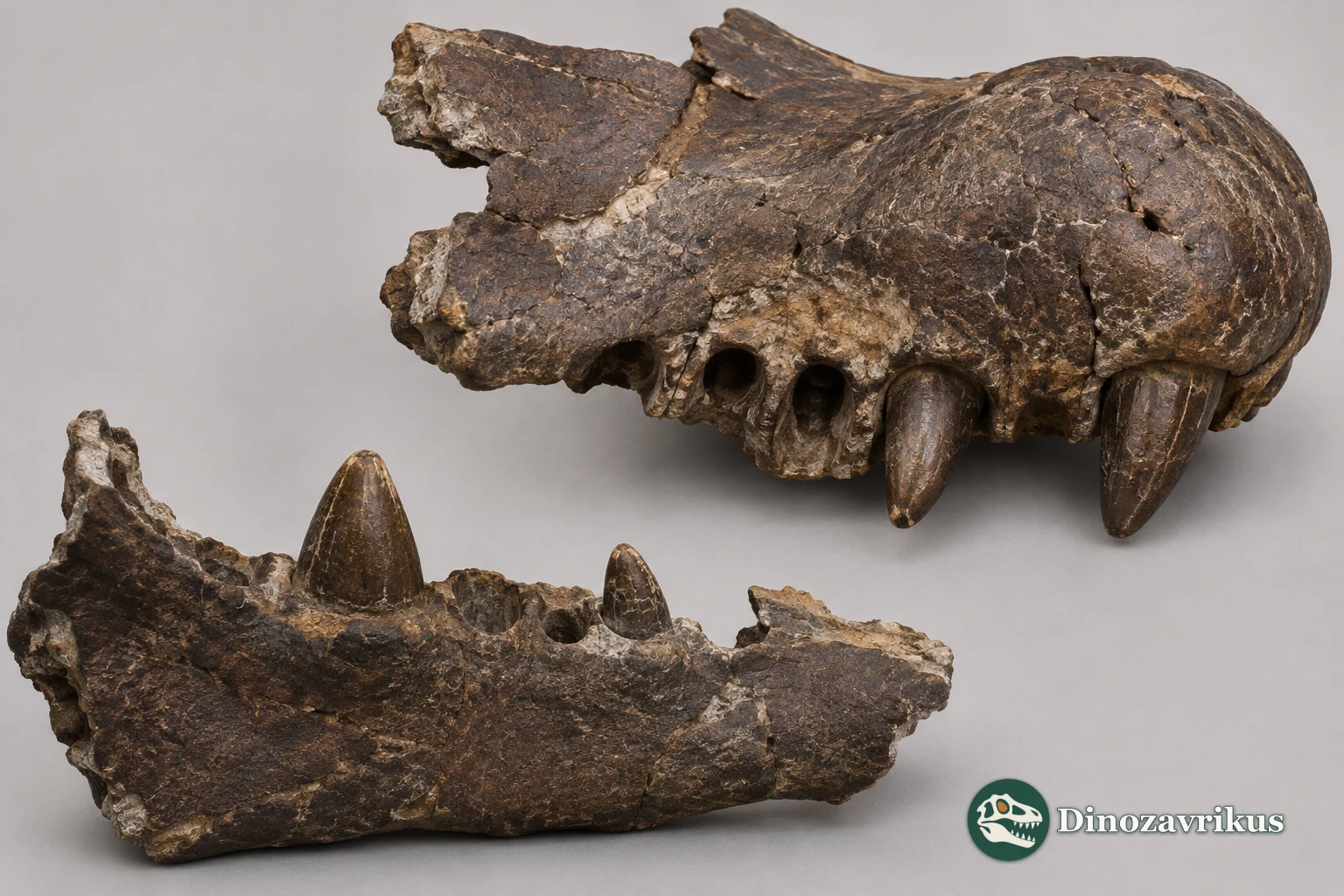
The premaxilla and maxillary fragments help establish the outline of the snout in dorsal view. The back of the skull is much less complete.
One front tooth measures about 15 cm with its root. That measurement alone cannot establish the animal's total length.
Some of the damage may have come from contact with hard tissue. The wear cannot identify an individual prey species.
From the first fragments to the Toulouse jaws
Simone Maganuco, Cristiano Dal Sasso and Giovanni Pasini named the species in 2006 from Bathonian rocks in the Mahajanga Basin. The holotype from near Ambondromamy, MSNM V5770, is a fragment of right maxilla with three unerupted teeth. It is held by the Natural History Museum in Milan. Isolated crowns were also available to the authors.
Its affinities among archosaurs were initially uncertain. In 2017, researchers described a complete right premaxilla, MHNT.PAL.2012.6.2, and the front of a left dentary, MHNT.PAL.2012.6.1, from the Natural History Museum in Toulouse. They revealed the curve at the front of the jaws and the arrangement of the tooth rows.
Reconstructing a deep, round-ended snout
The sizes and contact surfaces of the separate pieces help fit them together. The premaxilla makes up most of the curve at the front; maxillary fragments continue that curve along the sides. The published reconstruction is U-shaped from above and taller than wide at the front.
The phylogenetic analysis placed Razanandrongobe among notosuchians, close to the branch that includes later forms such as Sebecus. Much of the skeleton is missing, leaving many anatomical characters unavailable and its exact position provisional. The large jaw fragments indicate a large animal, with insufficient postcranial material to establish proportions or total length.
What the teeth could withstand
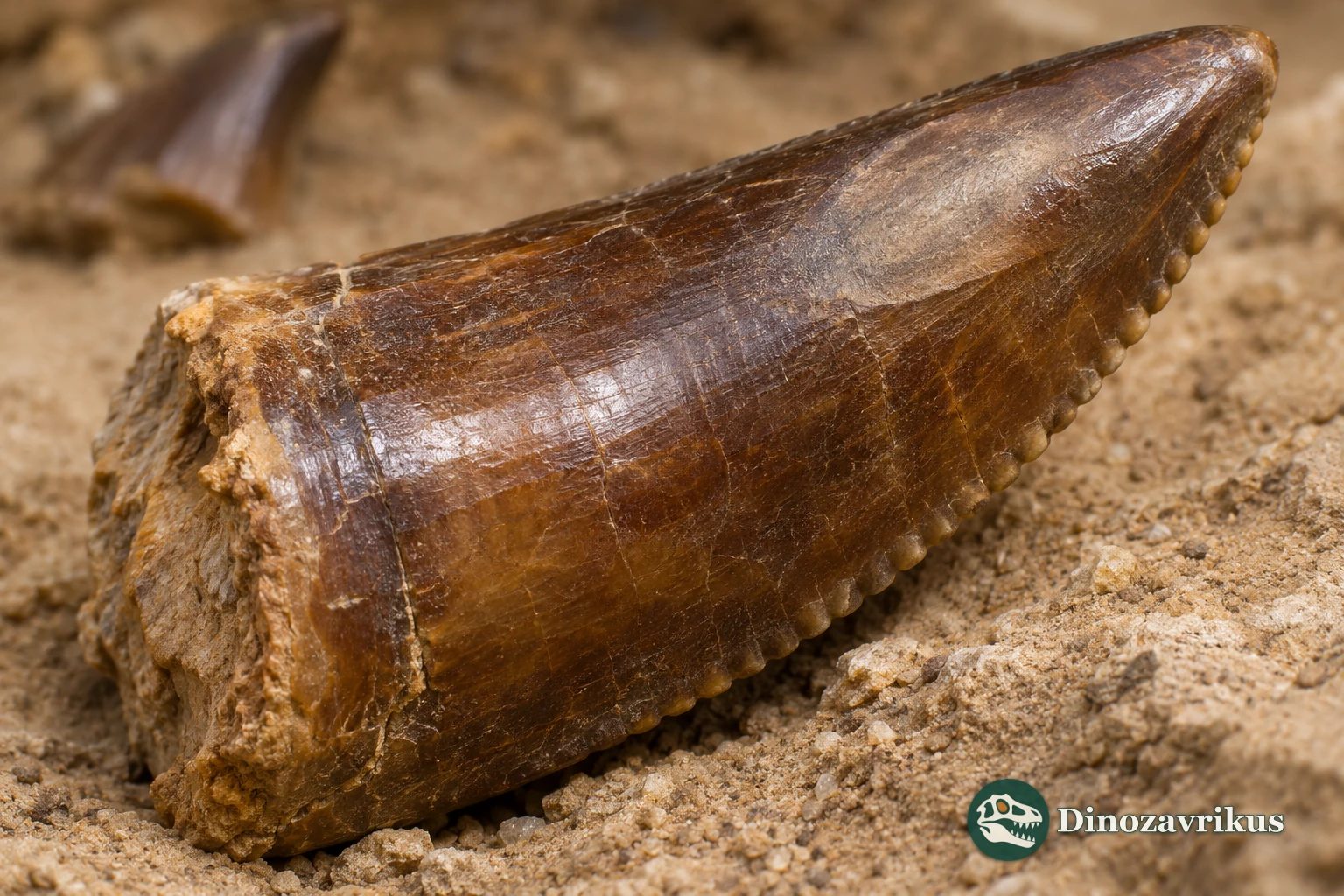
CT measurements put the third premaxillary tooth at 15.04 cm including the root. The third tooth of the lower jaw was 13.76 cm long. The root of the upper tooth enclosed a developing replacement, 6.41 cm long.
The teeth had thick crowns and conspicuous denticles on the cutting edges. Wear at several tips includes enamel spalling and fine scratches in the exposed dentine. The authors suggested contact with bone, tendon or other hard material. The wear and heavy jaws support hard biting and leave the prey species unknown.
Frequently asked questions
Was Razanandrongobe a dinosaur?
CT data and comparison of the new jaw bones supported a position among notosuchians, a branch of fossil crocodyliforms.
What does the 15 cm tooth measurement include?
It is the length of the third premaxillary tooth including its root, as measured with computed tomography.
Could this animal bite through bone?
The massive jaws and enamel damage are consistent with biting bone or other hard material. The fossils leave the precise cause of individual marks unresolved.
Is a complete skeleton known?
The described material consists of skull fragments and teeth. The proportions of the body and tail remain uncertain.