

Remopleurides is an Ordovician trilobite genus best recognised by its distinctive head shield, especially the long palpebral lobes beside the glabella. The name was established in the nineteenth century, and its type species, R. colbii, comes from the Late Ordovician Killey Bridge Formation of Northern Ireland. Fossils assigned to other species occur in separate regions and formations, often as incomplete or disarticulated material.
The shell gives palaeontologists useful anatomical characters, but it does not provide a simple answer about how every species lived. Reports from carbonate rocks and graptolitic shales have prompted discussion of ecology, yet occurrence of a genus in multiple facies does not demonstrate that one species occupied both or that all members swam in open water. The ancient arthropod catalogue places Remopleurides alongside other trilobites whose preserved anatomy and ecological interpretations can be assessed separately.
Quick facts
| Named | Portlock, 1843 |
|---|---|
| Type species | Remopleurides colbii |
| Group | Remopleurididae; trilobite |
| Age | Ordovician |
| Diagnostic feature | Long palpebral lobes beside the glabella |
| Known material | Often disarticulated or incomplete |
| Type region | Killey Bridge Formation, Northern Ireland |
| Open question | Whether different species occupied similar water-column niches |
What can the fossils tell us?
These are features of the preserved exoskeleton. Distortion and missing margins can still complicate a species-level identification.
The type species anchors the genus name. It does not imply that fossils assigned to other species came from the same bed or locality.
A fragment records a body part in a geological context, not a complete animal or a direct measurement of its lifestyle.
Genus-level occurrence cannot prove a single pelagic or bottom-dwelling ecology. Facies, species identity and preservation have to be evaluated together.
A genus named from the Irish Ordovician
John Edward Portlock established Remopleurides in 1843. The type species is Remopleurides colbii, named from material in the Killey Bridge Formation of Northern Ireland. The type species fixes the application of the genus name. Other species assigned to Remopleurides are separate taxonomic hypotheses and need their own diagnostic evidence.
Research on Ordovician trilobites has repeatedly revised species boundaries. Some forms once grouped together have been transferred to related genera such as Pararemopleurides. These changes reflect detailed comparisons of the head, facial sutures, thorax and pygidium, as well as the quality and completeness of the specimens. An old label or a superficial resemblance is not enough to confirm a modern identification.
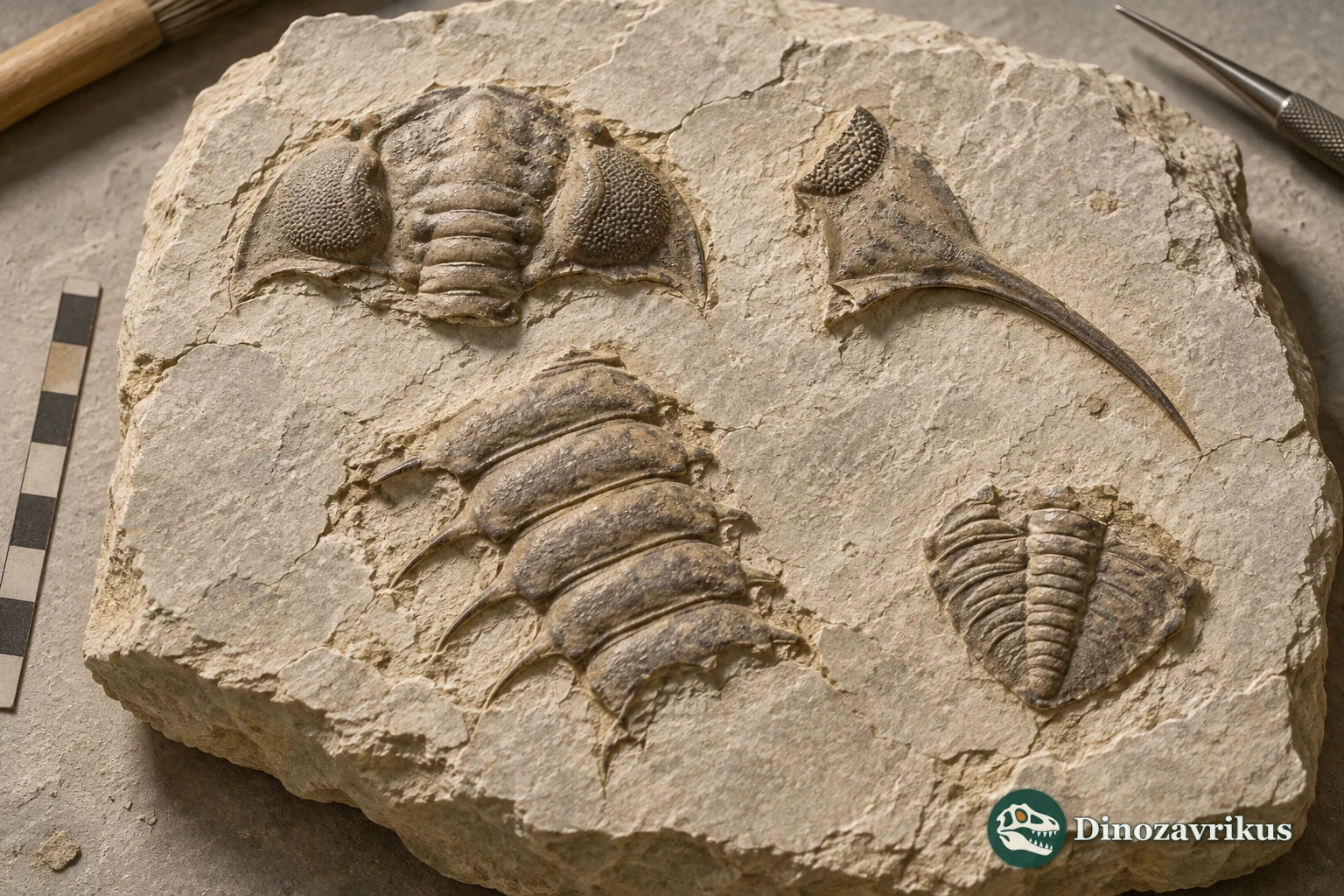
Long eye-bearing lobes and a segmented body
The cephalon of Remopleurides is elongated, and the palpebral lobes extend alongside the glabella. These lobes supported the compound eyes in life, though the mineralised fossil preserves the external structures rather than a view of the animal’s vision. The narrow outline is useful in identification when the front and rear of the head are sufficiently preserved.
As in other trilobites, the body continued through a segmented thorax to a pygidium. Disarticulation after death commonly separated these regions, so a local collection may contain numerous pieces without a single complete skeleton. That is not evidence that the living animal lacked a coherent body plan; it is a product of decay, moulting, transport and burial acting on a jointed exoskeleton.
Researchers should distinguish a fossil assemblage of isolated parts from an articulated individual. A head shield can preserve strong diagnostic traits while leaving body length, number of associated segments or proportions uncertain. Comparisons among specimens can help restore a likely anatomy, but a reconstruction remains an informed synthesis rather than a photograph of one complete animal.
Range, facies and incomplete records
The genus has been reported from several Ordovician regions, including the British Isles, parts of North America and high-latitude localities. Those records represent different species, ages and rock settings. A broad genus-level distribution should not be read as a single population crossing an ocean or as evidence that all species had identical tolerances.
Work on the trilobite fauna of Pai-Khoi and other Arctic sections discusses silicified remains, including incomplete material assigned to Remopleurides. Silicification can preserve fine shell details, but the taxonomic usefulness of a fragment still depends on which characters remain. A locality and a specimen number are essential context when comparing records.
Some palaeoecological discussions note remopleuridids in both carbonate and graptolitic-shale settings. The important qualification is that a genus-level list from different settings does not establish that the same species occupied both. Facies describe the conditions under which sediments accumulated; they are not direct labels for a trilobite’s swimming depth or behaviour.
Did Remopleurides swim above the seabed?
Elongated eyes and a distinctive head shield invite hypotheses about how the animal encountered its surroundings. Some authors have considered water-column or nektonic interpretations for particular trilobites and assemblages. Such proposals require more than an unusual outline: the species identity, associated fauna, sedimentary setting and preservation all matter.
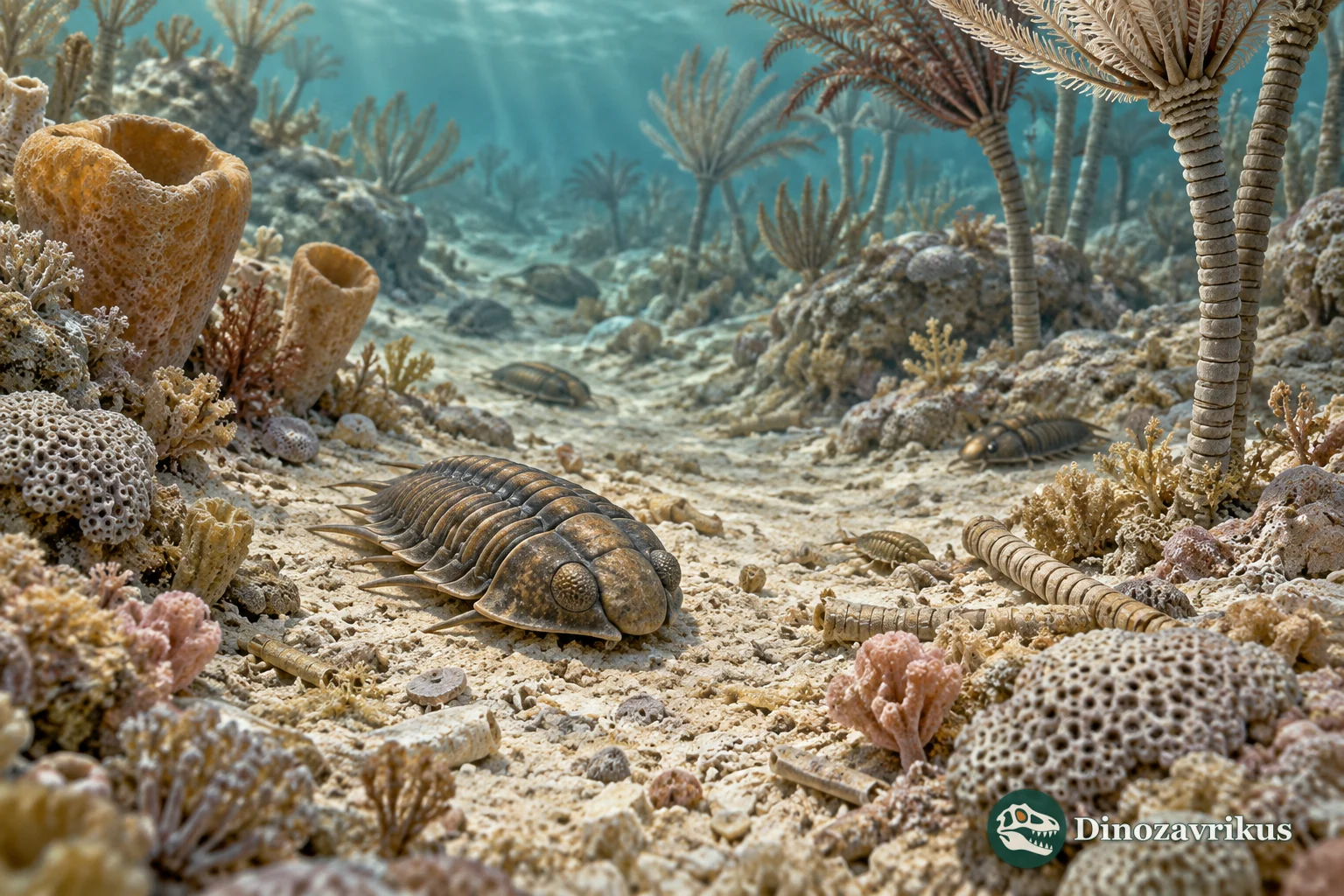
Remopleurides is also reported from benthic assemblages, and its presence in a deposit alone cannot distinguish active swimming from life on or near the seafloor. A trilobite could move across the bottom, lift briefly into the water, or change behaviour through its life. Without direct trackways, preserved soft anatomy or a tightly constrained species-level ecological study, these alternatives remain open.
The careful conclusion is narrower than a dramatic reconstruction: the genus had a recognisable head shield and occupied Ordovician marine environments represented by several fossil settings. The available record does not justify assigning one universal swimming mode or depth to all species.
What a fragment can and cannot tell us
Trilobite fossils preserve a durable exoskeleton that can reveal body segmentation, shield proportions and some growth-related changes. They usually do not preserve colour, internal organs, exact diet or social behaviour. Where material is fragmentary, the most defensible identification may be a family, genus or open nomenclature rather than a species name.
In Remopleurides, that distinction is especially useful because historical collections combine named species and partial specimens from many regions. Taxonomic revisions can sharpen the genus concept, while the ecological story remains more tentative. The two kinds of uncertainty are related but not identical: a fossil may be confidently assigned to a genus even when its behaviour is unknown.
Frequently asked questions
When did Remopleurides live?
Remopleurides is known from Ordovician rocks. Exact ages differ among species and localities.
What is the type species?
Remopleurides colbii is the type species, described from the Late Ordovician Killey Bridge Formation in Northern Ireland.
Did Remopleurides swim in open water?
That cannot be established for the entire genus. Facies records and species identifications differ, and occurrence in a deposit alone does not prove a pelagic lifestyle.
Why are many Remopleurides fossils incomplete?
Trilobites had articulated exoskeletons that could disarticulate during moulting, decay, transport or burial. Many collections therefore preserve separate shields and segments rather than whole individuals.