

Saltenia was a Late Cretaceous frog from northwestern Argentina. The beds that preserve its articulated skeletons also yield tadpoles. Together they document different stages in the life of an early relative of modern pipid frogs.
Quick facts
| Group | Frogs (Pipimorpha) |
|---|---|
| Age | Late Cretaceous |
| Region | South America (Salta Province, Argentina) |
| Type species | Saltenia ibanezi |
| Scientific name | Saltenia |
| Diet | Exact prey is unknown |
What can the fossils tell us?
The fossils described in 2011 include articulated skeletons, sets of associated bones and three tadpoles.
The combination of skull characters, elongate hand and foot bones, and free ribs in young individuals supports a pipimorph relationship.
Frogs and fishes occur together in the deposits. Their association provides evidence about the lake fauna, while the diet of Saltenia remains poorly documented.
The frogs of Salta Province
Osvaldo Reig named Saltenia in 1959 from fossils found in the Puente Morales area. Ana María Báez later revised the genus using a larger sample. Material from Abra El Zunchal, north of Puente Morales, comes from the Morales Member of the Las Curtiembres Formation. Analysis of fossil pollen and spores suggests a Campanian age for the member.
Anatomy beyond the outline
The skull roof has a single unpaired frontoparietal. The sacrum is fused with the urostyle, the long bone behind it. Some bones of the hands and feet are elongated. Features of the upper jaw and the count of vertebrae in front of the sacrum helped distinguish the Argentine specimens from African frogs with which they were initially compared.
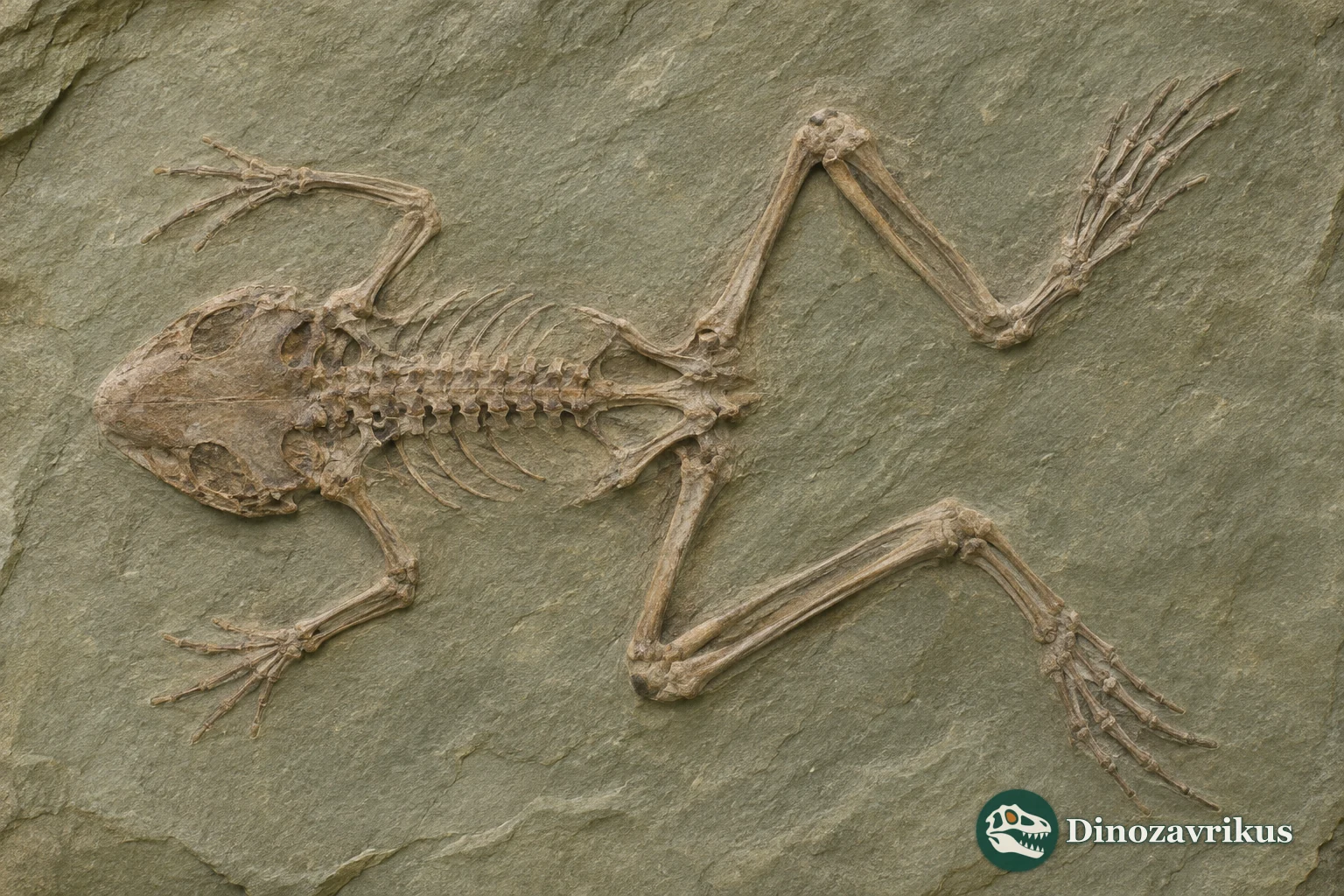
The larval record
Three tadpoles occurred among the specimens described from Abra El Zunchal. Some young individuals retained free ribs. The green, laminated siltstones that contain Saltenia also yielded fishes, consistent with preservation in a lake.
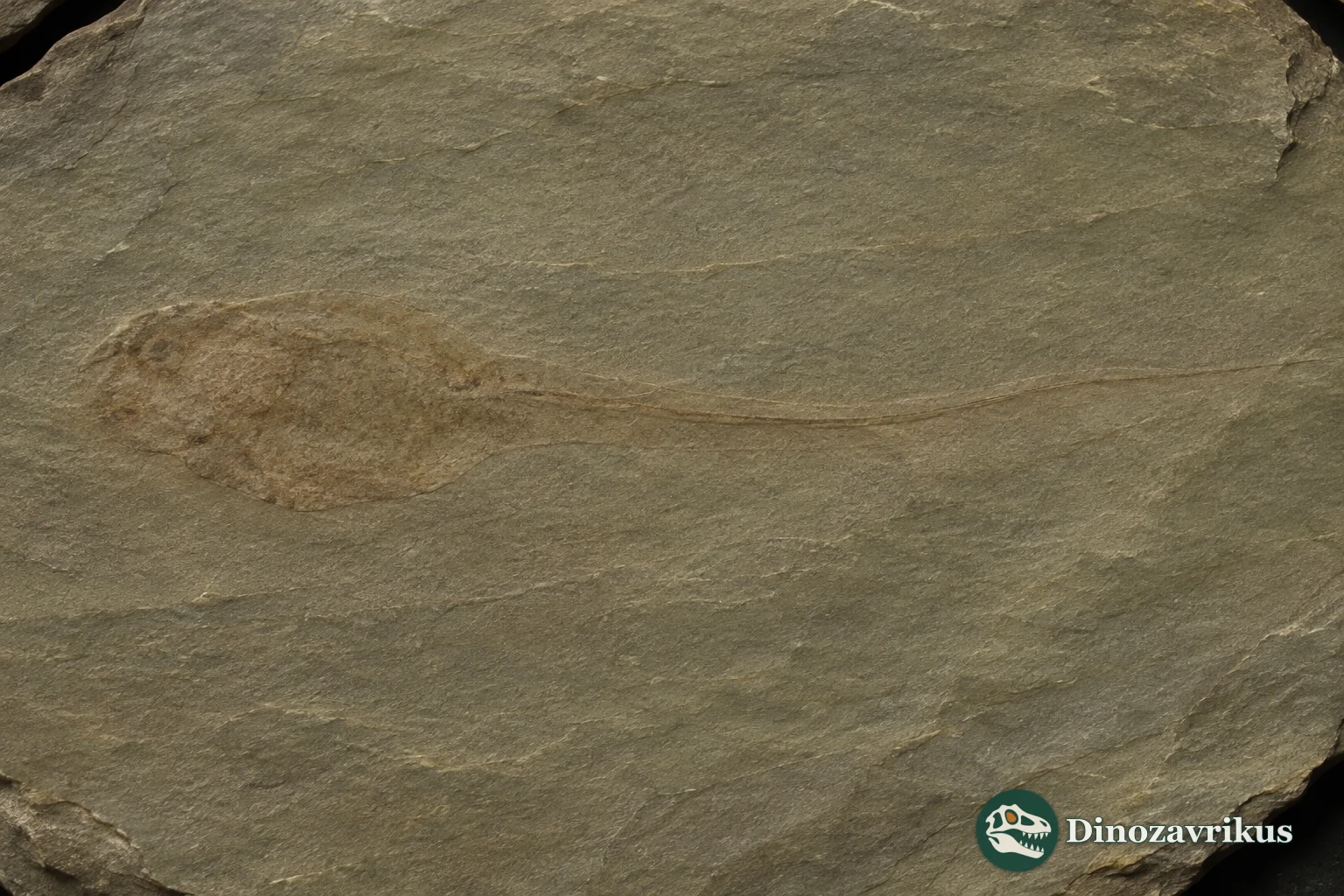
Where it fits among aquatic frogs
The skeletal evidence places Saltenia among pipimorphs, the lineage closer to living pipids than to rhinophrynids. Its fused sacrum and urostyle and several skull features are also seen in living pipids. A different part of the fossil record of aquatic frogs is represented by the later Palaeobatrachus.
Frequently asked questions
Where was Saltenia found?
In Salta Province, northwestern Argentina. The newer specimens came from the Morales Member of the Las Curtiembres Formation.
Are fossils of its tadpoles known?
Yes. A study published in 2011 reported three tadpoles and 30 individuals that had completed metamorphosis.
How old are the fossils?
They date to the Late Cretaceous. Palynological evidence suggests that the Morales Member is Campanian.
What features distinguish Saltenia from similar frogs?
Researchers compare the shape of the upper jaw, the bones at the front of the skull and the number of vertebrae in front of the sacrum.