

Sidersaura marae was a large rebbachisaurid from Cretaceous Patagonia. Its chevrons lay on the underside of the tail vertebrae. Several bear pairs of projecting ridges that give them a star-like outline. Part of a braincase also survived, allowing researchers to reconstruct the shape of the inner ear.
Quick facts
| Group | Sauropods (Rebbachisauridae) |
|---|---|
| Age | Late Cretaceous (late Cenomanian to Turonian) |
| Region | South America (Neuquén Province, Argentina) |
| Diet | Herbivore |
| Type species | Sidersaura marae |
| Holotype | MMCh-PV 70 |
| Estimated length | About 18–20 m |
| Formation | Huincul Formation |
What can the fossils tell us?
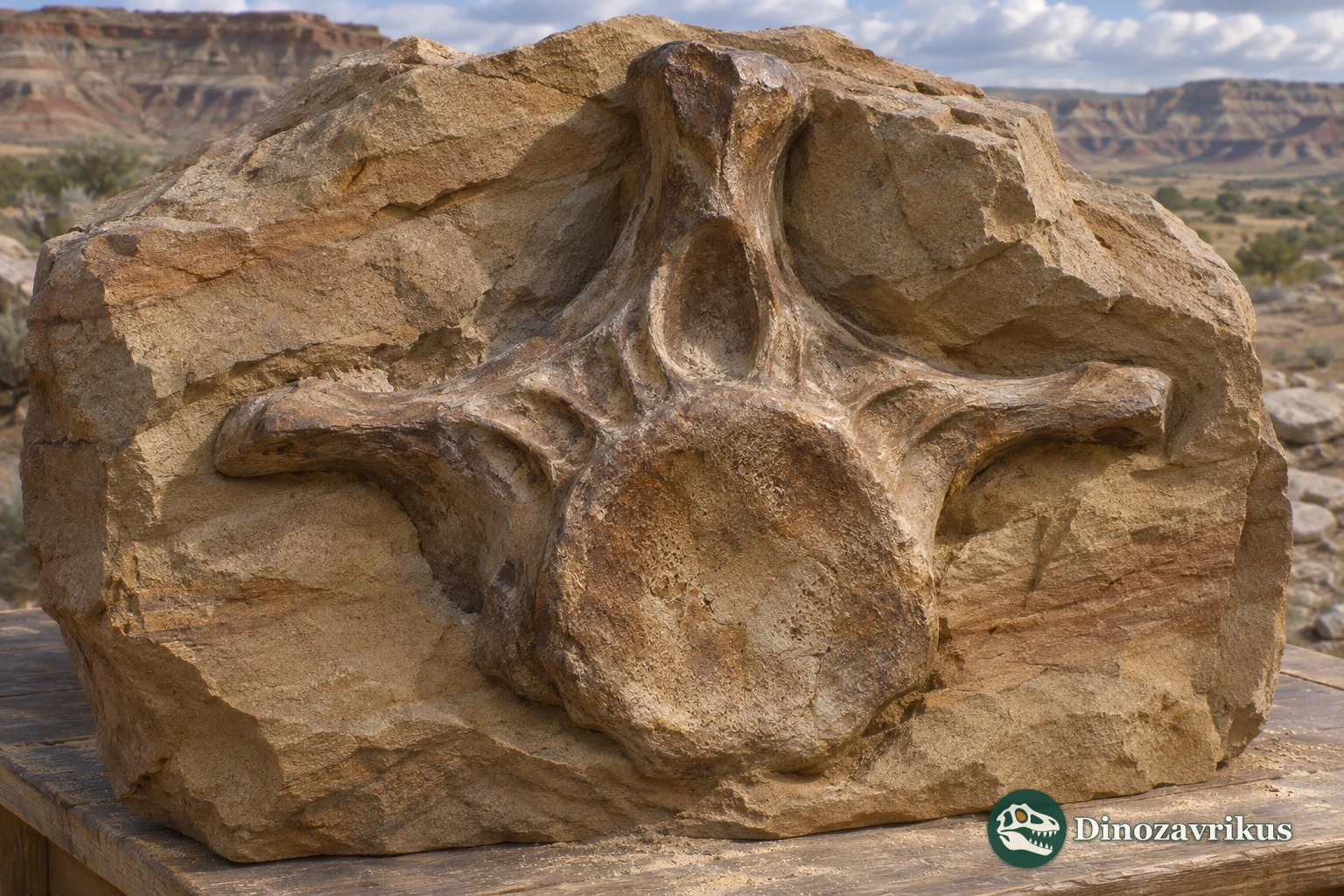
Chevrons supported the underside of the tail. Ridges on some Sidersaura chevrons form a star-like outline. The surrounding soft tissues have not been preserved.
CT data show cavities that held the brain, blood vessels and inner ear. Their shapes support estimates of hearing, while its behaviour remains unknown.
At least four individuals came from Las Campanas. Overlapping elements allowed comparisons among the specimens, which include bones of different sizes and stages of growth.
Four individuals from the Huincul Formation
The specimens were recovered at Las Campanas, near Villa El Chocón in Neuquén Province. They came from the lower part of the Huincul Formation, assigned to the late Cenomanian to Turonian. Lucas Lerzo and colleagues described the species in a study published online in 2024. The specific name honours fossil preparator Mara Ripoll.
The holotype MMCh-PV 70 includes part of the skull roof and braincase, dorsal elements, 14 tail vertebrae, chevrons and limb bones. Fused bones in the skull roof indicate a mature individual. An isolated vertebral centrum represents a juvenile. A partial skeleton about 20 metres away came from the same layer, near the large theropod Meraxes. Their proximity provides little evidence about how either dinosaur died.
Chevrons, relationships and size
The bony chevrons form a row beneath the tail vertebrae. Several Sidersaura chevrons carry projections in more than one direction. The same unusual pattern helped researchers reconsider some isolated Patagonian tail bones previously identified as titanosaur material.
The original phylogenetic analysis placed Sidersaura among early-branching rebbachisaurids, closer to Zapalasaurus than to the limaysaurines. The researchers estimated a total length of about 18 to 20 metres. The left femur of specimen MMCh-PV 236 measures 1.55 m directly. The overall length is reconstructed from incomplete remains. Its sauropod affinities support a plant-based diet, with the plants it ate unknown.
What CT scanning revealed about the skull
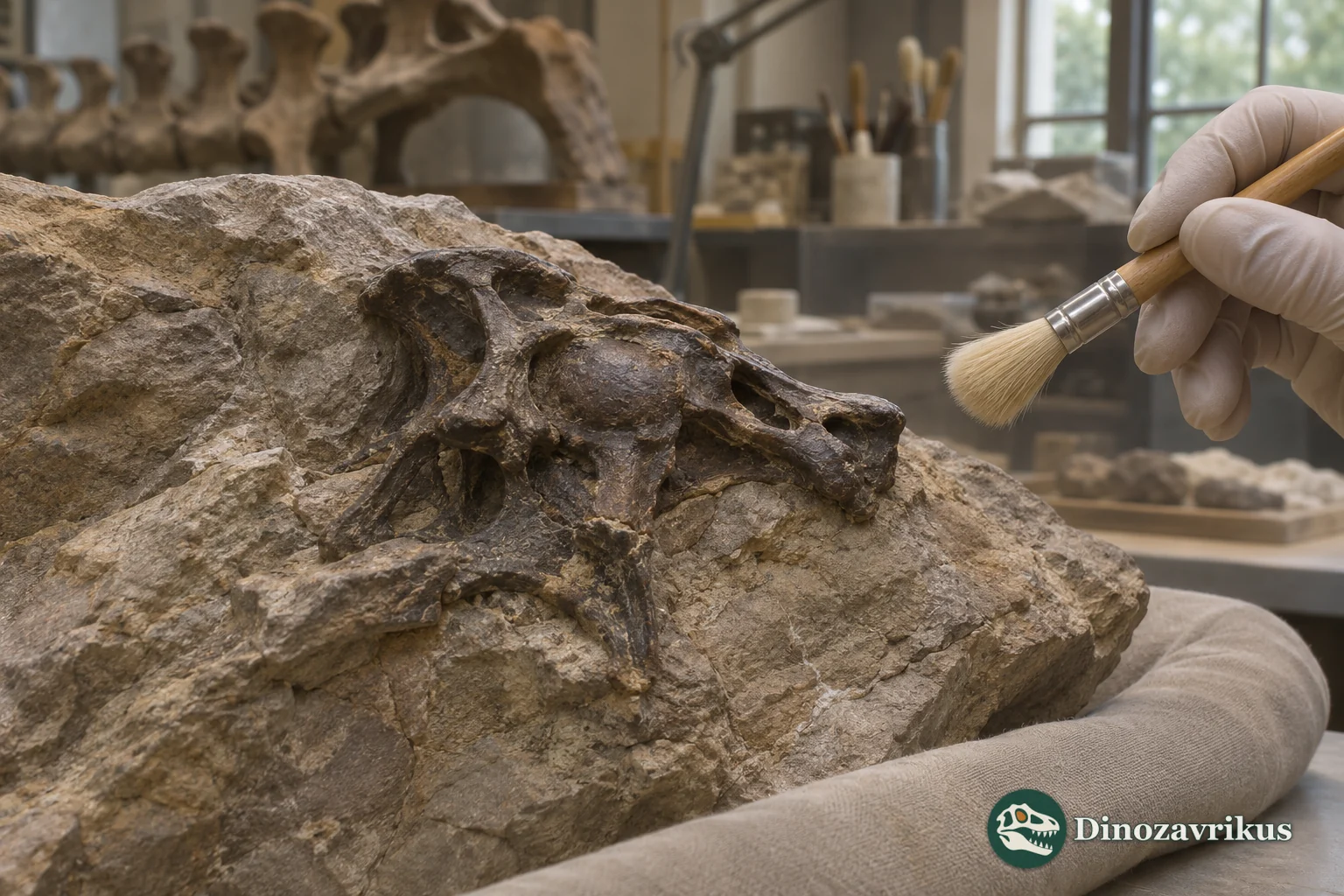
The holotype has a small opening with natural margins between the frontal and parietal bones. In 2026 researchers reconstructed internal skull cavities using CT scans of the type material and another fragment of the braincase. They measured the part of the inner ear associated with hearing and compared it with data from other dinosaurs and living animals.
The resulting estimates suggest an approximate frequency range of greatest sensitivity. The exact values depend on the model and the estimate of body size. The scans record the form of the inner ear, while the calls Sidersaura might have produced or recognised in life remain unknown.
Frequently asked questions
Why is Sidersaura named after a star?
The Latin root sidus refers to a star, recalling the radiating projections of the chevrons beneath its tail.
Where was it found?
At Las Campanas, near Villa El Chocón in Neuquén Province. The bones come from the Huincul Formation.
How long was Sidersaura?
The researchers estimated a length of about 18 to 20 metres. The recovered skeletons are incomplete.
Can the fossils tell us what it sounded like?
The inner ear can be used to model hearing sensitivity. The sounds made by the living animal are unknown.