

Simoliophis was a Cretaceous marine snake known for its markedly thickened vertebrae. The thickening was concentrated in parts of the trunk. By comparing bones from different points along the spine and examining the sediment around them, researchers explored how the snake may have moved underwater.
Quick facts
| Group | Snakes (Serpentes), Simoliophiidae |
|---|---|
| Age | Late Cretaceous, Cenomanian |
| Region | Europe and North Africa |
| Type species | Simoliophis rochebrunei |
| Scientific name | Simoliophis |
| Diet | Exact prey is unknown |
What can the fossils tell us?
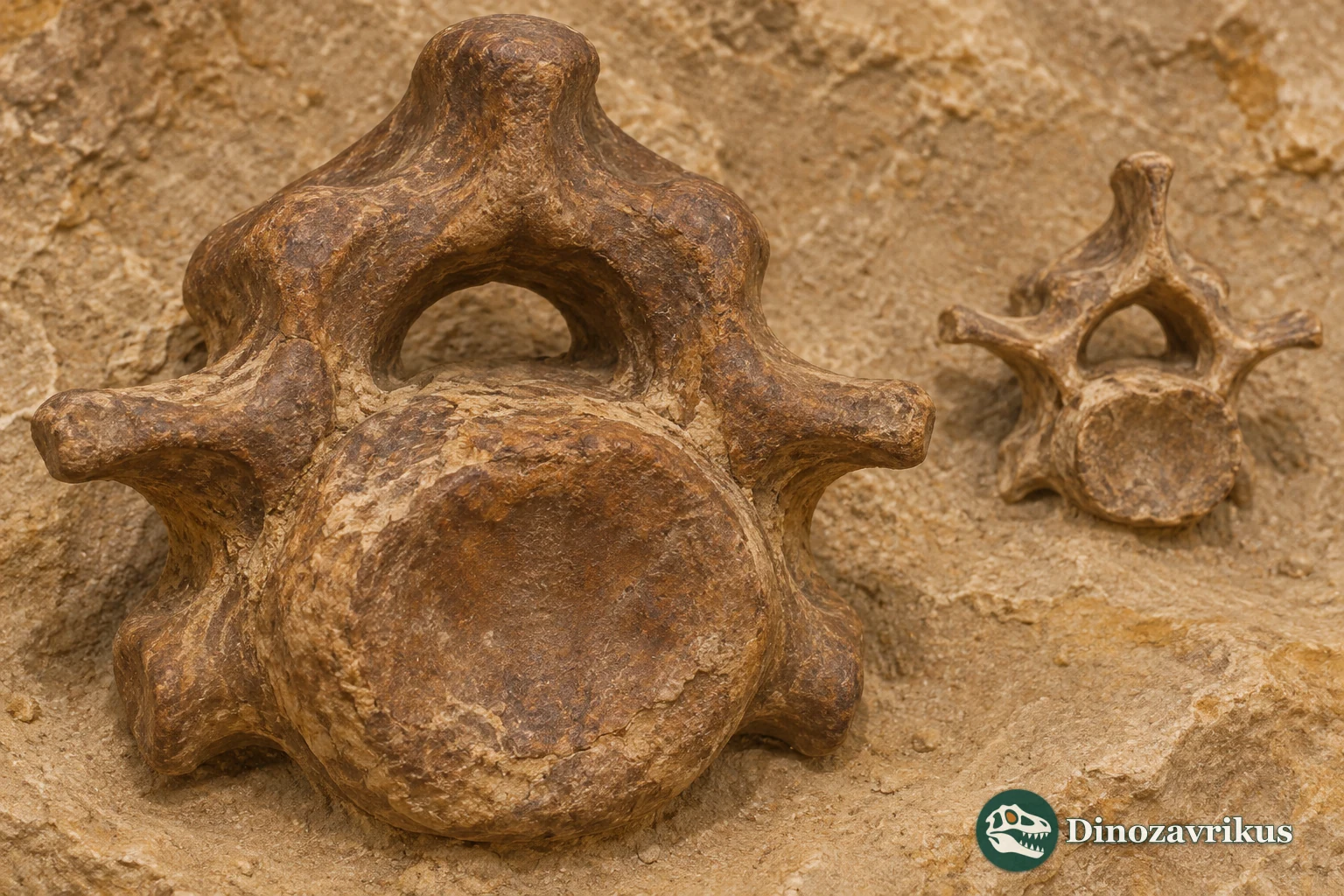
The most massive vertebrae of the type species came from the middle of the trunk and the beginning of its posterior section. The isolated bones show that thickening varied along the spine.
A heavier skeleton could have helped the snake submerge and stay underwater. The middle of the trunk was probably relatively stiff.
Articulated skeletons of related Cretaceous snakes preserve hind limbs. Their presence in Simoliophis itself is an inference from its relationships.
How the original description was revised
Henri Émile Sauvage named Simoliophis rochebrunei in 1880 from vertebrae found in the Charentes region of western France. The early descriptions dealt principally with mid-trunk bones. In 2016 Jean-Claude Rage, Romain Vullo and Didier Néraudeau compared new material from several Charentes sites and described how the bones vary along the spine. In the type area the species is restricted to the lower Cenomanian. It also occurs in middle Cenomanian beds in Portugal, where the name Simoliophis delgadoi, introduced for Portuguese material, is now treated as a junior synonym.
What changed along the backbone
In the middle of the trunk the vertebral body and surrounding bone were thickened. An increase in the external volume of a bone is called pachyostosis. The vertebrae of Simoliophis also exhibit high internal compactness. Both features add skeletal mass. From the anatomy and the sediment, researchers inferred a slow swimmer capable of staying submerged for some time in shallow water over sand. The snake could also enter brackish water. The bones do not give precise estimates of swimming speed or dive depth.
The African species and the question of hind limbs
A second species, Simoliophis libycus, is known from Draa Ubari in western Libya. Its holotype ZIN PC 2/31 is a mid-trunk vertebra. The age of the deposit was revised in favour of a Cenomanian date using the associated fish and snake fossils. Similar vertebrae from Morocco have been assigned more cautiously. Simoliophis is classed in a family that includes Pachyrhachis, which preserves hind limb bones directly. Isolated Simoliophis material has yet to supply equivalent evidence.
Frequently asked questions
When did Simoliophis live?
The type species is known from the Cenomanian, the first stage of the Late Cretaceous. Its finds in the Charentes type area are early Cenomanian.
Where have fossils been found?
The type species is recorded in southwestern Europe, including France and Portugal. The other named species was described from Libya.
What was the advantage of the heavy vertebrae?
Thick, compact bone adds skeletal mass. One interpretation is that this made it easier for the snake to submerge and remain underwater.
Could Simoliophis have had hind limbs?
Yes, as related Cretaceous snakes retained them. Their presence in Simoliophis is inferred, because the available fossils give no direct confirmation.