

Sinosaurus was a predatory theropod from Early Jurassic China. A specimen found near the type locality preserves a skull with its lower jaw and eleven neck vertebrae. It links the features in the fossil jaws to the shape of the head and the arrangement of the two crests.
Quick facts
| Group | Theropods (Theropoda) |
|---|---|
| Age | Early Jurassic |
| Region | Asia (Yunnan Province, China) |
| Diet | Carnivorous |
| Type species | Sinosaurus triassicus |
| Strata | Lufeng Formation |
| Specimen with skull | LFKL-004, skull, lower jaw and 11 neck vertebrae |
What can the fossils tell us?
The name Sinosaurus triassicus is tied to IVPP V34. The fragments preserve features of the jaws, but they do not show the shape of the entire head.
This specimen from near the type locality preserves the lower jaw and 11 neck vertebrae with the skull. It shows how the crests sit on the head.
In specimen ZLJT01, one of the upper tooth sockets closed during life. The remodelling records healing, although the cause of the tooth loss is unknown.
From jaw fragments to a skull
The type of Sinosaurus triassicus, IVPP V34, consists of jaw fragments. C. C. Young named the dinosaur while studying fossils of the Lufeng Basin. The species epithet reflects early ideas about the age of the rocks. The beds that yielded Sinosaurus are now dated to the Early Jurassic.
A later find from near the type locality, LFKL-004, preserves a skull approximately 52 centimetres long with its lower jaw and a series of neck vertebrae. Researchers can use this material to compare the proportions of the heads of Lufeng predators in greater detail.
Crests and relationships
Two narrow bony crests run along the top of the snout. The nasal and lacrimal bones contribute to them. In comparisons with North America's Dilophosaurus, details of each bone and the jaw joints matter, since paired crests occur in several theropod lineages.
Some Chinese specimens were originally assigned to a Chinese species of Dilophosaurus. Their affinities were reassessed as more skulls became available. Uneven preservation still limits the ability to determine whether all the material assigned to crested Lufeng theropods belongs to the same species.
How a tooth socket healed
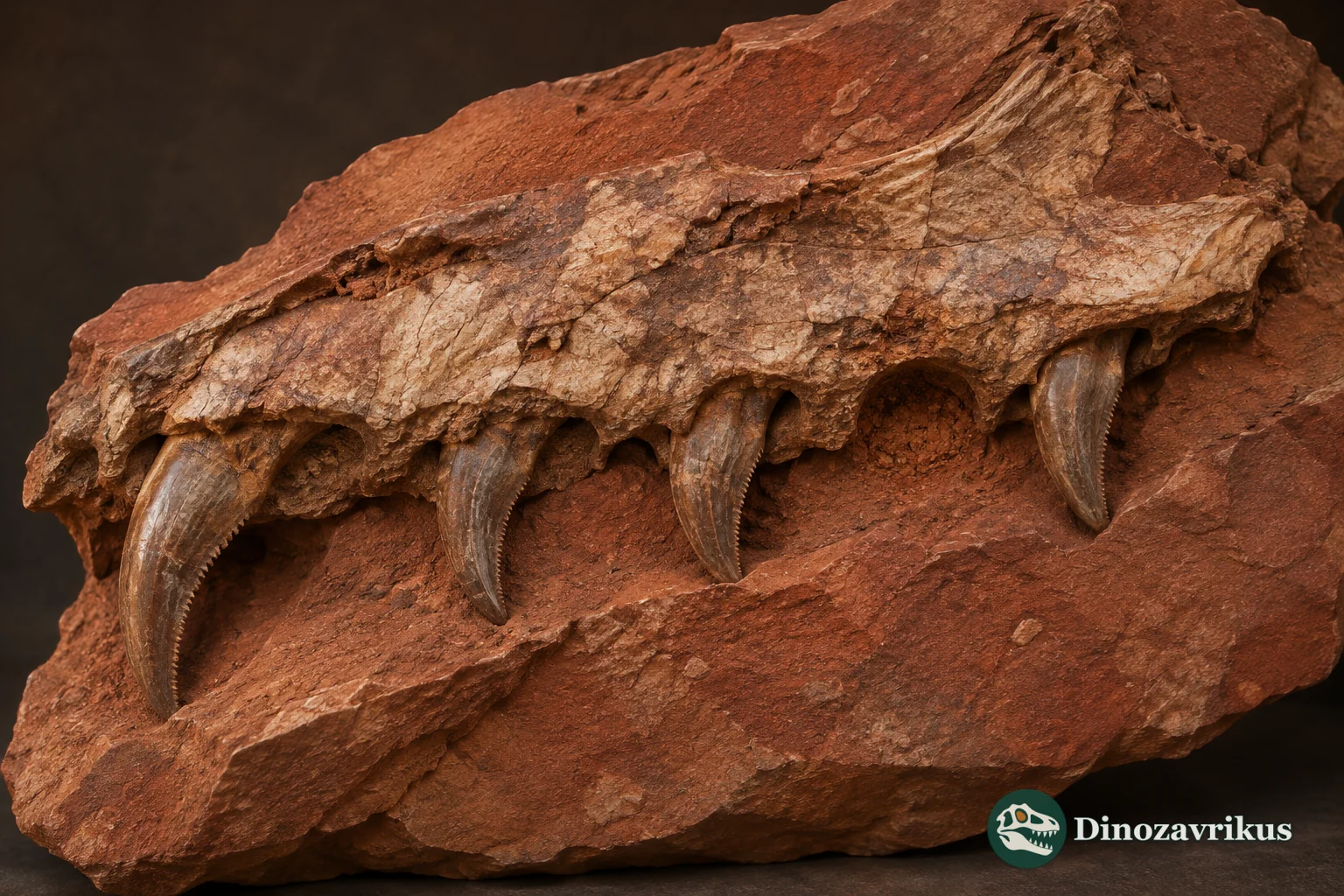
An upper jaw from specimen ZLJT01 has one tooth socket closed by remodelled bone. A tooth that simply dropped out after death would have left an open socket. The animal lived long enough after the loss for bone to grow over the empty space. The jaw provides no direct evidence of what caused the injury.
Frequently asked questions
When did Sinosaurus live?
It lived in the Early Jurassic. The species epithet triassicus reflects the history of dating the deposits.
How many crests did Sinosaurus have?
The skull has two long bony crests, one on each side above the snout.
What did Sinosaurus eat?
Its teeth support a carnivorous diet. They do not identify the animals it fed on.
How can researchers tell that a tooth was lost during life?
Bone grew around the empty socket and closed it. That remodelling could only happen while the animal was alive.