

Socognathus was a Late Cretaceous lizard from North America. Its type species was named from a robust lower jaw with tall pointed teeth. A later find in Alberta preserved part of the snout with upper and lower jaw bones from both sides.
Quick facts
| Group | Polyglyphanodonts (Polyglyphanodontia), chamopsiids (Chamopsiidae) |
|---|---|
| Age | Late Cretaceous, Campanian and Maastrichtian |
| Region | North America, Canada and the United States |
| Type species | Socognathus unicuspis |
| Scientific name | Socognathus |
| Diet | Diet unknown |
What can the fossils tell us?
The holotype UALVP 29739 has 11 intact teeth and the bases of six more. The bone is reinforced where the two halves of the lower jaw met.
Parts of the upper and lower jaws occur together in the Kleskun Hill material. Their features support placing the genus among chamopsiids.
The fossils show how high and curved the teeth were and where accessory cusps occurred. These traits alone cannot establish what the animal ate.
A dentary from Alberta
Ke-Qin Gao and Richard Fox named Socognathus unicuspis in 1991. The holotype, UALVP 29739, is an incomplete left dentary from Railway Grade in Dinosaur Provincial Park. The genus name refers to a strong jaw, and the species name refers to the single point on each tooth.
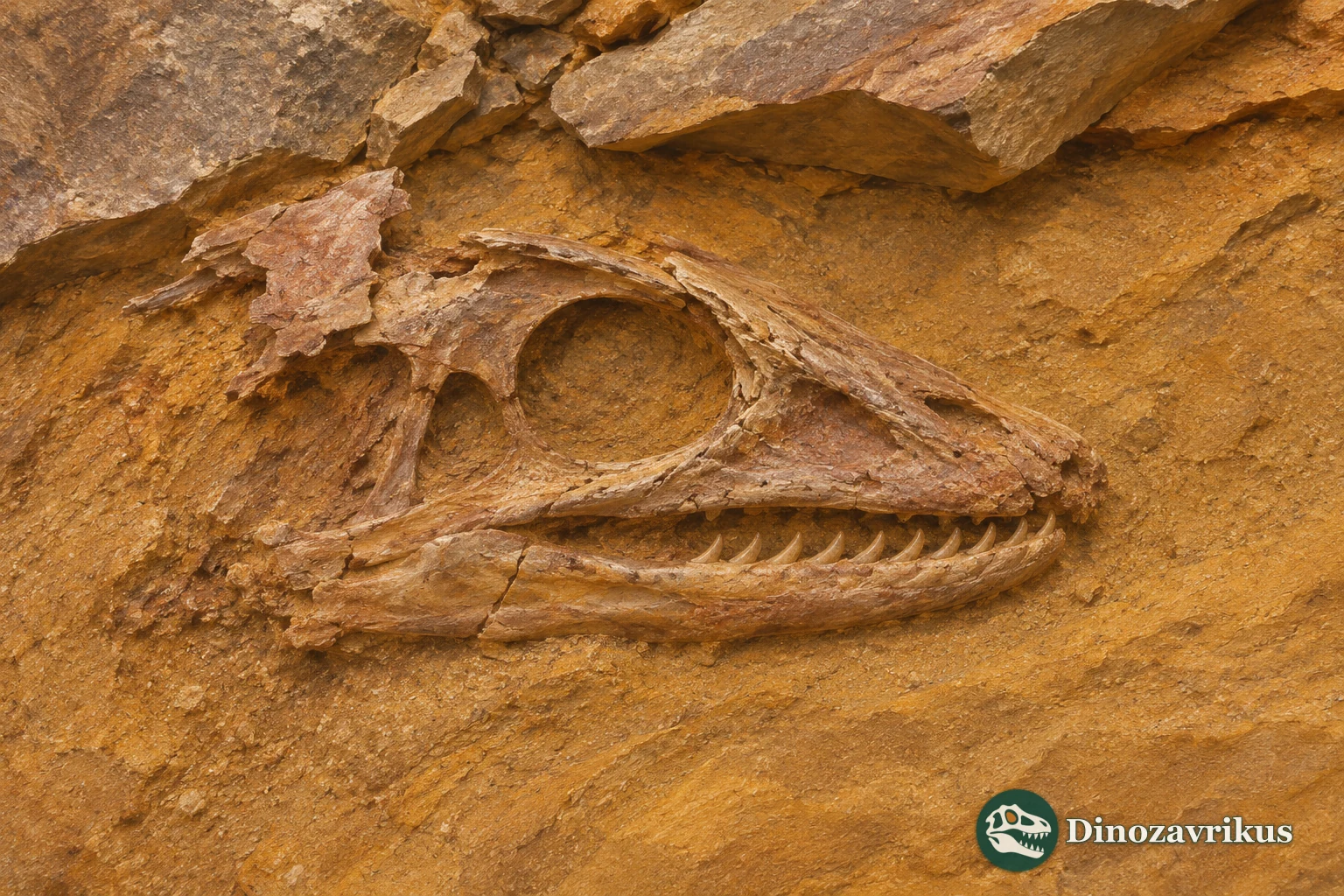
A partial snout from Kleskun Hill
Campanian deposits of the Wapiti Formation yielded UALVP 50958, a partial snout with parts of both upper jaws and both dentaries. The find helped refine descriptions of tooth spacing and of other traits used to distinguish Socognathus. Its fellow chamopsiid Meniscognathus differs in the ridges and grooves on its teeth.
The younger species from Wyoming
Socognathus brachyodon comes from the Maastrichtian Lance Formation. Its name was proposed in a 2012 study and formally established in 2013. The holotype, YPM PU 16724, is a dentary. It differs from the Canadian species in having closely packed, bulbous teeth with accessory cusps.
Frequently asked questions
Where was the type species discovered?
It comes from Campanian deposits at Dinosaur Provincial Park in Alberta, Canada.
How do the teeth of the two species differ?
Socognathus unicuspis had tall single-pointed teeth. Socognathus brachyodon had closely packed, bulbous teeth with accessory cusps.
Has a complete skull been found?
No complete skull has been described. The Wapiti specimens include several skull bones and part of the snout.
Which group included Socognathus?
It is a chamopsiid, one of the Late Cretaceous polyglyphanodontian lizards.