

Sphagesaurus huenei was a crocodyliform from Upper Cretaceous Brazil. It was first described from a single tooth with coarsely textured enamel. A later skull showed how the back teeth were set at an angle in the upper and lower rows. The wear on those teeth provides evidence of movement during feeding.
Quick facts
| Species | Sphagesaurus huenei |
|---|---|
| Group | Sphagesauridae, Notosuchia |
| Age | Late Cretaceous |
| Localities | Bauru Group, São Paulo state, Brazil |
| Holotype | DGM 332-R, isolated maxillary tooth |
| Other material | RCL-100, nearly complete skull and anterior lower jaw |
What can the fossils tell us?
DGM 332-R came from a railway cut. The crown can be compared with other teeth, but it does not reveal the length of the animal.
The anterior lower jaw of RCL-100 was preserved against the upper jaw in occlusion. The angled crowns help explain the orientation of the working surfaces.
Tooth-to-tooth wear exposes dentine and leaves scratches. Their distribution supports complex jaw movement without identifying the diet.
A single tooth and a skull from the Bauru Basin
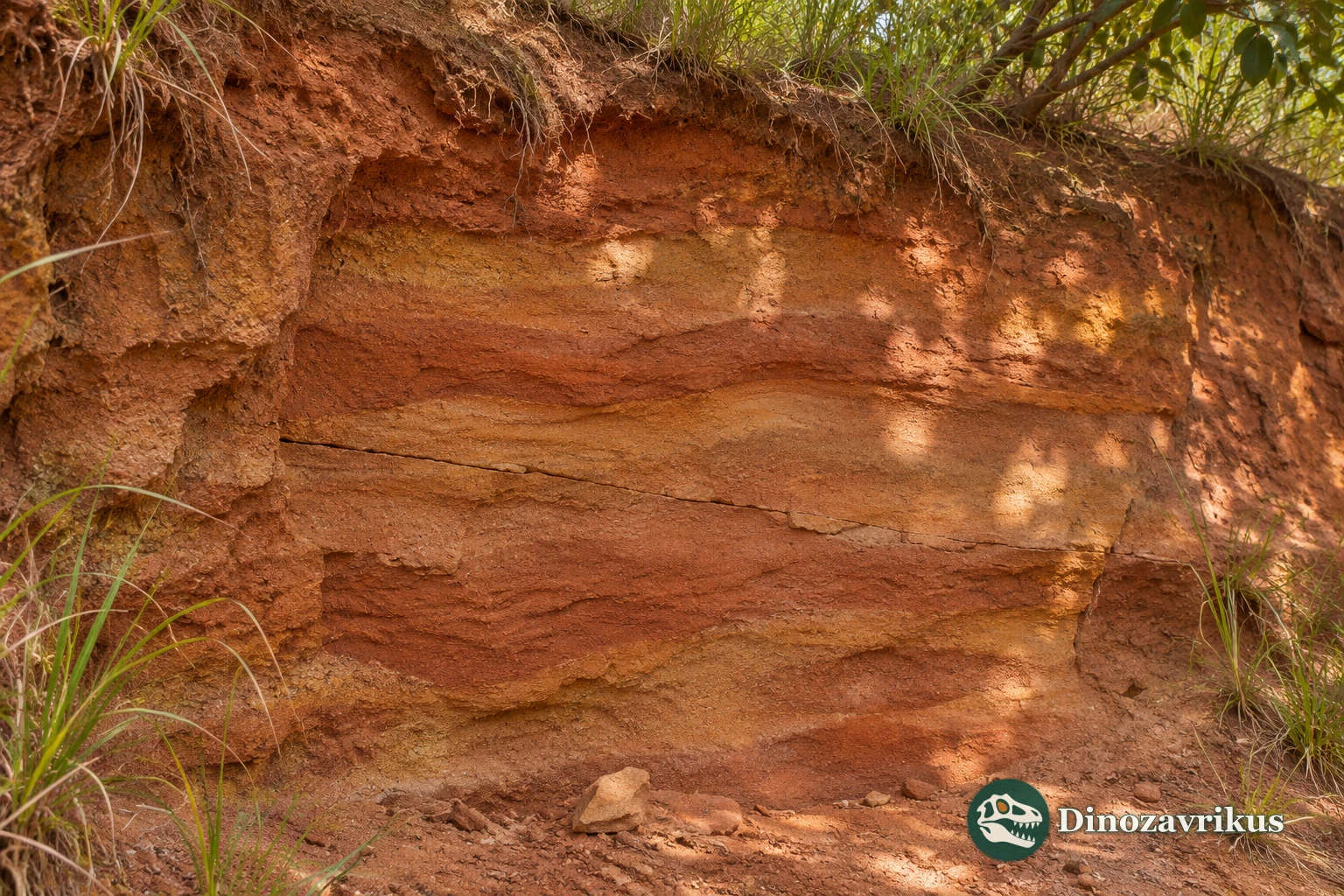
Llewellyn Ivor Price described Sphagesaurus in 1950. The type tooth, DGM 332-R, came from a railway cutting between Presidente Bernardes and Santo Anastácio. Another tooth, DGM 333-R, came from the Catanduva area. The original description did not identify the exact beds for these two finds.
RCL-100 was found during railway station construction at Buenópolis, in the Adamantina Formation. The snout and regions around and behind the orbits survived, though some bones of the skull roof were missing. Part of the front of the lower jaw remained in occlusion. Diego Pol described the skull in detail in 2003.
How the teeth met
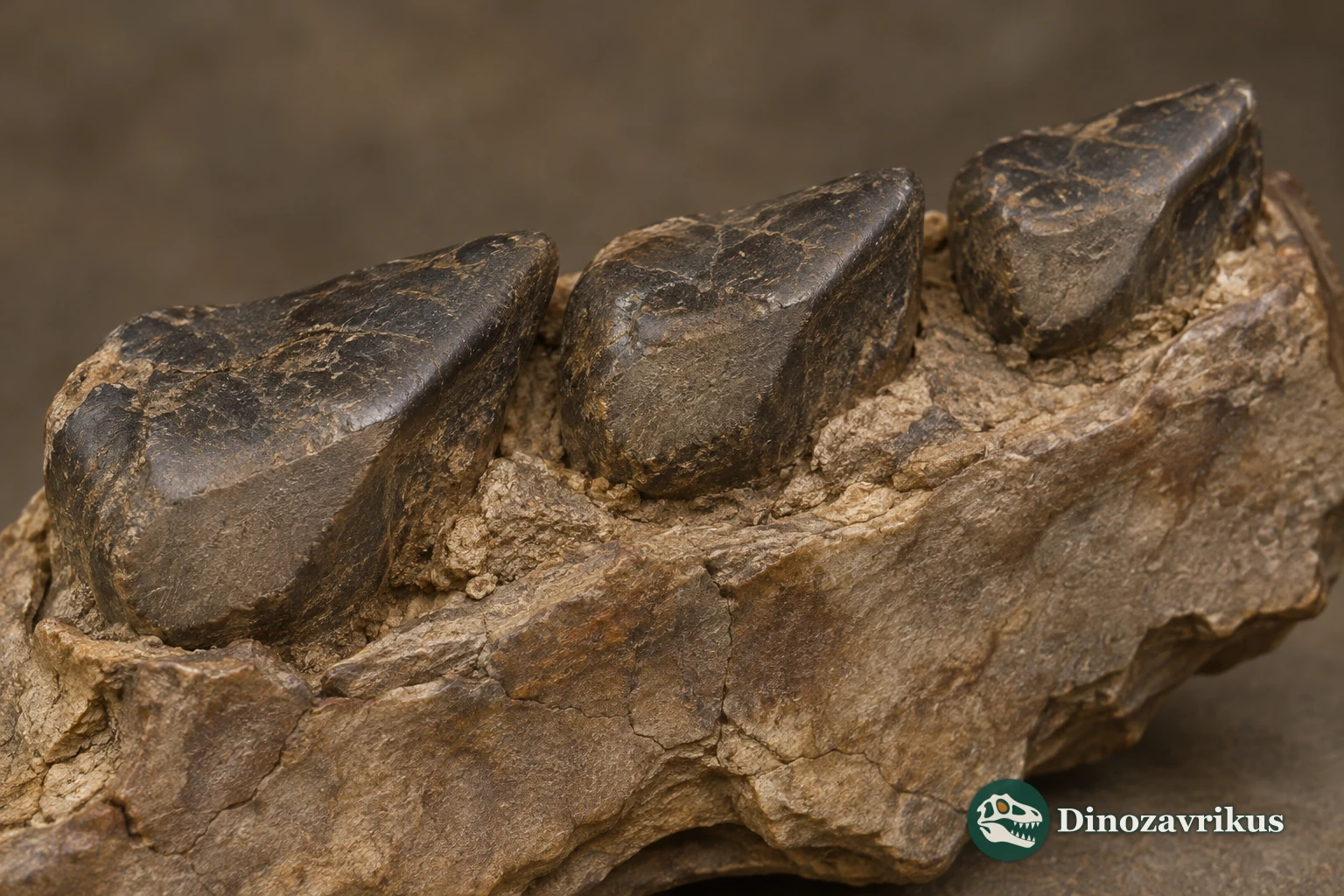
A toothless region at the front of the upper jaw precedes the large fang-like teeth. The shorter posterior crowns have a thick, textured coat of enamel and sit obliquely to the tooth row. Their triangular outlines point in opposite directions in the upper and lower jaws.
The opposing crowns have flat wear facets, some with scratches on the exposed dentine. Pol interpreted the position and direction of these marks as evidence for sliding both fore and aft and sideways, with contact concentrated on one side at a time. The arrangement explains the wear pattern without specifying the exact sequence of each movement.
Which species belong in the genus
Sphagesaurus gave its name to Sphagesauridae. A Brazilian species first described as Sphagesaurus montealtensis was later transferred to Caipirasuchus. Further preparation of its type skull and a new specimen exposed features consistent with that genus.
The back teeth of Sphagesaurus show that food was processed in the mouth. These crowns have been discussed in connection with possible plant consumption. Tooth contact alone cannot establish the proportions of plant and animal food.
Frequently asked questions
What is the type specimen of Sphagesaurus?
DGM 332-R is an isolated maxillary tooth from São Paulo state.
How can tooth wear show jaw movement?
Researchers compare the positions of the opposing crowns with the facets and scratches produced by contact.
Where was the skull found?
It came from the Adamantina Formation, exposed during construction at Buenópolis railway station.
Does the Monte Alto species still belong to Sphagesaurus?
It was originally placed there. Further fossil comparisons led to its transfer to Caipirasuchus.