

Spinostropheus is a theropod known from disarticulated fossils in Niger. The species was first placed in Elaphrosaurus. A new genus was named after comparison with another set of vertebrae, but the association between that second specimen and the original bones has since been doubted.
Quick facts
| Group | Theropods (Theropoda) |
|---|---|
| Age | Jurassic |
| Region | Africa (In Tedreft, Niger) |
| Diet | Exact diet unknown |
| Type species | Spinostropheus gautieri |
| Type material | MNHN 1961-28, including a neck vertebra |
| Deposits | Tiourarén Formation |
What can the fossils tell us?
The original material includes vertebrae and parts of limbs. In 2004 an isolated mid-neck vertebra was cited as the type specimen.
MNN TIG6 preserves articulated vertebrae with ribs. It was assigned to Spinostropheus in 2004, and later comparison found differences from the original material.
The geological relationships and comparison with other dinosaur faunas revised the estimated age. The precise level of the original collection remains undated directly.
The fossils from In Tedreft
Albert-Félix de Lapparent collected disarticulated theropod remains in 1959 near In Tedreft, north-west of Agadez. In 1960 he named them Elaphrosaurus gautieri in honour of the geologist F. Gautier. The original material is held at the Muséum national d'Histoire naturelle in Paris under the number MNHN 1961-28.
Paul Sereno, Jeffrey Wilson and Jack Conrad transferred the species to Spinostropheus in 2004. They cited a single mid-neck vertebra as the type and included an axial series from a second locality, Fako. A later detailed study of Elaphrosaurus re-examined the similarities on which earlier assignments had depended.
Why the Fako skeleton is treated separately
Specimen MNN TIG6 retains vertebrae from the neck through the front of the sacrum, with associated ribs. Its features helped support an early interpretation of Spinostropheus as a ceratosaur. In 2016 Oliver Rauhut and Matthew Carrano argued that MNN TIG6 differed markedly from the original bones. They suggested that the original material might instead represent an early tetanuran.
The original fossils support identifying Spinostropheus as a theropod. Its finer relationships remain uncertain. Reconstructions and length estimates based on the Fako vertebrae should be treated with caution because the two finds may represent different animals. No direct evidence establishes the diet of the type material.
A revised date for the Tiourarén Formation
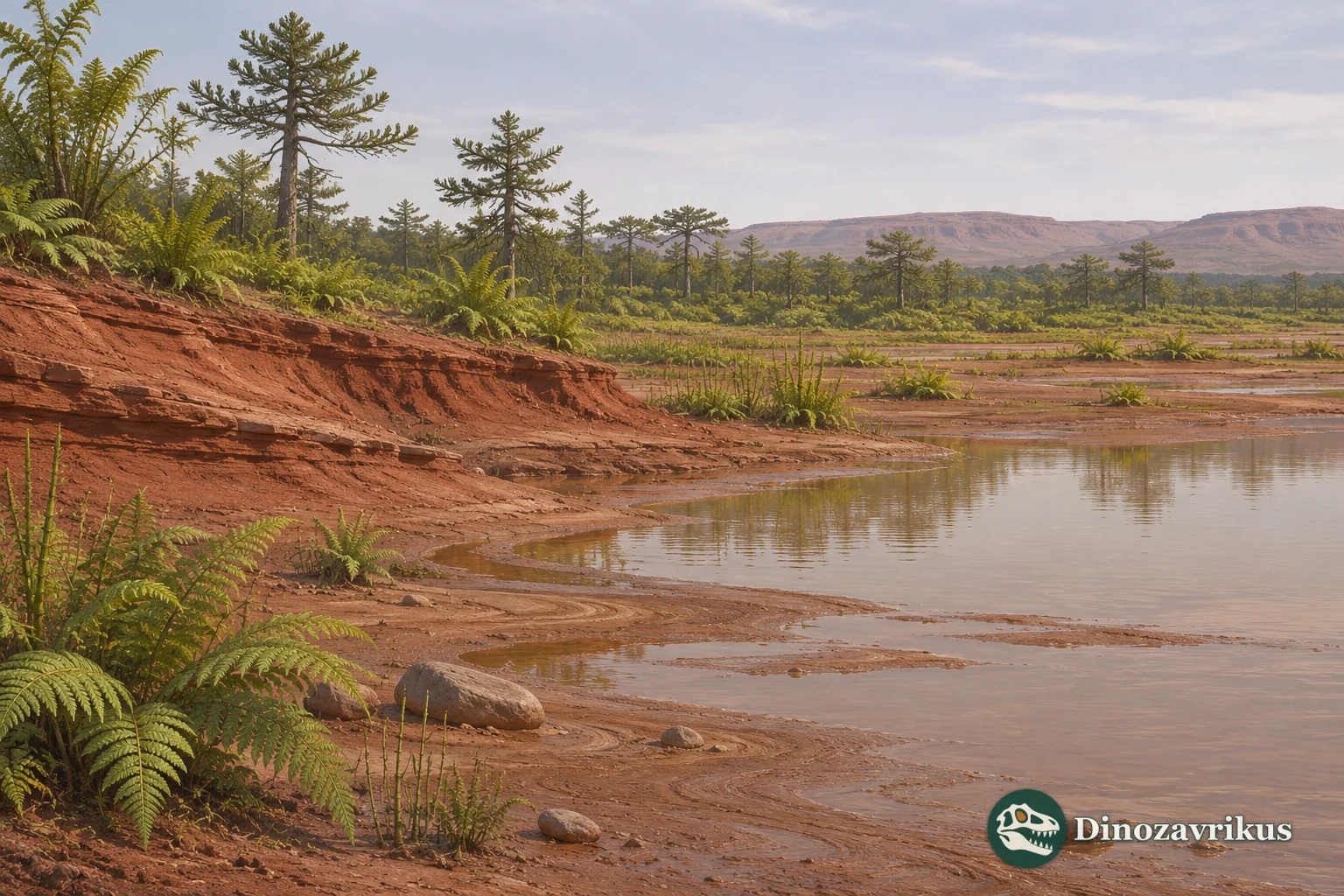
Early studies placed the deposits in the Early Cretaceous. In 2009 a reassessment of stratigraphic relationships and comparisons with other dinosaur faunas instead pointed to the Jurassic. Late Middle Jurassic is a leading interpretation, with the beginning of the Late Jurassic also considered possible.
Frequently asked questions
Where did the type fossils come from?
The original material came from In Tedreft in Niger. The articulated vertebrae of MNN TIG6 came from Fako.
Why was it originally placed in Elaphrosaurus?
Lapparent interpreted similarities between the fragmentary fossils and Elaphrosaurus as evidence of a common genus. A separate name was introduced in 2004.
Did Spinostropheus live in the Jurassic?
Later studies favour a Jurassic age for the formation, probably late Middle Jurassic. The Early Cretaceous date comes from older accounts.
How long was Spinostropheus?
Its length is difficult to establish from the original bones. Early estimates depended in part on a better preserved vertebral series whose attribution is disputed.