

Symphysurina is a genus of trilobites known from strata around the Cambrian–Ordovician transition in Laurentia. Its type species, S. woosteri, was published by Charles Doolittle Walcott in 1924 from a name and description prepared by E. O. Ulrich. The Smithsonian account quotes Ulrich's manuscript and records the features used to recognise the species.
The genus became widely discussed because the Symphysurina Zone was once divided into subzones and used to approximate the base of the Ordovician in some platform sections. Later work found the old three-part scheme untenable and described species from the uppermost Cambrian that clarified the zone's lower portion. The formal boundary is defined elsewhere, using a conodont first-appearance datum at Green Point, Newfoundland. Symphysurina belongs in the ancient arthropod catalogue and in the fossil record of the Cambrian–Ordovician transition.
Quick facts
| Scientific name | Symphysurina Ulrich in Walcott, 1924 |
|---|---|
| Type species | Symphysurina woosteri |
| Group | Trilobita; assigned to Symphysurinidae by Loch and Taylor |
| Age | Upper Cambrian and Lower Ordovician records are reported |
| Boundary context | Species occur in strata around the system transition |
| Type description | Walcott's 1924 account quotes Ulrich's manuscript diagnosis |
| Main uncertainty | A Symphysurina biozone is not a fixed boundary marker by itself |
What can the fossils tell us?
Walcott's 1924 Smithsonian monograph illustrated Symphysurina woosteri and quoted Ulrich's manuscript description. That account records an approximately 3 cm by 2 cm carapace estimate for the type species; it is not a measured range for every species in the genus.
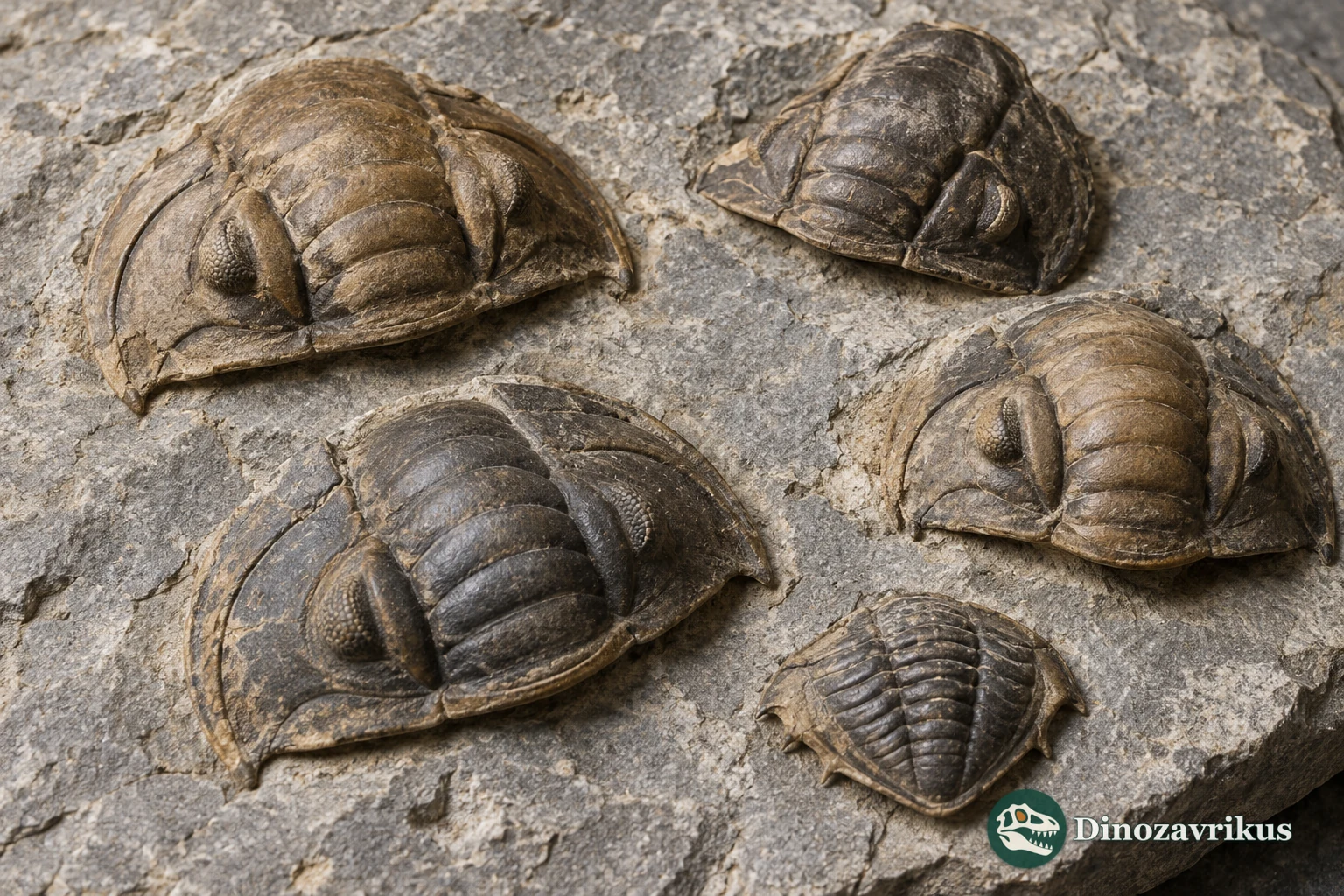
The published account describes a strongly convex cranidium that widens forward from the eyes, with a low median ridge, moderate palpebral lobes and small posterior limbs. These are observations from the named form, not a complete description of every referred specimen.
Loch and Taylor described Symphysurina ethingtoni and S. straatmannae from the uppermost Cambrian. Their comparison with lower Ordovician taxa helped distinguish the lower and upper parts of the traditional Symphysurina Zone.
The earlier use of the base of the S. bulbosa Subzone as a convenient proxy for the system boundary was questioned. The boundary's formal definition rests on a conodont datum at Green Point, Newfoundland, not on the genus name alone.
Ulrich's manuscript and Walcott's 1924 publication
The name Symphysurina woosteri appears in Walcott's 1924 Smithsonian Miscellaneous Collections monograph, where it is credited to Ulrich's manuscript. Walcott illustrated the species but noted that it had not previously been described. The work prints a quotation from Ulrich's diagnosis, giving a rare view of how the name entered the literature.
That quoted description calls the carapace medium-sized, approximately 3 centimetres long and 2 centimetres wide. It describes a strongly convex cranidium, a low median ridge, a shape that expands forward from the eyes, and moderately sized palpebral lobes. Those values and features belong to the account of S. woosteri; they should not be presented as a measured maximum for the entire genus.
The history also illustrates a practical point in trilobite taxonomy: an illustrated specimen, a manuscript diagnosis and a later formal redescription are different kinds of evidence. The name's authorship and type concept have to be read from the publication record rather than inferred from the age of the specimen alone.
Recognising the trilobite in incomplete material
Walcott's quotation describes a convex cranidium whose outline widens forward from the eyes. It notes a low median ridge, a rimmed anterior margin and palpebral lobes positioned mostly behind the midlength. The posterior limbs are described as small and tapering. Several of these details can be obscured when a specimen is preserved as an internal mould or compressed into the rock.
Later studies distinguish species through combinations of cranidial and pygidial characters, as well as their stratigraphic positions. A fossil fragment identified as Symphysurina does not automatically identify a particular species or age. The surrounding bed, associated fossils and preserved diagnostic surfaces all matter.
As in other trilobites, the animal's calcified dorsal exoskeleton is much more likely to be preserved than its soft appendages or behaviour. A reconstruction can be anatomically plausible without showing directly preserved colour, movement or feeding.
The genus and the Symphysurina Zone
The genus name and the biostratigraphic zone are related but not interchangeable. A fossil zone is a working interval defined by the distribution of taxa in a region. In the Lower Ordovician Ibexian, the Symphysurina Zone was historically subdivided into the S. brevispicata, S. bulbosa and S. woosteri subzones. The base of the middle subzone was once considered a practical approximation of the Cambrian–Ordovician boundary in Laurentian carbonate-platform successions.
Loch and Taylor's study rejected the tripartite division as untenable. They described the new species S. ethingtoni and S. straatmannae from the uppermost Cambrian, alongside lower Ordovician taxa that helped distinguish the two portions of the zone. Their work improved regional biostratigraphic resolution; it did not move the formal boundary to a Symphysurina occurrence.
The Ordovician System's base is formally tied to the first appearance of the conodont Iapetognathus fluctivagus at Green Point in Newfoundland. Trilobites, including Jujuyaspis, provide important comparative context in other sections, but correlations may be affected by ecology, local preservation and changing species concepts. A zone can help locate an interval without serving as a universal, exact boundary line.
Where the boundary-interval fossils were collected
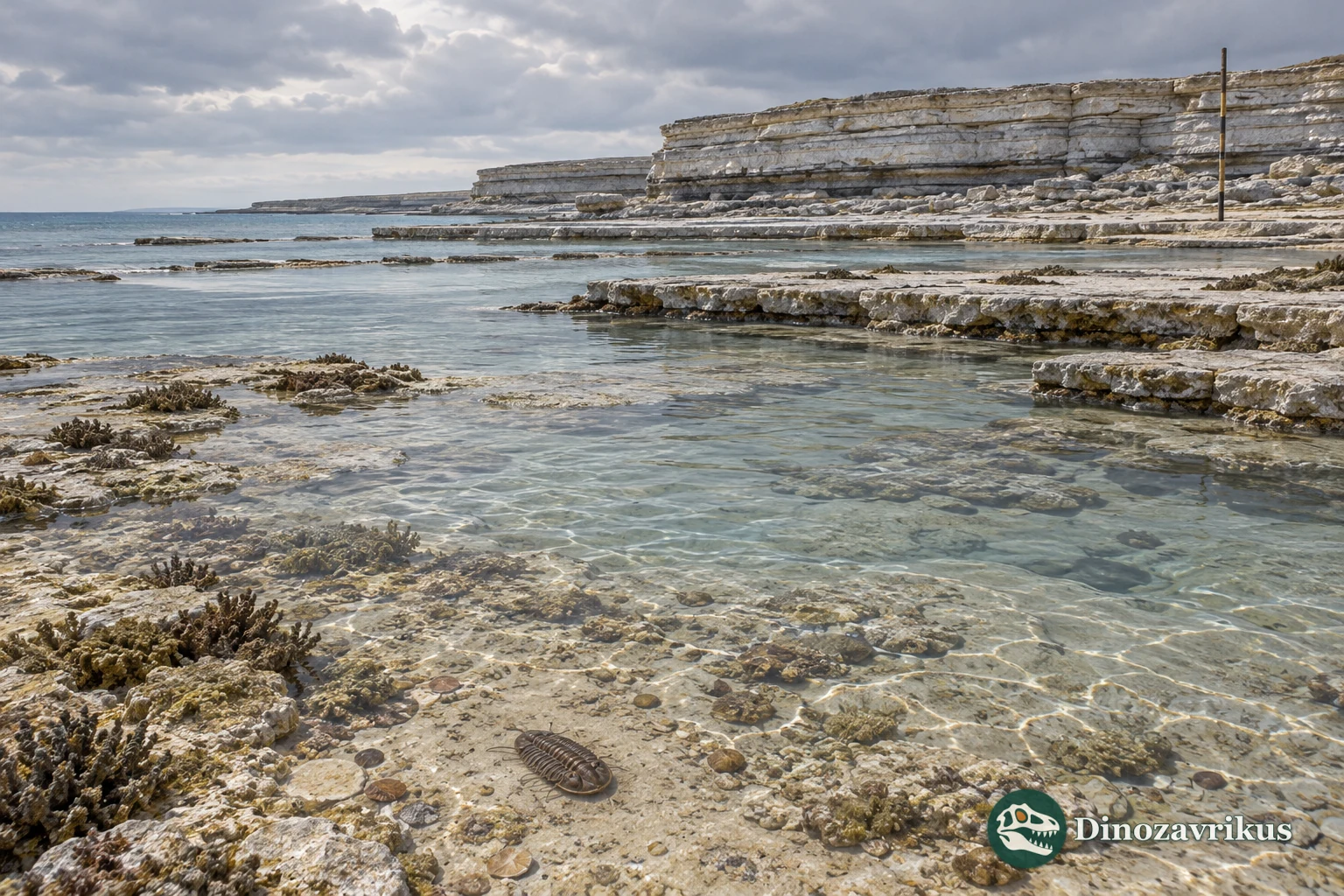
Loch and Taylor compared intensively sampled sections in the Bliss Formation of New Mexico, the Wilberns Formation of Texas and the House Limestone of Utah. These western United States records preserve Laurentian platform faunas through the boundary interval. The species assemblages and independent conodont evidence allowed the authors to distinguish Cambrian from Ordovician portions more confidently than the older subzone scheme alone.
These are not one continuous exposure or one local population. Each formation represents a different place and sedimentary history. Carbonate deposition, changes in water conditions and preservation affected which trilobite parts could be collected. The same taxon may therefore be common in one section and scarce in another without the difference reflecting only biological abundance.
Walcott's original description and the later western North American study address different samples and questions. The former anchors the species name; the latter revises how boundary-interval trilobite distributions can be used.
Ecology and the limits of reconstruction
Symphysurina had the calcified exoskeleton and jointed body plan characteristic of trilobites. Fossils support a marine setting for the deposits in which it occurs. They do not directly record a particular meal, swimming speed, burrowing habit or reproductive cycle.
Trilobites could enrol by flexing the jointed body, and similar structures in other trilobites support that general capability. Unless a specimen preserves the animal enrolled, however, that behaviour should be described as a group-level inference rather than a direct observation for every Symphysurina species.
The Cambrian–Ordovician transition saw substantial changes in marine communities, but a genus-level range cannot by itself explain those changes. Stratigraphic occurrences must be combined with independent conodont data, sedimentology and carefully revised taxonomy.
Evidence, inference and reconstruction
| Level | What belongs here |
|---|---|
| Direct fossil evidence | Cranidia, pygidia, surface features and their positions in sampled strata |
| Research inference | Species diagnoses, regional correlation and the revised Symphysurina Zone framework |
| Unresolved | Exact species range in unsampled sections, ecology and soft-body anatomy |
| Artistic reconstruction | Colour, soft tissues, behaviour and the specific seafloor scene |
Frequently asked questions
When did Symphysurina live?
Published records include upper Cambrian and lower Ordovician species from Laurentian sections around the system boundary. The range varies by species and locality.
What is the type species?
Symphysurina woosteri, published by Walcott in 1924 from Ulrich's manuscript name and description.
Does the Symphysurina Zone mark the exact base of the Ordovician?
No. The zone and its former subzones helped correlate regional platform strata, but the old three-part scheme was later rejected. The formal boundary is tied to a conodont datum at Green Point, Newfoundland.
How large was Symphysurina?
Walcott's 1924 account quotes an approximate length of 3 cm and width of 2 cm for S. woosteri. Those figures describe the type-species account, not a maximum for every Symphysurina species.