

Tendaguria tanzaniensis is a Late Jurassic sauropod from south-eastern Tanzania. It was named from two vertebrae from the front of the back. Their spines are particularly low, and scans show large spaces inside the bones. These fossils give a detailed view of one part of the skeleton. The overall proportions remain uncertain.
Quick facts
| Group | Sauropods (Sauropoda) |
|---|---|
| Age | Late Jurassic, probably Tithonian |
| Region | Africa (south-eastern Tanzania) |
| Diet | Herbivore |
| Type species | Tendaguria tanzaniensis |
| Syntypes | MB.R.2092.1 and MB.R.2092.2 |
| Formation | Tendaguru Formation |
What can the fossils tell us?
The type vertebrae are broad, with a low upper arch and prominent lateral processes. These two specimens establish the name.
CT scans reveal large chambers within the bodies and extending into the transverse processes, associated with air-filled soft tissues in life.
A single neck vertebra was tentatively referred to Tendaguria. The available bones leave that attribution unresolved.
Two type bones from Nambango
Both vertebrae came from Nambango, about 15 kilometres south-east of Tendaguru Hill. They are thought to come from the Upper Dinosaur Member of the Tendaguru Formation. The Museum für Naturkunde in Berlin holds the syntypes as MB.R.2092.1 and MB.R.2092.2.
The back bones were previously assigned to Janenschia. José Fernando Bonaparte, Wolf-Dieter Heinrich and Rupert Wild established Tendaguria tanzaniensis for them in 2000. The articulated series of tail vertebrae also once referred to Janenschia represents different material, subsequently described as Wamweracaudia.
Chambers inside the bones
In both type specimens the neural spine projects only slightly above the arch. CT scanning identified large openings within the weight-bearing bodies and spaces extending into the lateral processes. Sauropod vertebrae can preserve cavities left by air-filled extensions of the respiratory system.
A redescription published in 2019 recovered Tendaguria among turiasaurs, a group that includes Turiasaurus from Spain. Its exact place depends on the limited features available for comparison. A neck vertebra, MB.R.2091.31, also has a low neural spine and has been tentatively associated with Tendaguria. Its assignment remains uncertain.
Burial setting and body size
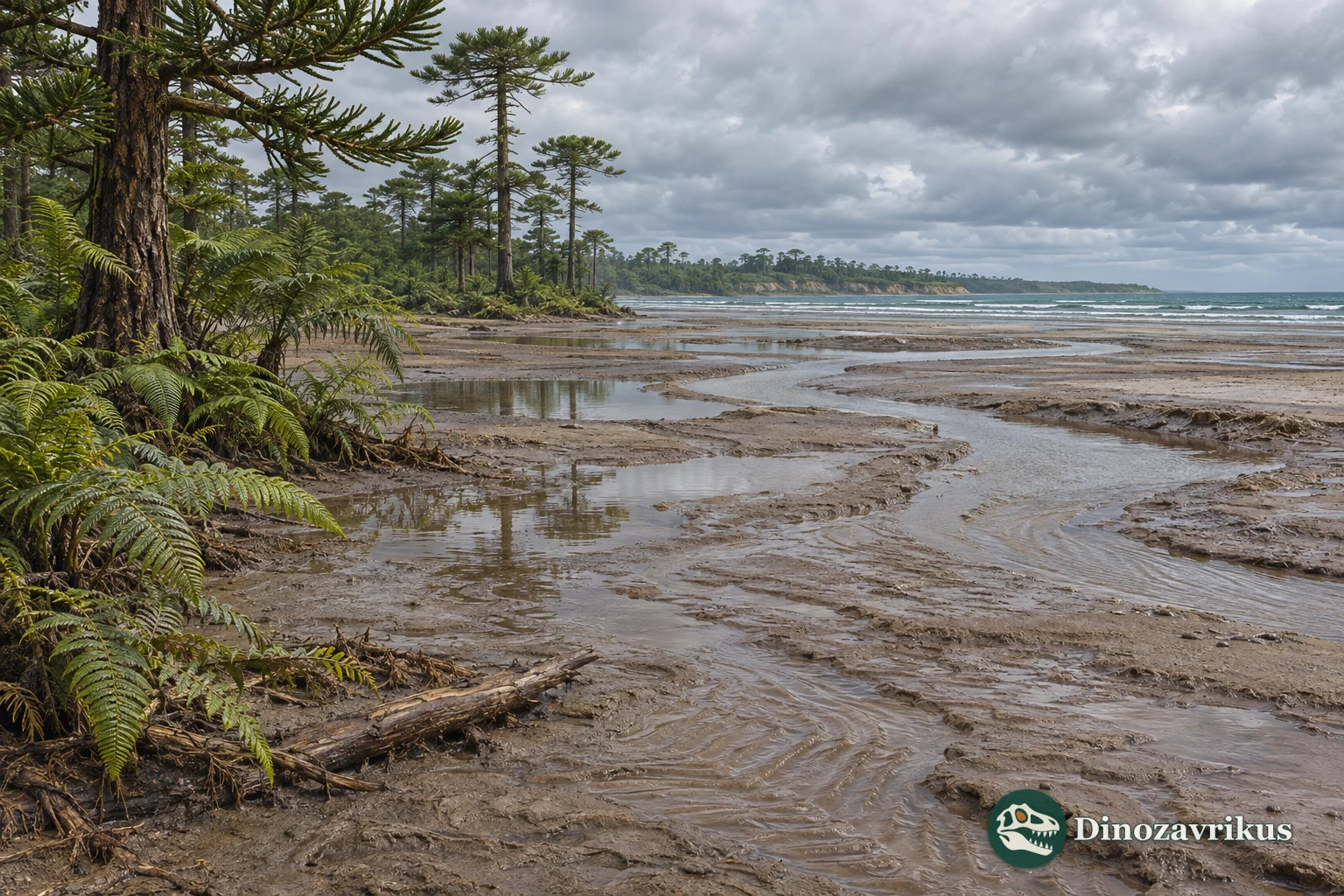
The Tendaguru Formation preserves coastal settings where marine influence varied over time. Sediments with land vertebrates alternate with deposits laid down under stronger marine influence. The two type vertebrae show the shape of the front of the back. They provide too little evidence for a reliable estimate of body length. A plant diet is inferred from its sauropod affinities.
Frequently asked questions
How many bones form the type material?
Two anterior dorsal vertebrae from Nambango. A neck vertebra was referred tentatively.
How were air spaces identified?
CT scans revealed large chambers in the bones. Their arrangement is consistent with invasion by air-filled extensions of the respiratory system.
What kind of sauropod was it?
A comparative analysis in 2019 placed it in Turiasauria. Further material would help test that result.
How long was Tendaguria?
A reliable length estimate is unavailable because the two confirmed bones come from a small part of the skeleton.