

Teridontus was a marine conodont known from microscopic phosphatic parts of its feeding apparatus. The type species occurs in rocks from the late Cambrian to the early Ordovician. The shapes of the separate elements offer clues to their original positions.
Quick facts
| Group | Conodonts |
|---|---|
| Age | Late Cambrian to Early Ordovician |
| Genus established by | James Miller, 1980 |
| Type species | Teridontus nakamurai |
| Type beds | Fengshan Formation, China |
| Material studied | Disarticulated feeding elements |
What can the fossils tell us?
Outline and fine lengthwise striations help identify the element. They cannot reveal the form of the animal's body.
These are morphological categories. A count of the different shapes does not establish the total number in one animal.
The range runs from the Proconodontus Zone to the Cordylodus angulatus Zone. A single element is insufficient to locate the system boundary.
From the first description to the modern genus
In 1967 Yasuo Nogami described Oneotodus nakamurai from the Yencho Member of the Fengshan Formation in northeastern China. James Miller established Teridontus in 1980 and designated it as the type species. The change in classification drew on comparisons of the cusp and base of the elements.
What magnification reveals
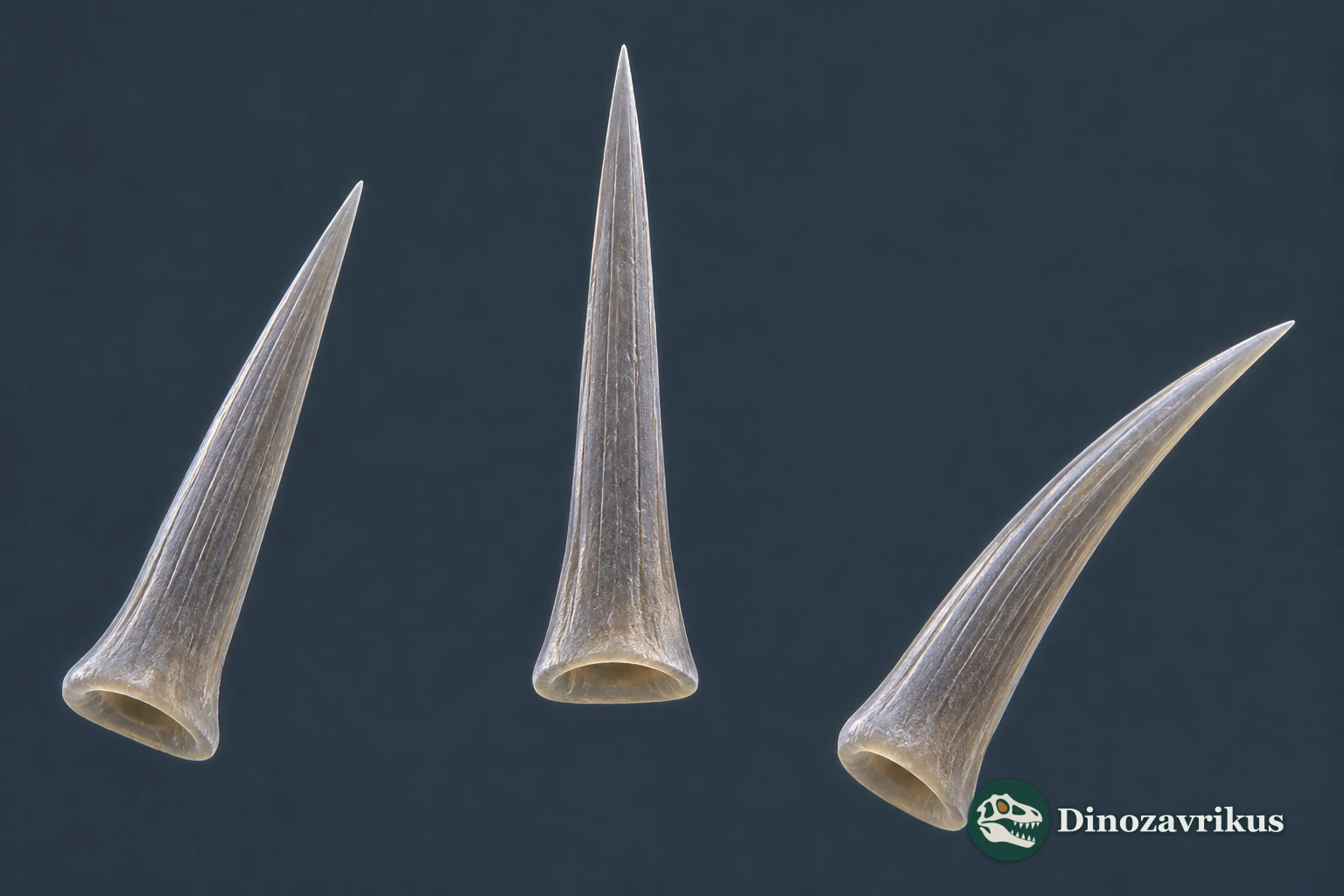
An element of Teridontus nakamurai resembles a cone with one pointed cusp. The cusp varies from upright to reclined. The cross-section is round to oval. A cavity opens at the base, and well-preserved surfaces show fine lengthwise striations.
Richard Nicoll distinguished six element forms in material from the Chatsworth Limestone in Queensland, Australia. Other authors grouped their material differently, partly because the collections themselves differ. Disarticulated specimens allow a model of the feeding apparatus, with uncertainty about the positions of individual elements.
Fossils that span a boundary
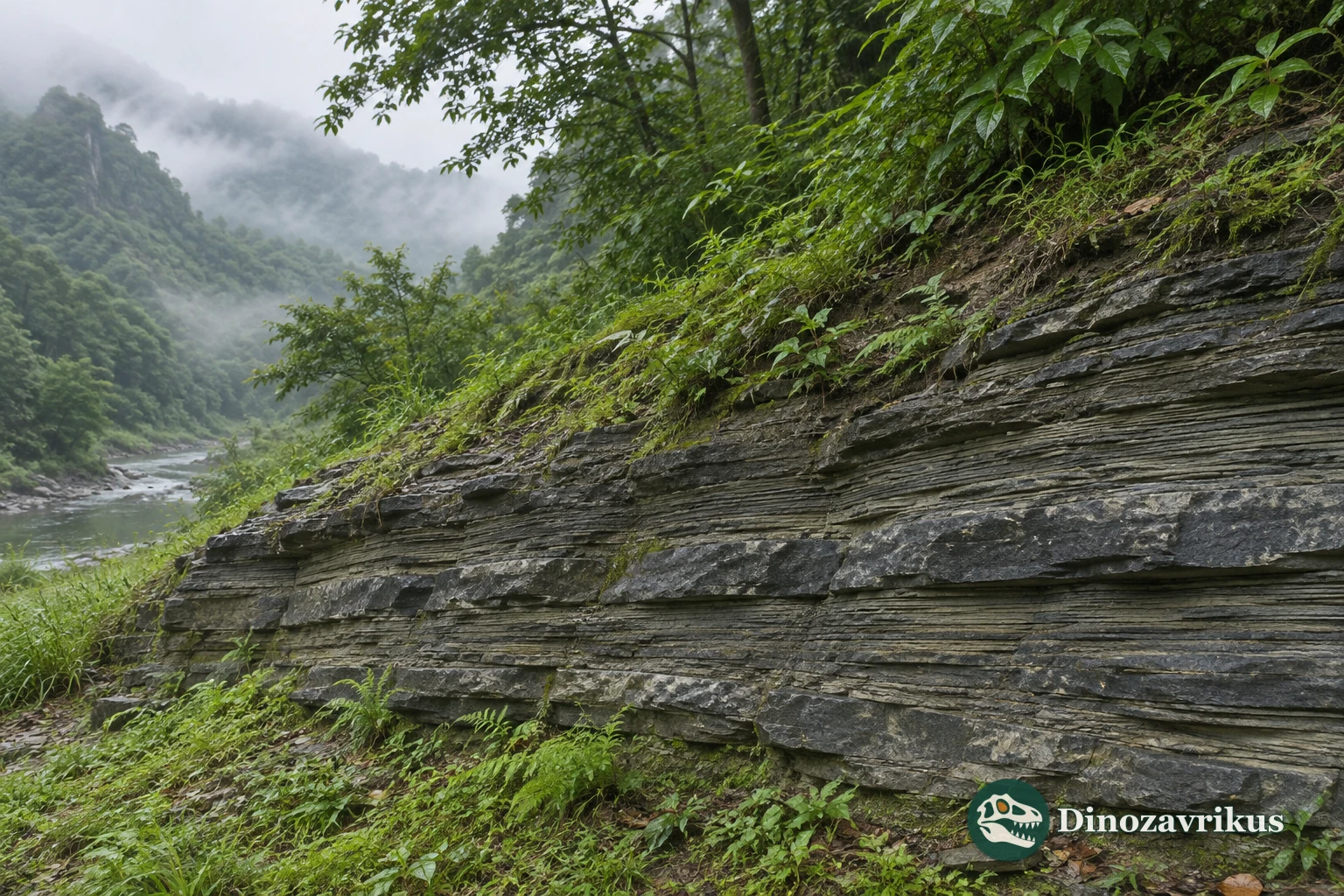
A set of 100 Teridontus nakamurai specimens was described from the Wangcun and Wa’ergang sections in Hunan. The species there ranges from the Proconodontus Zone to the Cordylodus angulatus Zone. The full fossil assemblage, including successive species of Cordylodus, allows geologists to distinguish older from younger beds.
A study of the Early Ordovician Santa Rosita Formation in Argentina identified 40 elements of the same species. The team assigned them to the P and S groups after comparing their bases and basal cavities. The total counts individual fossil elements. It does not show how many animals contributed them to the sediment.
Frequently asked questions
What is preserved of Teridontus?
Microscopic phosphatic feeding elements with a single cusp and a basal cavity. Fine lengthwise striations can be visible on well-preserved specimens.
What was the original name of the type species?
Nogami described it as Oneotodus nakamurai in 1967. Miller established Teridontus in 1980.
Why do six forms not mean six individual elements?
The forms separate isolated fossils by shape. An apparatus can contain more than one element of the same form.
Does Teridontus occur in the Cambrian or the Ordovician?
The type species occurs in both the Late Cambrian and Early Ordovician. China preserves the range across the transition, while Argentina also has Ordovician specimens.