

Tersomius was a small Early Permian temnospondyl from North America. A short skull from Texas established the genus. A later find from Oklahoma preserved enough of the skull for researchers to name another species and reconsider earlier identifications.
Quick facts
| Group | Temnospondyls, amphibamiforms |
|---|---|
| Age | Early Permian |
| Region | North America: Texas and Oklahoma, United States |
| Type species | Tersomius texensis |
| Scientific name | Tersomius |
| Diet | Unknown |
What can the fossils tell us?
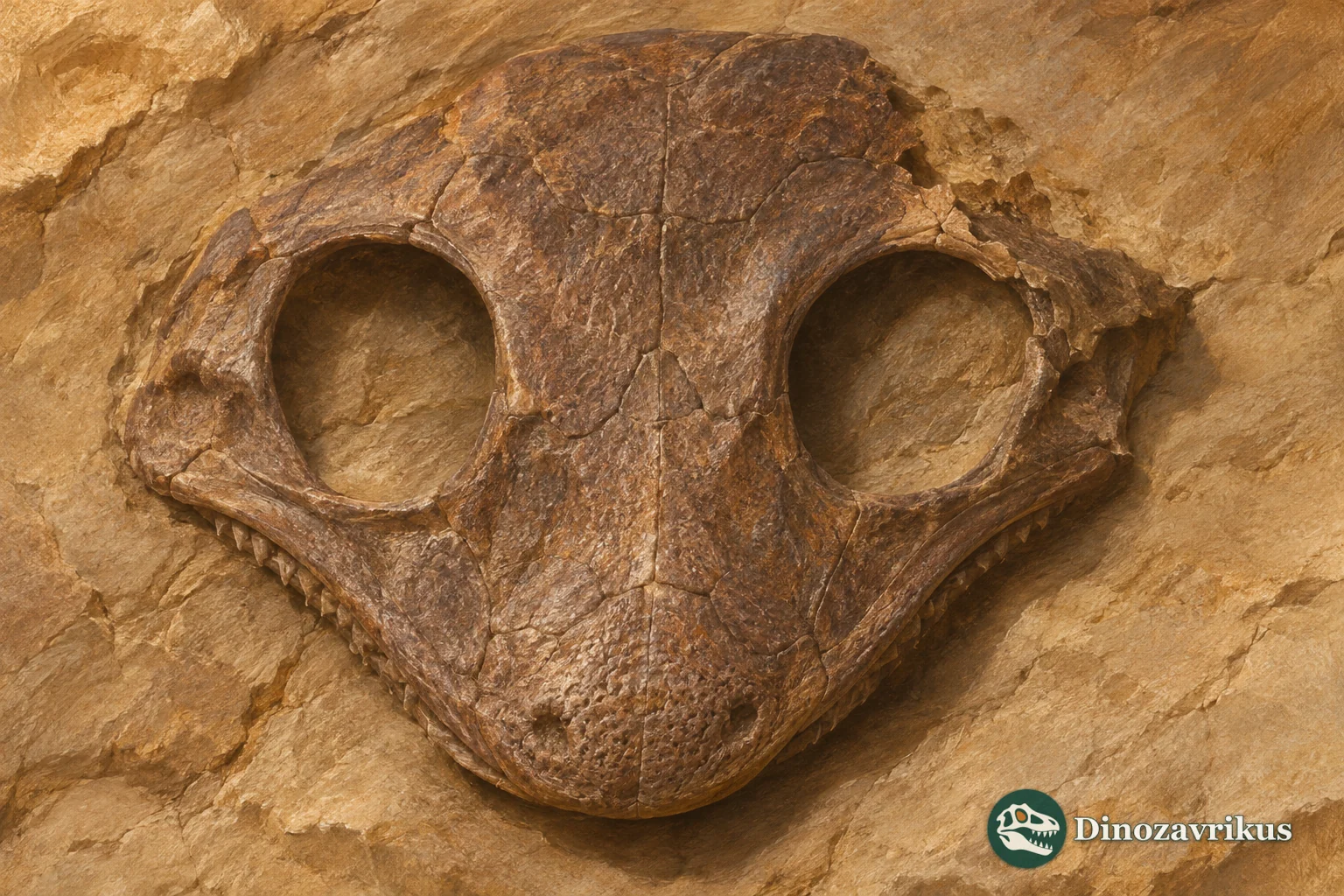
AMNH 4719 is the type skull from Texas. An almost complete skull from Richards Spur is the basis of the Oklahoma species.
Researchers compare the bones at the back of the skull and the curve of the upper jaw. Other temnospondyls share some of these features.
The skulls give a sense of head shape. They cannot establish total body length or skin colour.
The type skull and the Oklahoma find
Ermine Cowles Case named Tersomius texensis in 1910. Its type specimen, AMNH 4719, is a small, short and wide skull from Early Permian rocks in Texas. In 2013 Jason Anderson and John Bolt described T. dolesensis from a nearly complete skull found at Richards Spur in Oklahoma.
What distinguishes the skulls
The Oklahoma specimen has elongated tabular bones at the rear of the skull roof. Its upper jaw bends inward near the jaw joint. The inward curve also occurs in Doleserpeton, so the diagnosis depends on a combination of features.
Several skulls once included in Tersomius received other identifications after re-examination. For instance, the specimen MCZ VPRA-1415 was reassigned to Pasawioops mayi. These revisions help establish which variation belongs to Tersomius itself.
How bones accumulated at Richards Spur
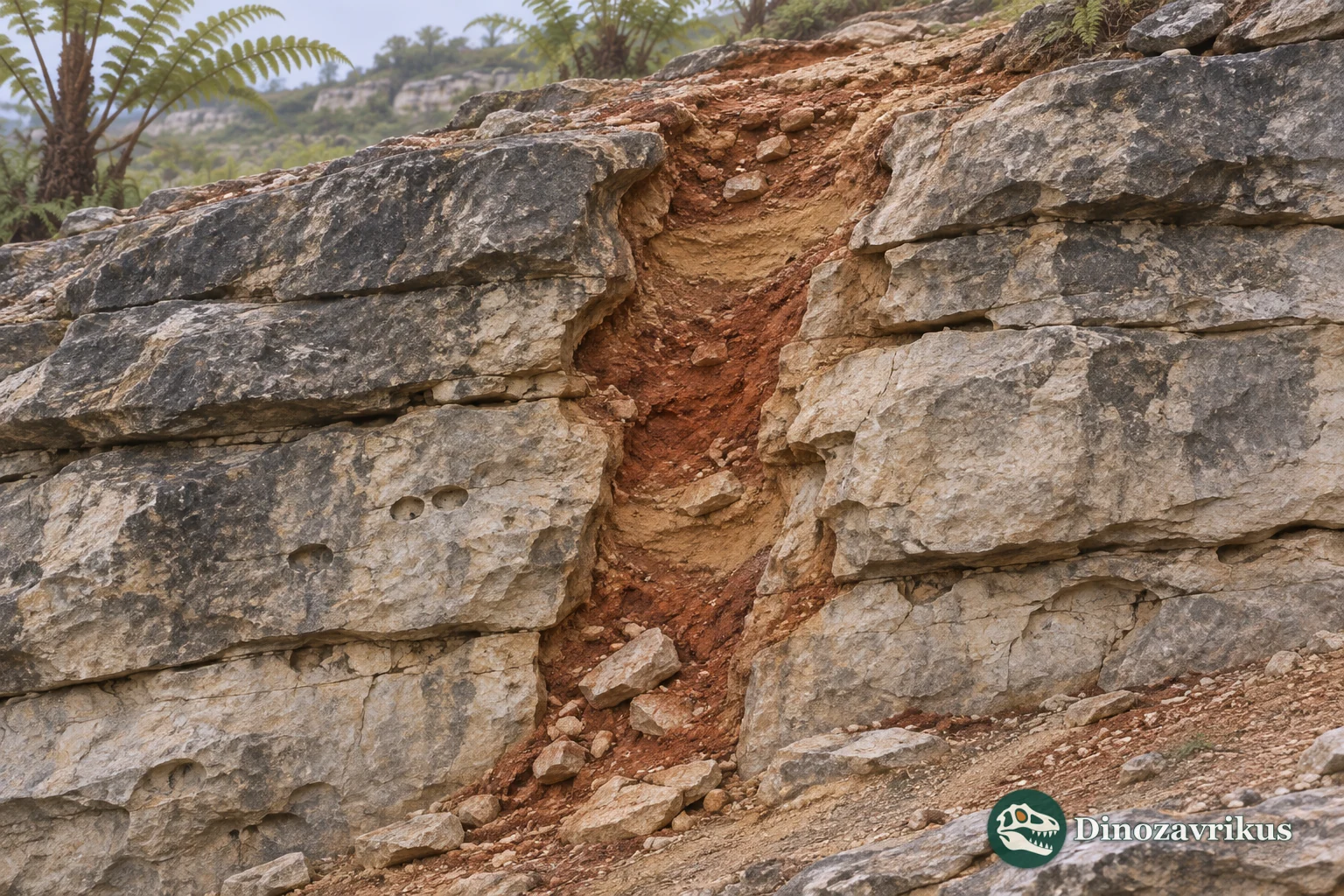
Early Permian sediment and vertebrate remains accumulated in fissures and cavities within much older limestone. The cave fill and its fauna establish the fossil context. They offer no direct evidence of what Tersomius ate.
Frequently asked questions
Where has Tersomius been found?
The type species comes from Texas. The Oklahoma species is known from Richards Spur.
What established the species from Oklahoma?
A nearly complete skull preserved enough of the skull roof and upper jaw to compare it with related amphibians.
Why were some fossils removed from the genus?
The combination of features on some skulls supported other identifications. MCZ VPRA-1415, for example, was reassigned to Pasawioops mayi.
How large was Tersomius?
The known skulls are small. They provide no reliable measurement of total body length.