

Thaisaurus chonglakmanii is an Early Triassic ichthyopterygian known from southern Thailand. Its type specimen preserves a nearly complete skull and incomplete postcranial remains. The fossil was only preliminarily described, and a 2025 conodont study revised the age of its type bed. Published body-length estimates are comparisons with another genus, not measurements of a complete Thaisaurus skeleton.
Quick facts
| Type species | Thaisaurus chonglakmanii Mazin et al., 1991 |
|---|---|
| Age | Late Spathian, Early Triassic, based on a 2025 conodont reassessment |
| Locality | Khao Thong area, north of Phatthalung, southern Thailand |
| Holotype | TF2454, a nearly complete skull with incomplete postcranial material |
| Size | A 2022 study estimated 53–84 cm by comparison with Chaohusaurus proportions |
| Classification | Early ichthyopterygian; its precise placement remains uncertain |
Evidence guide
TF2454 preserves a nearly complete skull and parts of the postcranial skeleton. The fossil is not a complete articulated body, so missing regions cannot be measured directly.
A 2020 study suggested an early Spathian age from an ammonoid found 2.4 m below the type fossil. A 2025 study identified Triassospathodus anhuinensis in the type bed and 5 m above it, supporting a late Spathian age. Both are biostratigraphic interpretations from associated fossils.
A 2022 study estimated 53–84 cm by applying skull-to-body proportions from Chaohusaurus to the roughly 10 cm Thaisaurus skull. This is an indirect estimate, not a measurement of the incomplete Thaisaurus skeleton.
The fossil has been treated as an early ichthyopterygian, but its short preliminary description and incomplete preparation limit comparisons. A proposed synonymy with Chaohusaurus has not become a settled identification.
Discovery and a preliminary description
Thaisaurus was discovered in 1988 by geologist Chonglakmani at Khao Thong, about 14 km north of Phatthalung in southern Thailand. The fossil came from weathered dolomitic limestone associated with poorly preserved ammonites. The available accounts document the region and discovery context, not a measured excavation log for the specimen.
Jean-Claude Mazin, Varavudh Suteethorn, Éric Buffetaut, Jean-Sébastien Jäger and Somchai Helmcke-Ingavat introduced Thaisaurus chonglakmanii in a preliminary 1991 description. The type specimen is TF2454. Its skull is nearly complete, but the postcranial skeleton is incomplete and the fossil has not received the same detailed redescription as better-known ichthyosaurs.
The species name honours Chonglakmani, who discovered the fossil. The available description established a named species, but its preliminary nature leaves anatomical details and comparisons open to renewed study.
A revised age for the type bed
The type locality lies in the Phukhaothong Dolomite Member of the Chaiburi Formation in the southern Thailand succession. Its age has been discussed using different index fossils. A 2020 study reported the ammonoid Marcouxia chaiburiensis 2.4 m below the type fossil and suggested an early Spathian age.
A 2025 study examined conodonts from the type bed and a level 5 m above it. The presence of Triassospathodus anhuinensis led the authors to propose a late Spathian age. This later biostratigraphic assessment revises the age interpretation; it does not mean that the same fossil was directly dated by a laboratory clock.
The revised age places Thaisaurus in the later part of the Early Triassic. Comparisons with other early ichthyopterygians, including Chaohusaurus and Utatsusaurus, are useful for studying the group's early diversity, but they do not turn an age similarity into proof of direct ancestry.
What the skull and skeleton preserve
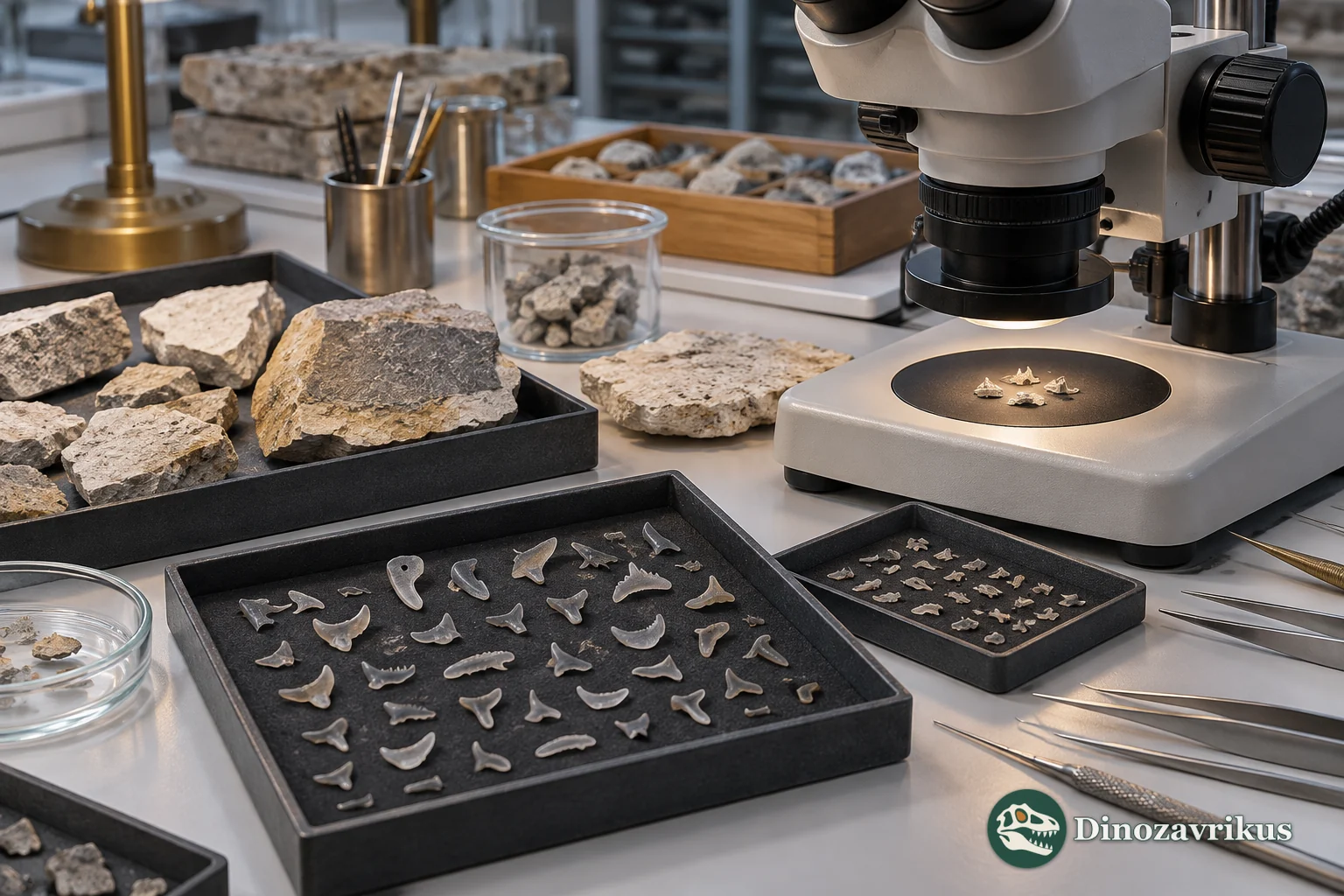
The nearly complete skull is the most informative part of TF2454. A 2022 study reported a skull length of about 10 cm and described the postcranial skeleton as incomplete. The fossil therefore supports comparisons of cranial form, but it does not preserve every feature needed for a complete anatomical reconstruction.
The preliminary description treated Thaisaurus as an early-diverging ichthyopterygian. Later authors have emphasized that the specimen is poorly known and not fully prepared. Some researchers have discussed whether it could represent Chaohusaurus, but a possible synonymy remains a question for renewed anatomical study, not an established replacement of the name.
A small skull can make a body-size estimate tempting, but estimates depend on which comparison animal supplies the skull-to-body ratio. The incomplete fossil does not preserve a full trunk and tail that could be measured directly.
Body size and limits of reconstruction
In 2022, researchers estimated a total length of 53–84 cm by applying proportions from Chaohusaurus to the roughly 10 cm skull of Thaisaurus. The range is a comparative estimate, not a measurement from a complete skeleton. It depends on the assumption that the two early ichthyopterygians had sufficiently similar proportions.
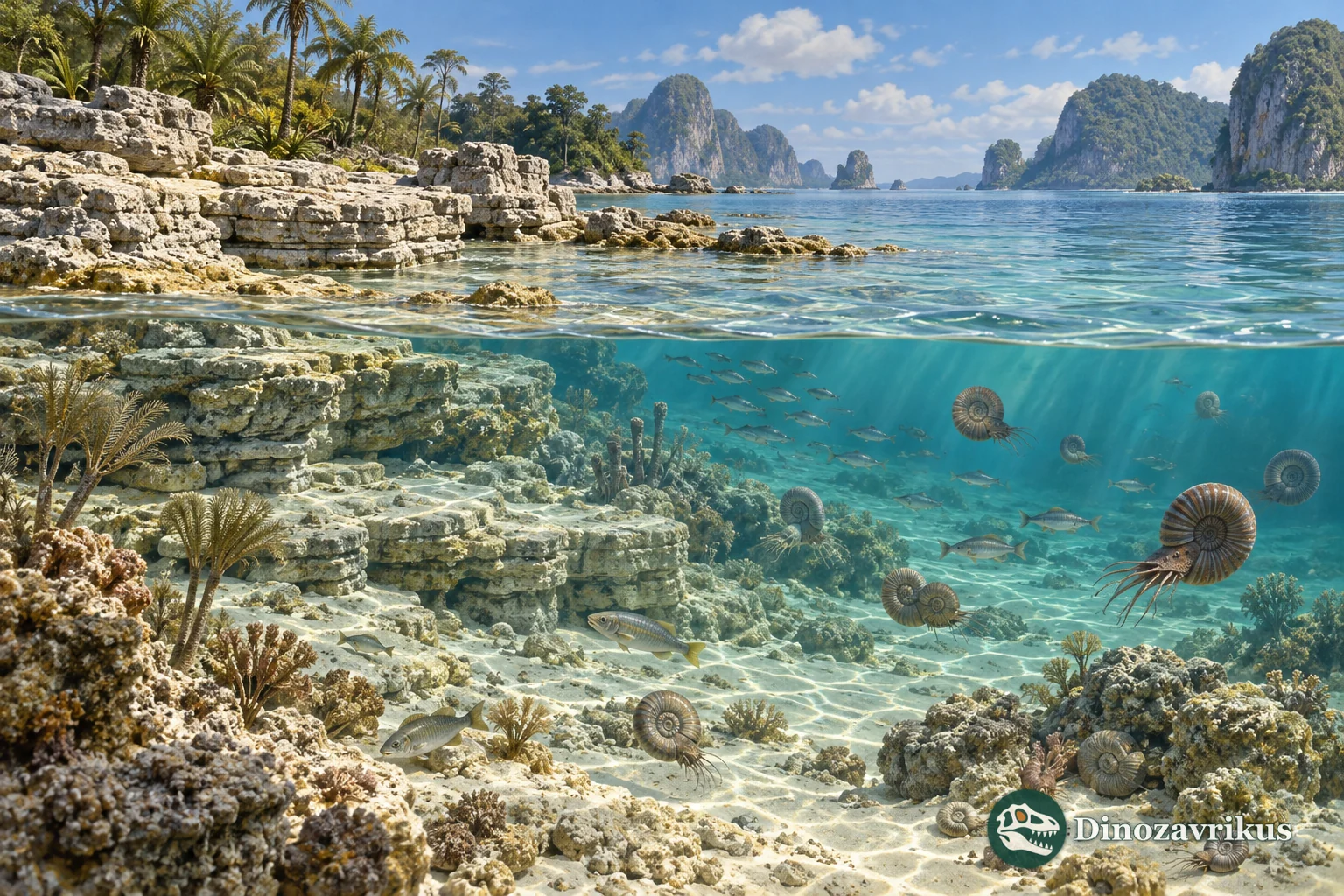
The known material does not establish the animal's diet, swimming speed, reproductive biology, growth pattern or soft-tissue anatomy. An early marine-reptile body plan can guide an illustration, but the exact outline and colour shown here remain artistic choices.
The short description, incomplete preparation and revised age make Thaisaurus valuable as a record of early ichthyopterygian diversity, while also explaining why several basic biological questions remain open.
Frequently asked questions
Where was Thaisaurus discovered?
It was found in 1988 near Khao Thong, about 14 km north of Phatthalung in southern Thailand, in weathered dolomitic limestone.
How old is Thaisaurus?
A 2025 conodont study supports a late Spathian age for the type bed. A 2020 ammonoid study had suggested an earlier Spathian age from a fossil found below the type specimen.
How long was the animal?
A 2022 paper estimated 53–84 cm by comparing its roughly 10 cm skull with body proportions in Chaohusaurus. This is an indirect estimate, not a measured complete skeleton.
Is Thaisaurus the same as Chaohusaurus?
That possibility has been discussed because the material is poorly known, but synonymy is not settled. Thaisaurus chonglakmanii remains the name used for the type specimen.