

Thanatosdrakon amaru was described from two individuals in the Plottier Formation of Argentina. One yielded associated bones of the trunk and limbs; the other is represented by a larger humerus. Their proposed seven- and nine-metre wingspans are estimates based on comparison. No skull is known, so the head in the cover illustration is speculative.
Quick facts
| Named species | Thanatosdrakon amaru, Ortiz David and colleagues, 2022 |
|---|---|
| Holotype | UNCUYO-LD 307, axial and limb bones |
| Paratype | UNCUYO-LD 350, isolated left humerus |
| Locality | Agua del Padrillo quarry PS-3, Mendoza, Argentina |
| Rock unit | Upper Plottier Formation |
| Age | Late Coniacian–early Santonian, Late Cretaceous |
| Estimated wingspans | About 7 and 9 metres for separate individuals |
What can the fossils tell us?
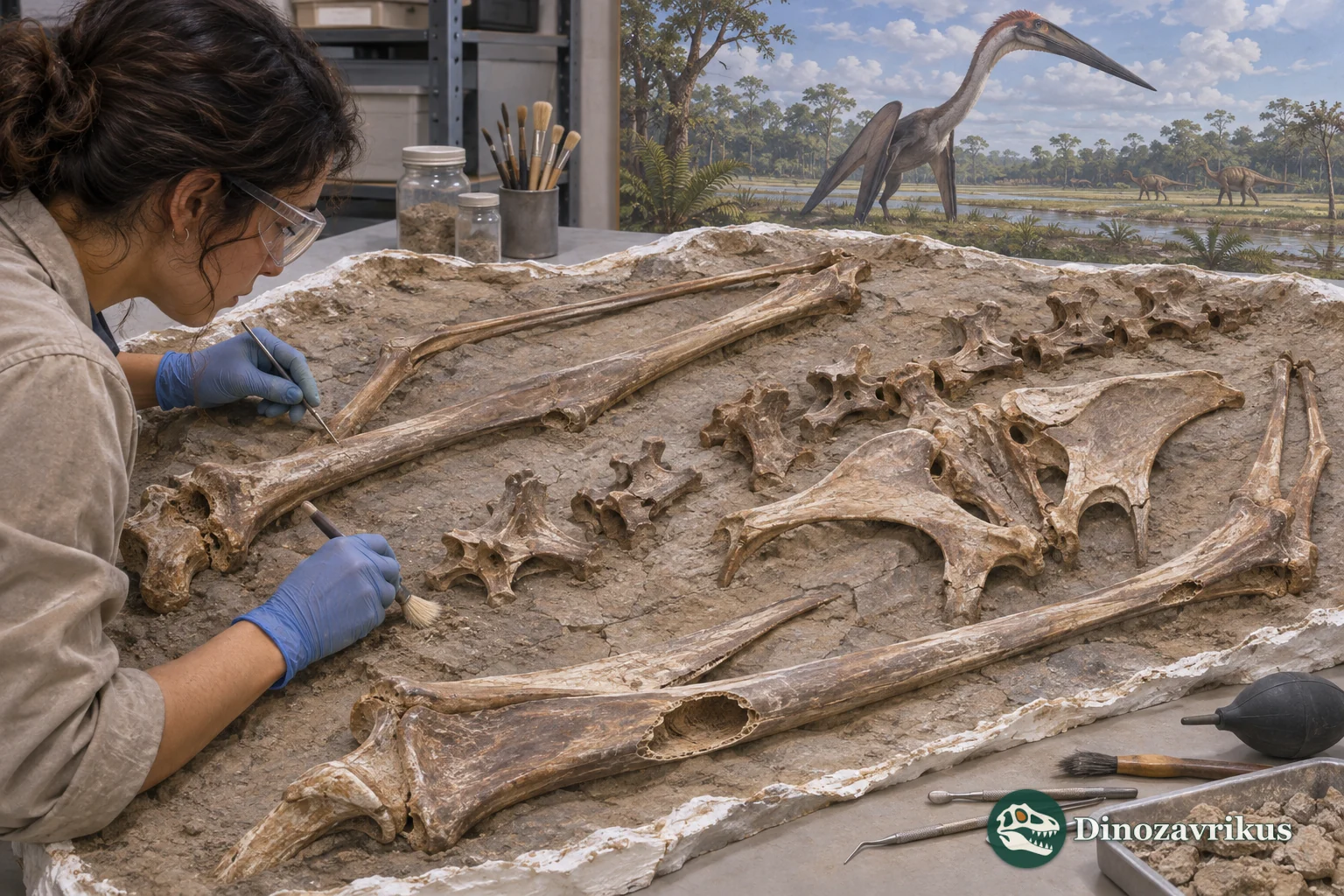
UNCUYO-LD 307 includes vertebrae, a notarium, pelvis and limb elements. The bones were associated but disarticulated; no head or entire wing was preserved.
UNCUYO-LD 350 is an isolated left upper-arm bone. It supports a size comparison but cannot reveal the complete skeleton or skull of its owner.
The 2022 authors inferred spans from preserved elements and comparisons with other pterosaurs. These are not measurements of two complete spread wings.
A 2025 study inferred limited transport and relatively rapid burial for the holotype. The separate humerus experienced stronger weathering and later compression.
Two fossils from Agua del Padrillo
Leonardo Ortiz David, Bernardo González Riga and Alexander Kellner named Thanatosdrakon amaru in 2022. The material came from the PS-3 quarry in the Agua del Padrillo sector of Mendoza and belongs to the collection of the National University of Cuyo. The genus name means 'death dragon'; the species name refers to Amaru from Andean mythology. These names say nothing about the living animal's behaviour.
Holotype UNCUYO-LD 307 includes a cervical vertebra, fused dorsal vertebrae called a notarium, further vertebrae, a sacrum, pelvis, shoulder-girdle parts and several wing and hindlimb bones. It is a substantial record for such a large azhdarchid, though the bones were disarticulated and the skeleton is incomplete. Paratype UNCUYO-LD 350 is one left humerus of a larger animal, not a second complete skeleton. Neither specimen includes a skull.
How large was it?
The 2022 description estimated a wingspan near seven metres for the holotype and about nine metres for the larger paratype. Those figures came from preserved bones and comparative proportions. No complete spread wing survives, so neither value is a direct measurement. The difference between two individuals does not by itself reveal their ages, sexes or growth rates.
The first phylogenetic analysis placed Thanatosdrakon among azhdarchids, within the quetzalcoatline group. That result compares anatomical characters; it is not an observed ancestry chain. Another South American azhdarchid, Aerotitan, is based on more limited material. Arambourgiania offers a comparison for large azhdarchids, but its bones cannot be substituted for missing parts of the Argentine specimens.
A floodplain and two burial histories
The Plottier Formation at this locality contains river sands and finer floodplain sediments. A 2025 taphonomic study recorded the bones' positions, weathering and deformation at PS-3. The holotype bones lay close together and show limited transport, consistent with relatively rapid burial after the carcass came apart. The isolated paratype humerus shows stronger weathering and was later compressed by sediment. Fossils found nearby therefore need not have identical burial histories.
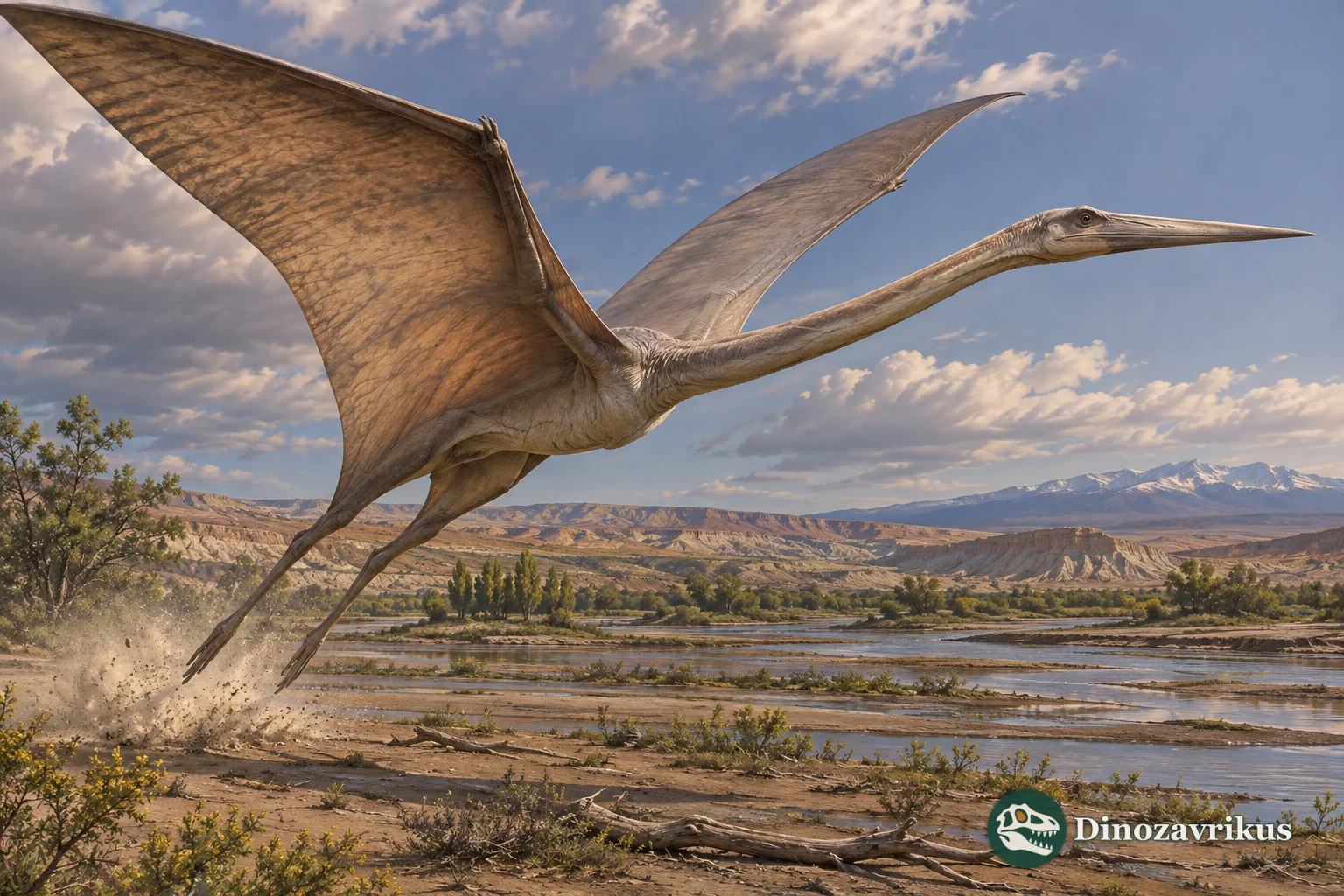
Other Late Cretaceous vertebrates occur in the region, but sharing a formation does not document encounters or food relationships. Without a skull, prey traces or stomach contents, the diet of Thanatosdrakon cannot be established directly. Its pictured long beak, colour and exact head posture depend on comparisons and artistic choices.
What the illustrations show
The laboratory image is an imagined scene of fossil study, not a photograph or precise arrangement of the PS-3 bones. The flight picture uses the known floodplain setting and general azhdarchid anatomy. Neither image measures how this particular individual launched or flew.
Frequently asked questions
How many Thanatosdrakon individuals were described?
Two: the more complete holotype UNCUYO-LD 307 and paratype UNCUYO-LD 350, an isolated humerus.
Where were the bones found?
Both came from quarry PS-3 at Agua del Padrillo in Mendoza, in the upper Plottier Formation.
Was a nine-metre wing measured?
No. Nine metres is a wingspan estimate for the larger individual based on a humerus and comparative proportions.
Is its head known?
No Thanatosdrakon skull was preserved in the described material, so illustrated beaks are speculative.