

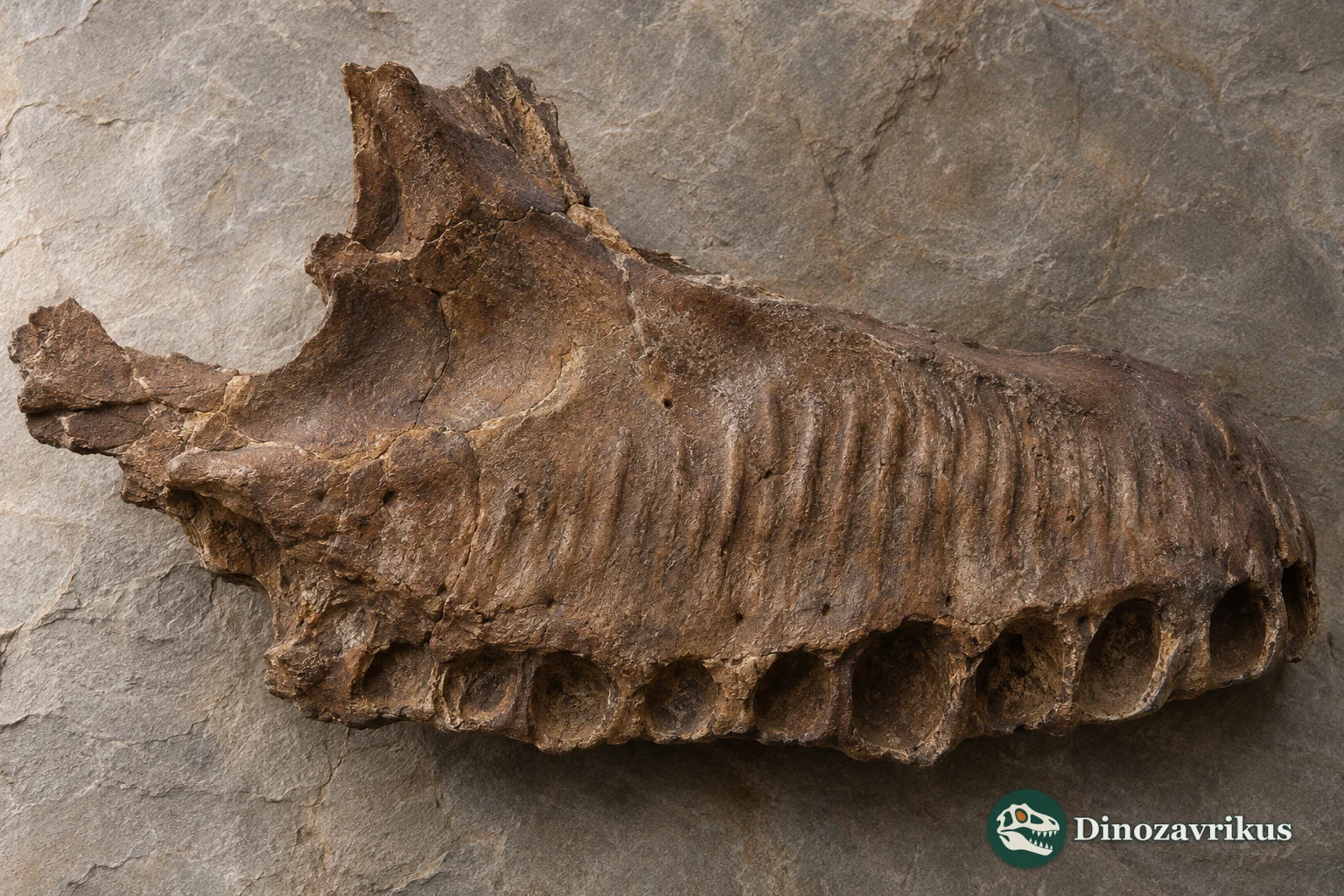
Thanatotheristes degrootorum was a predatory dinosaur from the Campanian of southern Alberta. Its upper jaw bears a row of near-vertical ridges above the tooth sockets. These ridges and features of other skull bones led researchers to describe a distinct genus closely related to Daspletosaurus.
Quick facts
| Group | Theropods (Tyrannosauridae) |
|---|---|
| Age | Late Cretaceous, Campanian |
| Region | North America (Alberta, Canada) |
| Diet | Carnivore |
| Type species | Thanatotheristes degrootorum |
| Holotype | TMP 2010.5.7 |
| Formation | Foremost Formation |
| Estimated skull length | About 80 cm in the type individual |
What can the fossils tell us?
The near-vertical ridges are on the outer face of the upper jaw. The authors diagnosed the dinosaur using several bones together.
The skull survived in fragments. The descriptive team used frontal width to estimate that the type individual had a skull about 80 centimetres long.
The holotype comes from Campanian strata near the Bow River. These beds are older than the better-known dinosaur-bearing units above them in southern Alberta.
Skull fragments from the Bow River
John and Sandra De Groot discovered the type material in southern Alberta. Jared Voris, François Therrien, Darla Zelenitsky and Caleb Brown described it in 2020. The species name honours the discoverers, and the Greek roots of the genus name give the meaning “reaper of death”.
The type specimen TMP 2010.5.7 comprises disarticulated skull bones, including the right maxilla and jugal, several bones from the back of the skull, the left frontal and both dentaries. A second specimen, TMP 2018.16.1, preserves part of the upper jaw. The Foremost Formation predates some of Alberta’s more productive dinosaur-bearing formations.
Ridges, relationships and a taxonomic debate
The ridges cross the outer surface of the maxilla immediately above the row of sockets. The original diagnosis also used features of the cheek and frontal bones. The authors recovered Thanatotheristes close to Daspletosaurus in a branch of the tyrannosaurines.
A separate study proposed that Thanatotheristes is a junior synonym of Daspletosaurus. The question is whether the combined differences distinguish two genera once variation among individuals is taken into account. New fossils preserving the same parts of the skull could help test the proposal.
What the bones say about size and habitat
The type specimen represents a large individual that was still growing. Comparison of the frontal bone with other tyrannosaurids gave an estimated skull length of about 80 centimetres. The absence of bones behind the skull makes its adult body length less certain.
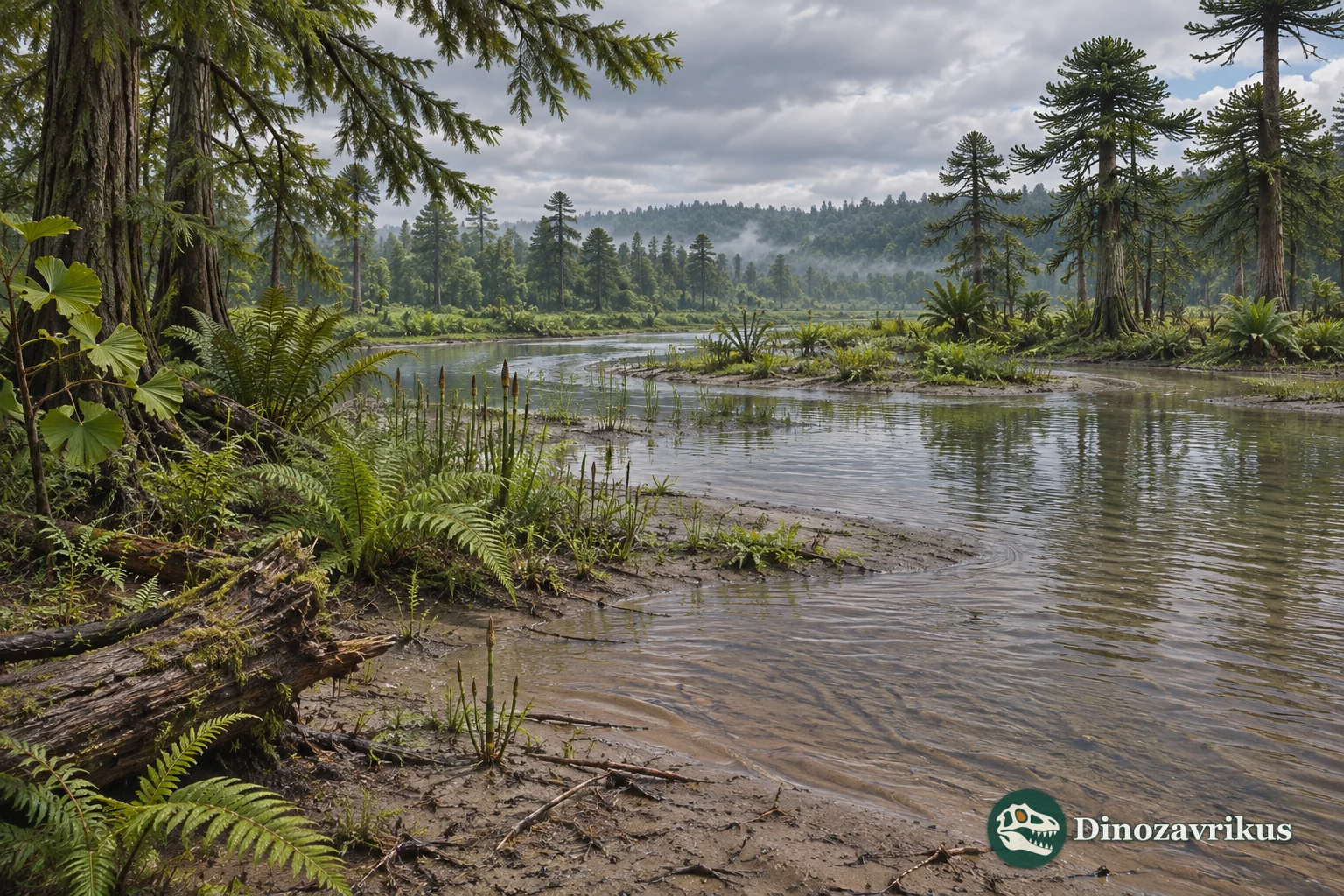
The sediments of the Foremost Formation accumulated in coastal settings in western North America. Its jaws and tyrannosaurid affinities support a carnivorous diet. The available remains give no direct evidence of the species it preyed on.
Frequently asked questions
Where did Thanatotheristes fossils come from?
The type material was recovered near the Bow River in southern Alberta, in the Foremost Formation.
What is distinctive about its upper jaw?
A row of nearly vertical bony ridges runs across the outside of the maxilla, above the tooth sockets.
How was its skull length estimated?
The researchers used the width of the frontal bone and compared it with proportions in other tyrannosaurids, obtaining about 80 centimetres.
What does the name mean?
The genus name means “reaper of death”. The species name honours John and Sandra De Groot.