

Theatonius lancensis is a small Late Cretaceous frog known from a handful of isolated skull bones. Its most unusual fossil is a toothless upper jaw. This is a rare documented example of toothlessness in a Mesozoic Northern Hemisphere frog, but the tiny fragments do not reveal a complete skeleton, lifestyle or diet.
The genus belongs in the ancient amphibian catalogue. Similarity between fragmentary Late Cretaceous frogs does not automatically mean close relationship: Scotiophryne is also known from limited diagnostic bones, while the older Triadobatrachus offers a comparison for frog evolution, not a direct ancestor.
Quick facts
| Scientific name | Theatonius lancensis; additional material is assigned to an indeterminate species |
|---|---|
| Group | Anuran amphibian; relationships within Anura remain uncertain |
| Age | Late Cretaceous; T. lancensis is from the late Maastrichtian |
| Known from | Wyoming and Montana; similar material from Utah |
| Key feature | Toothless upper jaw and densely tuberculate skull bones |
| Fossil material | Isolated skull bones, including the holotype maxilla |
| Body size | No reliable body-length estimate |
What can the fossils tell us?
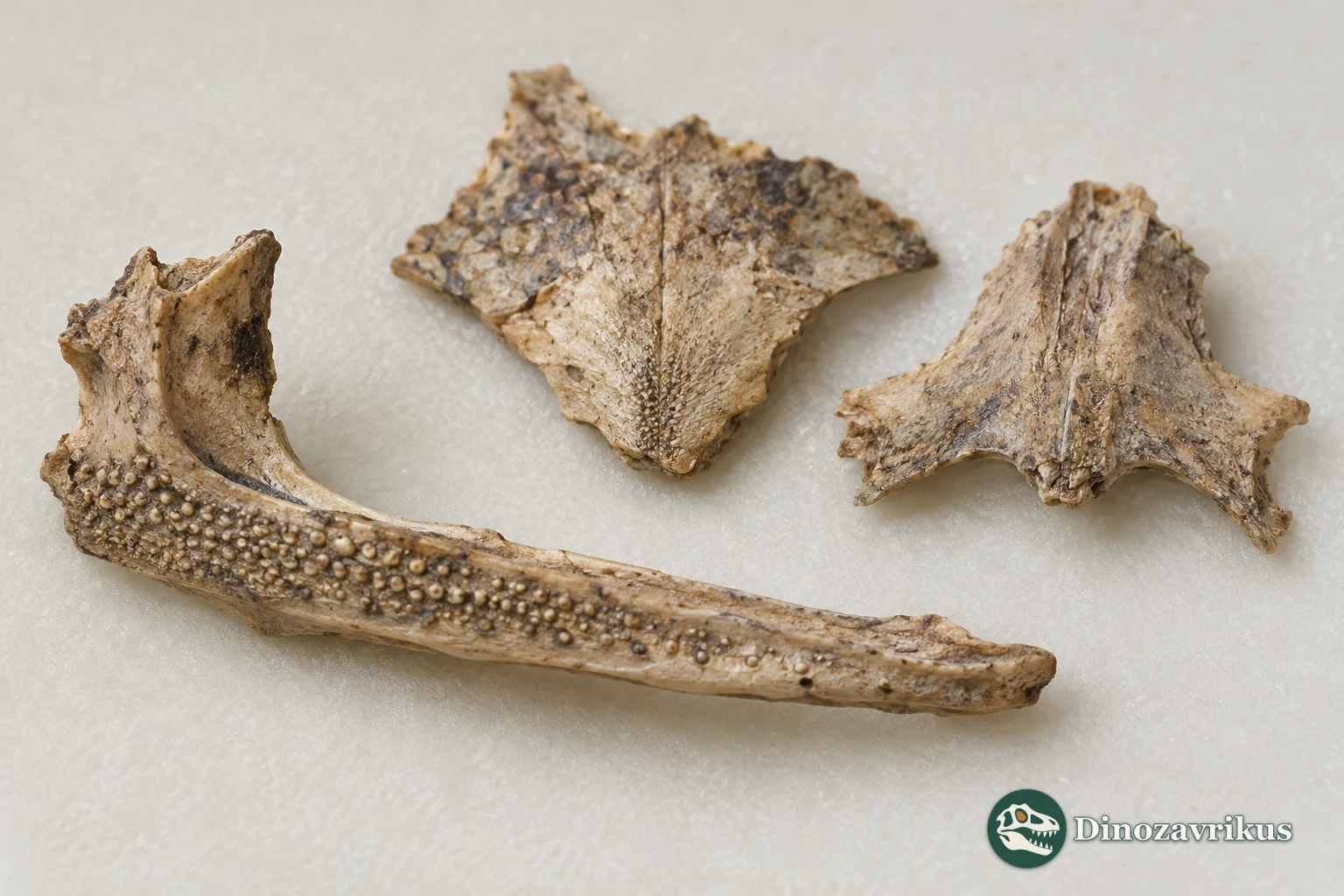
Richard Fox described Theatonius lancensis in 1976 from a left maxilla from Wyoming’s Lance Formation. The bone has no teeth: that is a direct observation. It does not show what the frog ate or how it captured food.
Known maxillae, frontoparietals and squamosals have a dense tuberculate ornament. Small size, bone shape, surface texture and the absence of teeth are more useful together than any single feature, but they do not add up to a complete skull.
Six small maxillae from the Kaiparowits Formation resemble Theatonius, but have tiny marginal tubercles and come from older beds. The authors considered a second species possible; they did not formally name one.
Reviews retain T. lancensis as a recognizable Late Cretaceous taxon but do not place it confidently in a particular family. Fragmentary bones limit phylogenetic comparison; this uncertainty does not erase the diagnostic value of the jaw.
From the Lance Formation
Richard Fox established the genus and species Theatonius lancensis in 1976. The holotype is the left maxilla UALVP 12073 from the Bushy Tailed Blowout locality in Wyoming’s Powder River Basin. It comes from the Lance Formation and lacks teeth. Several other small skull bones, including roof-of-skull elements and squamosals, were later referred to the species.
The Lance Formation is late Maastrichtian, the final age of the Cretaceous. Its characteristic fauna lived roughly 69–66 million years ago, although individual beds and localities should not be reduced to one exact date. Early reports of Theatonius from other formations have been reassessed; each new occurrence must distinguish securely identified bones from merely similar fragments.
Why a toothless jaw matters
Teeth have been lost independently in several frog lineages, so toothlessness alone does not make species close relatives. The Theatonius maxilla is genuinely toothless, while other known bones have dense, rounded surface ornament. The combination helps distinguish the material but does not reveal whether tooth loss related to a particular food or feeding method.
Comparative studies show that tooth loss arose repeatedly among frogs. In some living species it occurs alongside small-prey diets, but that ecology cannot be transferred to Theatonius: its fossils preserve no gut contents, feeding traces or tooth-like structures that could test its diet. Insect eating is only a cautious possibility based on frogs in general, not an established fact.
Isolated bones, not a complete skeleton
Isolated elements make comparisons difficult. The maxilla, skull-roof bones and squamosal may come from different individuals; without direct articulation they cannot be assembled into one skeleton. A jaw’s size also does not provide a precise body length: reliable proportions between skull and trunk are unavailable.
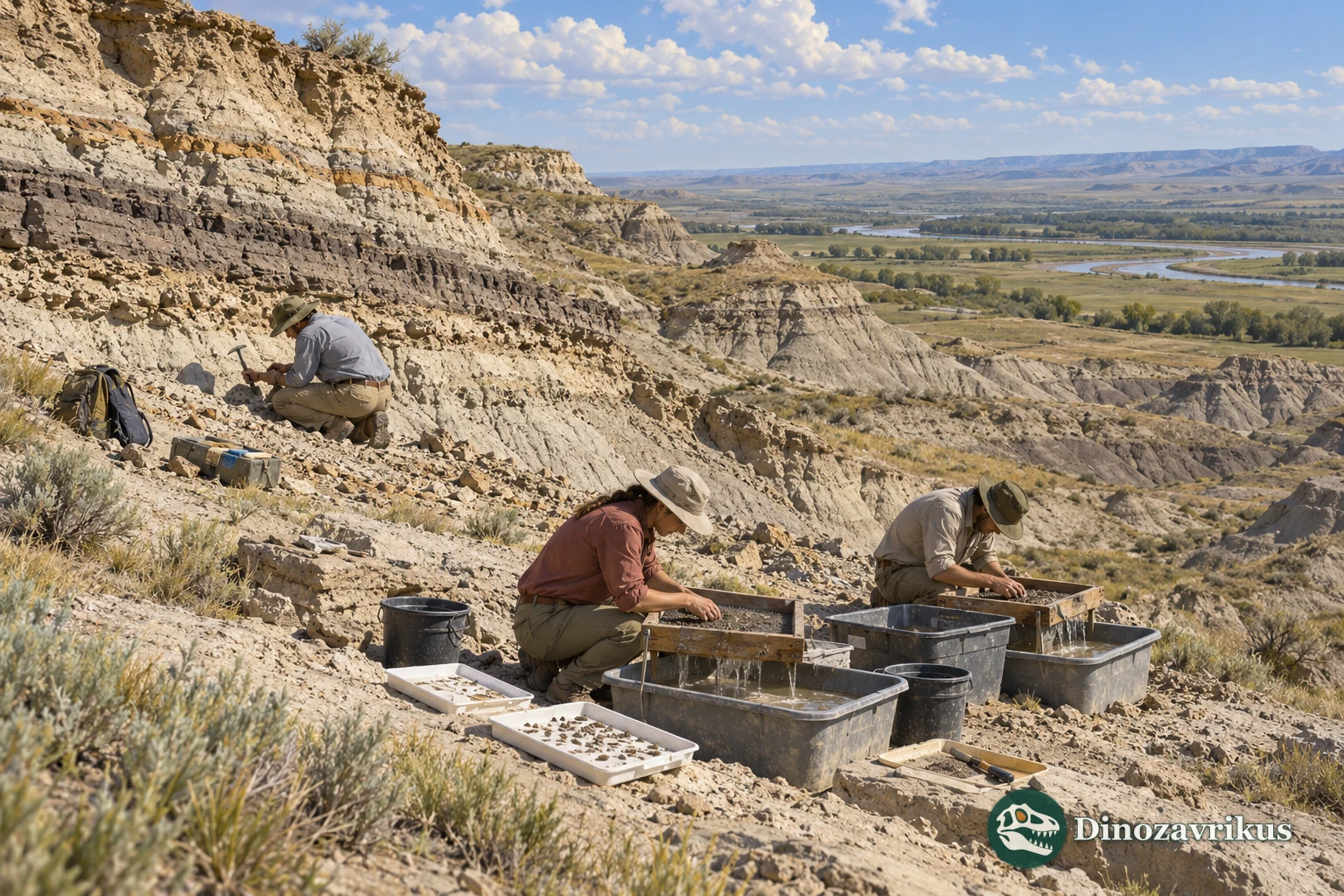
Six small maxillae have been described from the middle-to-late Campanian Kaiparowits Formation in southern Utah. They resemble T. lancensis in general size, toothlessness and surface texture, but the Utah bones have tiny marginal tubercles absent from the compared Lance specimens. Their age and differences may indicate a second species. For now, the material is labelled Theatonius sp.; it should not be presented as a formally named species.
An uncertain place on the tree
Fox noted that the family relationships of T. lancensis were unclear. Later reviews have not resolved them: scattered bones provide few traits that can be compared with complete frog skulls. Theatonius is generally treated as an anuran, but a toothless jaw alone cannot place it confidently in a particular family.
The fossils indicate a small frog in Late Cretaceous continental environments. That is geological context and cautious reconstruction, not proof that this individual constantly swam or hunted in water. Skin, colour, voice, breeding, habits and a dependable body length are unknown. Artwork can suggest a plausible outline; the bones remain the testable evidence.
Frequently asked questions
Why is Theatonius called a toothless frog?
Its holotype upper-jaw bone has no teeth. This is a direct fossil feature, although it does not explain why the teeth were lost.
Where was Theatonius lancensis found?
The holotype comes from the Bushy Tailed Blowout locality in Wyoming’s Lance Formation. Similar bones are known from the older Kaiparowits Formation in Utah and may represent another species.
How large was Theatonius?
No reliable body length is known. An isolated jaw is too small to provide the proportions of a complete skeleton.
Do we know what Theatonius ate?
No. The fossils contain no gut contents or other direct evidence of diet. Toothlessness alone cannot identify its food.