

Thegornis was a relatively large Miocene bird of prey from Argentina, related to forest falcons and the Laughing Falcon. The first remains were so incomplete that the genus was transferred to the hawk family. A later discovery of numerous bones from a single individual allowed that identification to be tested and restored Thegornis to Falconidae.
Quick facts
| Group | Falconidae |
|---|---|
| Distribution | Patagonia and northwestern Argentina |
| Age | Miocene |
| Main skeleton | MPM-PV 3443 |
| Genus named | Florentino Ameghino, 1895 |
What can the fossils tell us?
The type tarsometatarsus fragment matches the corresponding bone of the newer skeleton in form and measurements. This links the historical name to a fuller anatomical picture.
The skull, shoulder girdle and legs of one individual support falcon affinities. Resemblance to the Laughing Falcon establishes neither its voice nor snake-eating specialisation.
A Catamarca bone was initially attributed to another raptor. Further removal of the rock exposed characters that led to its description as a new Thegornis species.
The Ameghino brothers and a foot fragment
Carlos Ameghino collected the original remains during Patagonian field trips in 1892–1893. His brother Florentino described Thegornis musculosus and Thegornis debilis in 1895. The collection entered London’s Natural History Museum the following year. The holotype of the first species, BMNH-A600, is a distal fragment of a right tarsometatarsus.
Its label gives the locality as “Tagua Quemada”. By comparing this with Ameghino’s handwritten catalogue, researchers in 2011 proposed a transcription error and identified Yegua Quemada in Santa Cruz Province as the intended locality. This was a documentary correction, not a new discovery of the type specimen.
The smaller debilis was originally treated as a separate species. In 2011, its size difference was suggested to represent sexual dimorphism, with males and females differing in size. The authors stressed the need for additional specimens; a 2023 revision accepted the merging of the older forms. The sex of any particular fragment remains undetermined.
The skeleton that changed the identification
Specimen MPM-PV 3443 comes from Puesto Estancia La Costa in the lower Santa Cruz Formation. It represents one individual and includes parts of the skull and bill, vertebrae, shoulder girdle, pelvis, wing and leg bones, and toe bones with claws. It is held at the Padre Molina museum in Río Gallegos.
Its tarsometatarsus matches the type in diagnostic features and measurements. Jorge Noriega, Juan Areta, Sergio Vizcaíno and María Susana Bargo showed in 2011 that the combined anatomy belongs to a falconid. This rejected the previous placement of the species in the hawk genus Buteo.
A cladistic analysis of 66 anatomical characters linked Thegornis with the Laughing Falcon and forest falcons. It was not recovered simply as an ancient member of Falco, the genus containing peregrines and kestrels.
A robust bird and the limits of size estimates
The skull has a robust bill region and strongly developed muscle-attachment areas. Its legs possess features of a grasping predatory foot. In MPM-PV 3443, the femur is approximately 91 millimetres long, the tibiotarsus 131 millimetres and the humerus 121 millimetres.
These are measurements of particular bones. They are not the bird’s standing height, body length or wingspan. Comparisons indicate a larger bird than the sampled living members of the related group, but the measurements cited here do not yield one independently secure body-mass value.
The bill and claws support predatory feeding. Relationship to the Laughing Falcon does not prove a specialisation in snakes, however, and the living relative’s name cannot reveal the extinct bird’s vocalisations.
A bird of woodland margins?
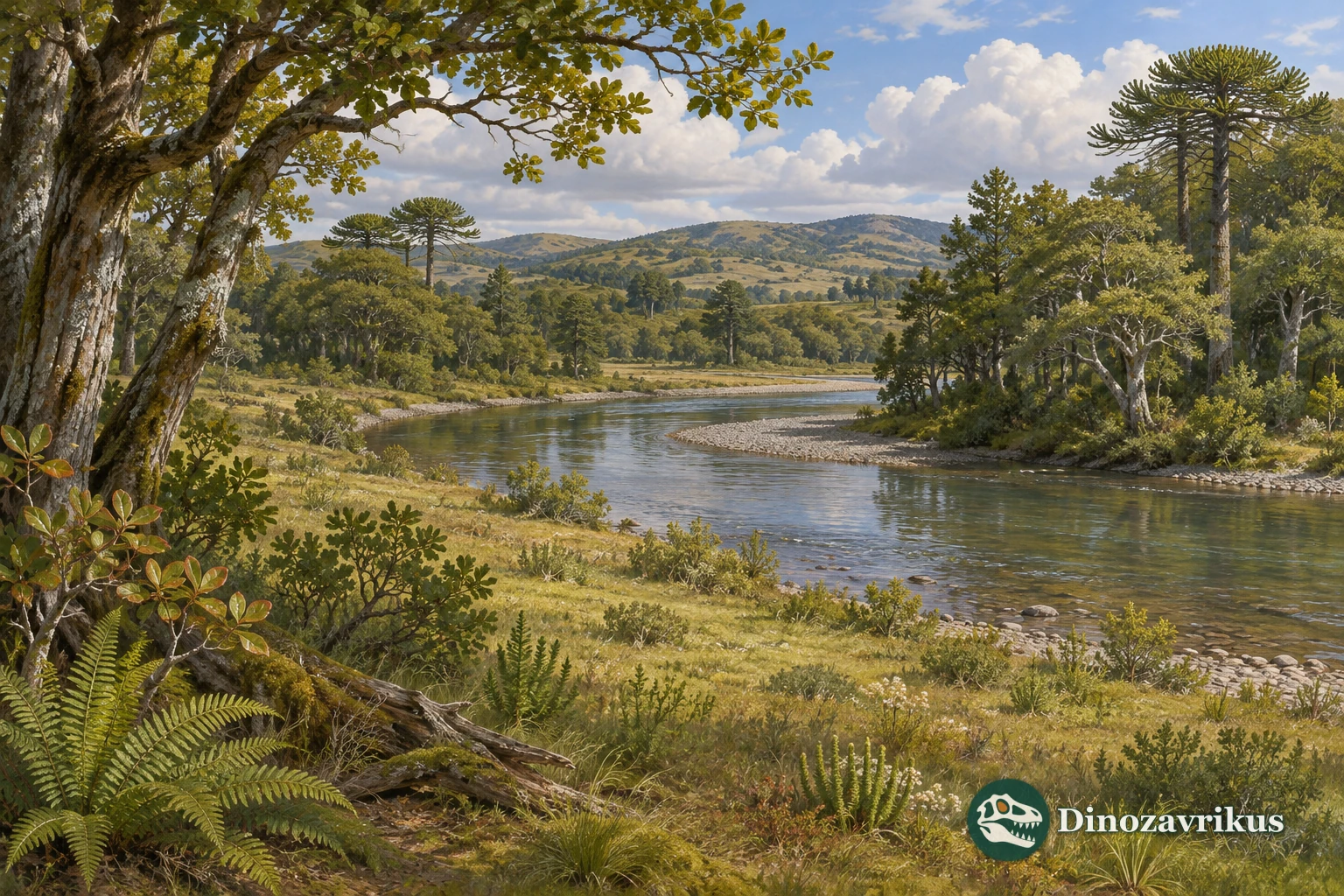
Early Miocene Patagonian plant communities formed a mosaic, with forests adjoining shrubs and more open habitats. The 2011 study proposed that Thegornis could have occupied transitional environments along humid forest margins. This hypothesis draws on fossil plants and the ecology of living relatives.
Santa Cruz Formation faunas also included Psilopterus, a member of the terror-bird family. A shared region and predatory feeding do not place these birds in the same family. Thegornis is identified through its own falconid skeleton, including well-developed wing bones.
New species in old collections
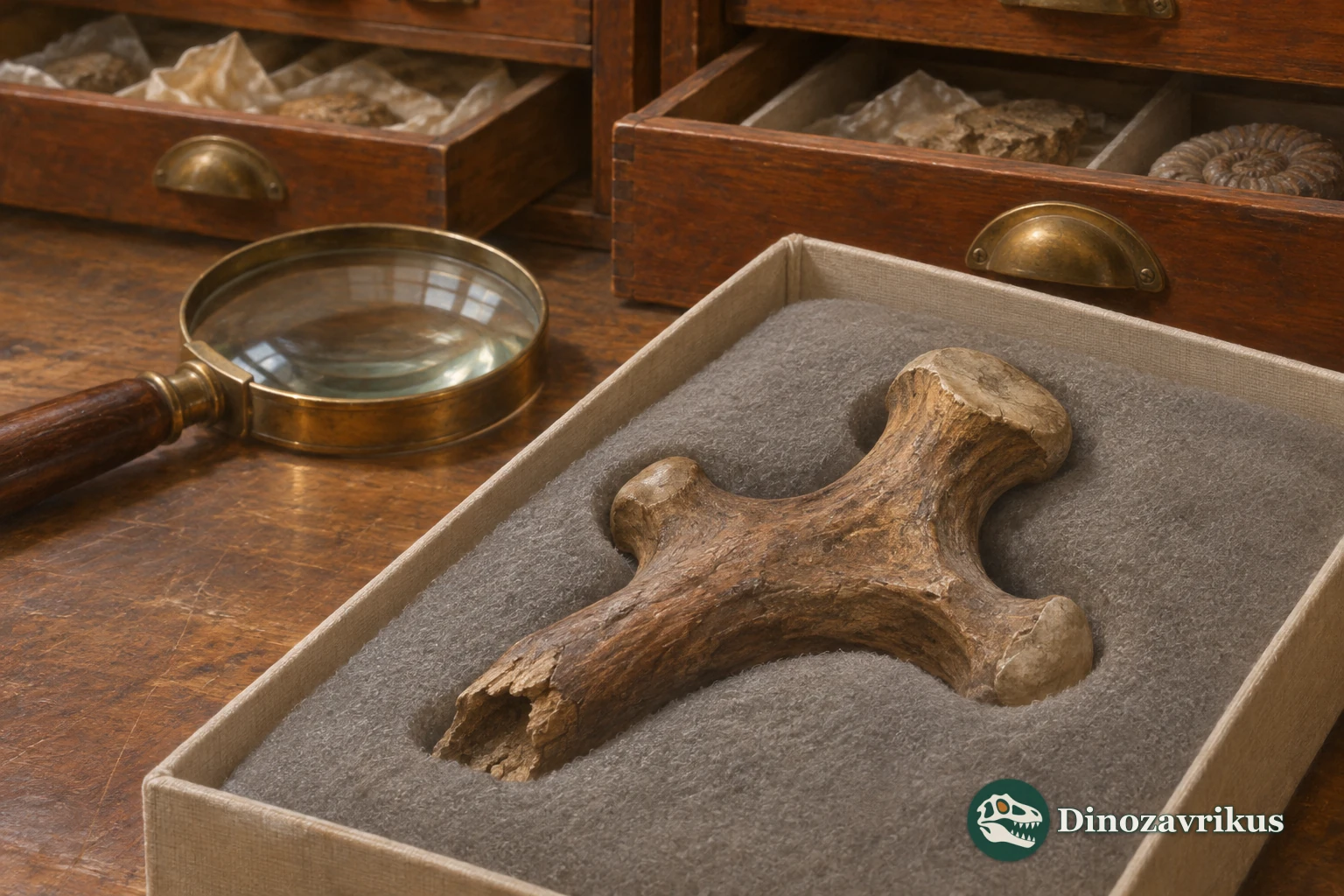
Thegornis spivacowi was described in 2022 from Miocene deposits in Santa Cruz Province. Federico Agnolín named another species, Thegornis sosae, in 2023 from Catamarca specimen MACN PV 5431. This is the distal end of a left tarsometatarsus, with a maximum transverse width of approximately 2.3 centimetres.
The same specimen had previously been assigned to another bird-of-prey genus, Geranoaetus. Additional preparation exposed the toe-joint surfaces and revealed Thegornis characters. The new species differs in the closely positioned trochleae for the third and fourth toes and in their outlines. It honours the Argentine singer Mercedes Sosa.
The precise collecting spot, collector and collection date are unknown. Its old label names the Puerta de Corral Quemado area and the “Araucanian Formation”, approximately corresponding to lower levels of the Late Miocene Andalhualá Formation. The age range of the entire sequence therefore cannot be converted into an exact date for this individual.
The discovery extends the known distribution of the genus from southern Patagonia into northwestern Argentina. The appearance of the new species remains much less securely documented than the anatomy represented by skeleton MPM-PV 3443.
Frequently asked questions
Was Thegornis an eagle or a falcon?
The new skeleton supports placement in the falcon family. Older assignments to hawks were revised after the skull and other bones became available for comparison.
Why has debilis been combined with musculosus?
Size is the main distinction between the old fragments. Sexual dimorphism was proposed as an explanation, but a single bone cannot securely establish an individual’s sex.
Who is honoured by the species name sosae?
Federico Agnolín named it after Mercedes Sosa. The species is founded on a fossil foot bone in a museum collection, not evidence of the bird’s behaviour.
Do we know that Thegornis hunted snakes?
There is no direct confirmation. Its relationship to the Laughing Falcon makes the comparison understandable, but the extinct bird’s diet cannot simply be copied from its living relative.