

Thyrohyrax is a small hyracoid known from the fossil-rich Fayum region of Egypt. The genus was established from jaw material, and later discoveries added two relatively complete crania. Together, those fossils reveal teeth, the shape of the snout and a distinctive internal chamber in some lower jaws. They do not preserve the soft tissues needed to determine whether the chamber amplified sound or served another function.
The genus is part of the wider radiation of ancient mammals represented in the ancient mammal catalogue. Small Fayum hyracoids can be contrasted with much larger local mammals such as Arsinoitherium, while each jaw and skull must still be assessed by its own diagnostic features.
Quick facts
| Scientific name | Thyrohyrax Meyer, 1973 |
|---|---|
| Type species | T. domorictus Meyer, 1973 |
| Group | Hyracoidea; relationships among early hyracoids remain under study |
| Age | Early Oligocene; about 29–31 million years ago |
| Locality | Jebel Qatrani Formation, Fayum, Egypt |
| Holotype | CGM 40001: partial right mandible with cheek teeth |
| Cranial evidence | Two relatively complete crania described in later work |
| Unusual feature | An inflated internal mandibular chamber in some specimens |
| Main uncertainty | The chamber's function and species-level variation |
How do jaws and crania shape the Thyrohyrax story?
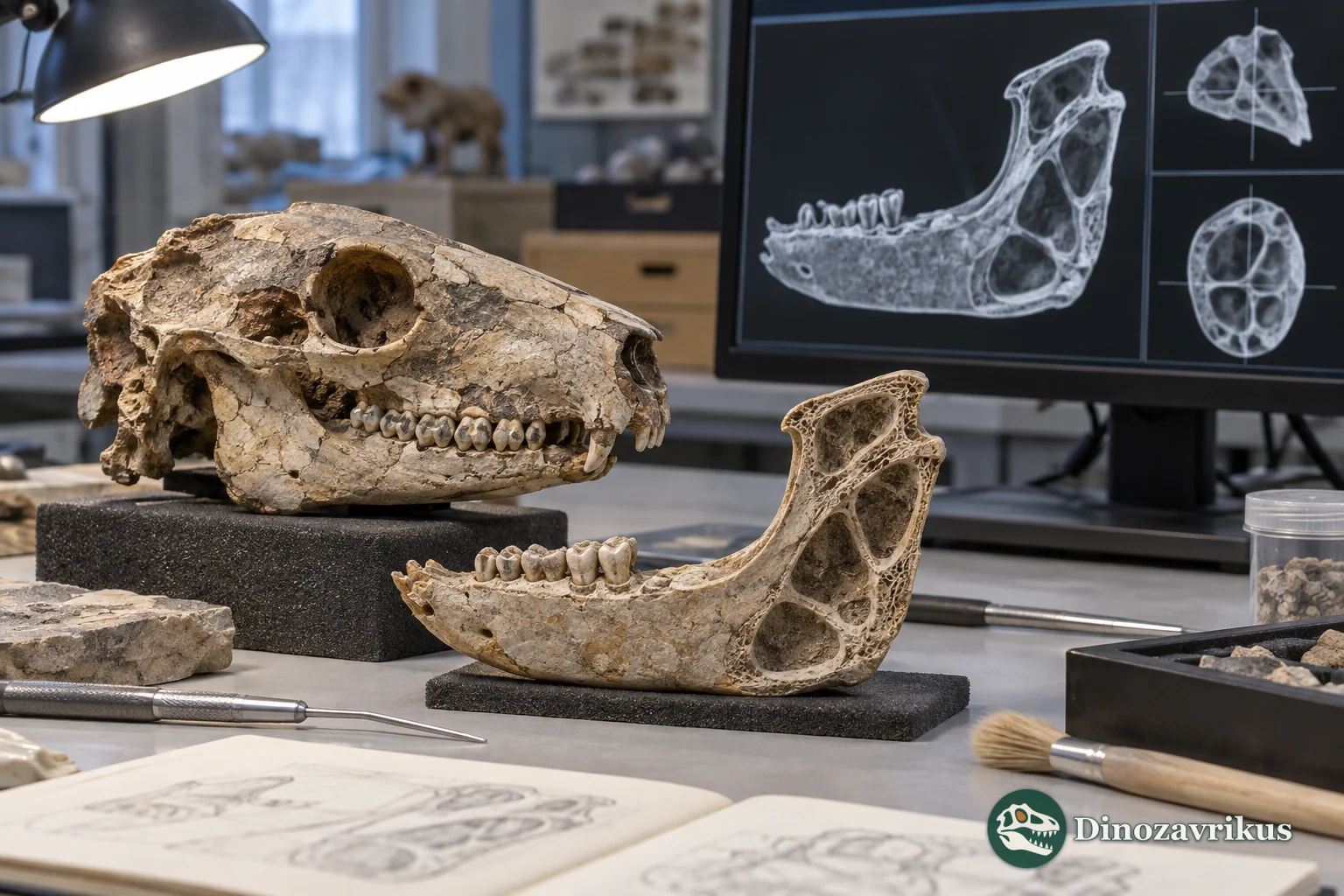
CGM 40001 preserves a partial right lower jaw with p1–p4 and portions of the molar series. It establishes diagnostic dental anatomy, but cannot by itself describe the full skull, body size or behaviour.
Later study described two fairly complete crania with a relatively long rostrum, a nasomaxillary fossa, and an orbit above the molars with a complete postorbital bar. They broaden the anatomical picture, though they do not preserve soft tissue or a complete skeleton.
About half of the sampled jaws in a comparative study show an inflated internal mandibular chamber. Its association with larger anterior incisors informed a hypothesis about sex-related variation; the fossils do not directly preserve sound production or social display.
The Upper Fossil Wood Zone of the Jebel Qatrani Formation places the fossils in an early Oligocene Fayum fauna. Stratigraphic studies refine the chronology, but the formation is not a single instant and the habitat varied across its deposits.
The type jaw and naming history
Hans de Bruijn and E. L. Simons introduced Thyrohyrax domorictus in 1973 from the Jebel Qatrani Formation of the Fayum Depression. The holotype, CGM 40001, is a partial right mandible preserving premolars and part of the molar row. The type specimen anchors the species name; it is not a complete skull or skeleton.
The genus was later represented by additional dental and cranial material. More complete crania permitted comparisons that the type jaw could not support. Taxonomic lists and higher classifications of early hyracoids have changed over time, so a species assignment should be tied to the diagnostic characters and revision being followed rather than to a name alone.
Age and the Fayum sequence
Thyrohyrax domorictus is reported from the Upper Fossil Wood Zone of the Jebel Qatrani Formation. Revised stratigraphic work places the relevant upper part of the sequence in the early Oligocene, approximately 29–31 million years ago. These numerical ages refer to geological units and their calibration, not to a direct date on CGM 40001.
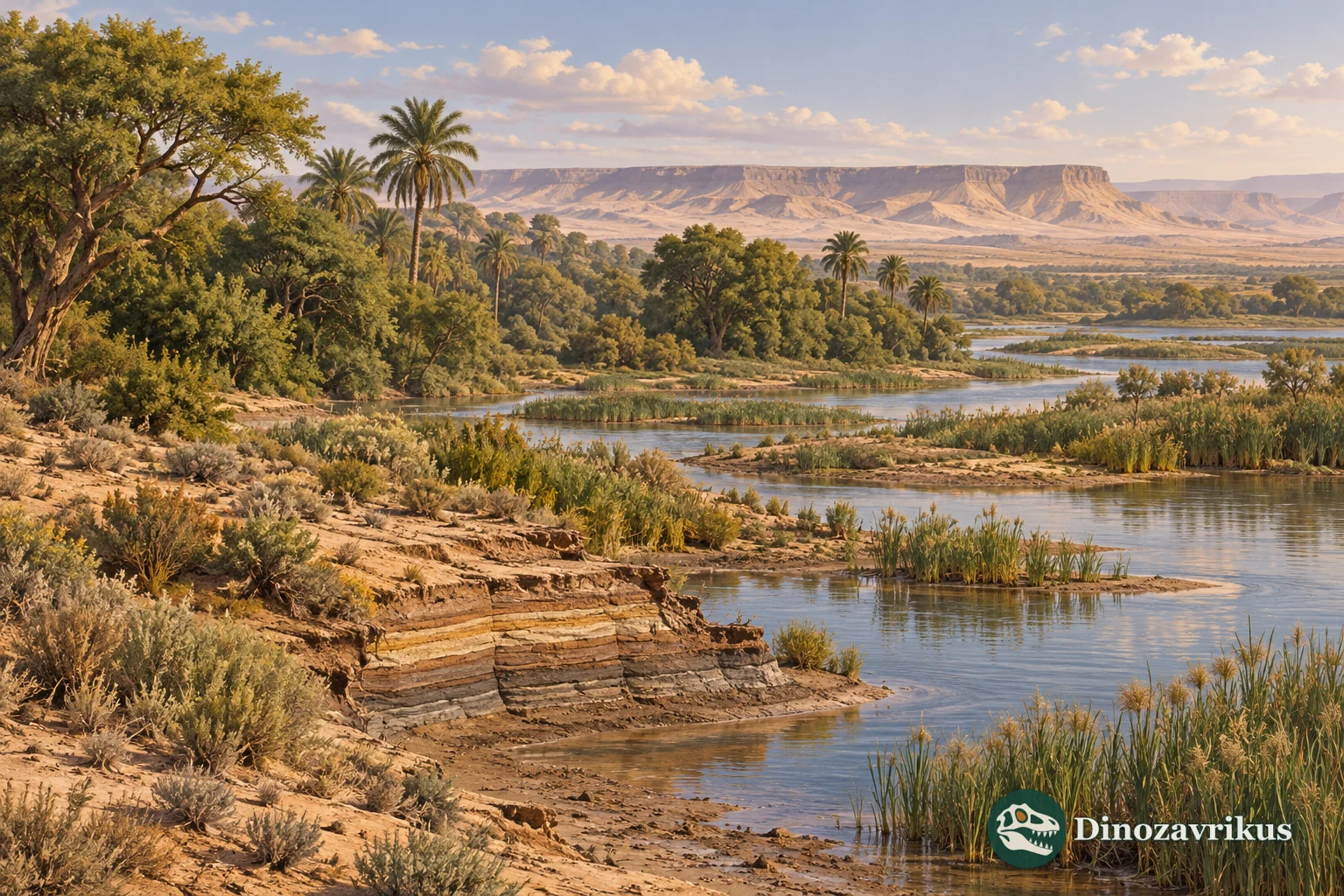
The Jebel Qatrani deposits preserve a changing riverine landscape with channels, floodplain sediments and wooded settings. Fossils from the formation document a diverse African mammal fauna at a time of major environmental and climatic change. A single mandible does not reveal the animal's exact habitat, and the modern desert surface is not a guide to the ancient landscape.
The age revision also matters when comparing Fayum species. Fossil levels should not be collapsed into one undifferentiated “Fayum” interval: stratigraphic position can change which taxa were contemporaneous and which ecological comparisons are appropriate.
Cranial anatomy and the jaw chamber
Two relatively complete crania described in later research show a long rostrum, a nasomaxillary fossa and an orbit positioned above the cheek teeth, with a complete postorbital bar. These are observable features of the preserved skulls. They provide a more informative anatomical basis for comparison than the holotype mandible alone.
Some jaws have an expanded internal mandibular chamber. A study of Fayum hyracoids found the inflation in roughly half of the sampled jaws, alongside larger anterior incisors in some individuals. Early interpretation treated the pattern as possibly female; subsequent work argued that the association could instead indicate larger males. The assignment depends on comparative anatomy and sample composition, not on directly sexed fossil individuals.
A resonating air sac or sound-related display has been proposed as one possible function of the chamber. That remains a functional hypothesis. The bones do not preserve a vocal sac, a sound, or the behaviour of a living animal, and alternative explanations have not been eliminated.
Diet, relationships and limits of reconstruction
The cheek teeth and jaw anatomy are consistent with herbivory, as in other hyracoids. They do not identify an exact menu or demonstrate that Thyrohyrax ate a particular plant. The surrounding deposits and associated flora offer environmental context, not stomach contents for the type individual.
Cladistic studies have placed Thyrohyrax near lineages that include living hyraxes and extinct pliohyracids, but the precise arrangement depends on the taxa and characters sampled. The fossil record is richer in jaws and skulls than in associated postcranial skeletons, limiting conclusions about locomotion and body proportions.
Growth studies of Fayum hyracoids use tooth eruption and wear to compare age classes, but they cannot provide an exact birthday for an isolated specimen. Fur, colour, call, group structure and the use of the mandibular chamber remain unknown. Reconstructions should show the preserved skull features without presenting a proposed sound-making role as fact.
Frequently asked questions
When did Thyrohyrax live?
Thyrohyrax domorictus is known from the early Oligocene Upper Fossil Wood Zone of Egypt's Jebel Qatrani Formation, dated approximately 29–31 million years ago.
What is the holotype of Thyrohyrax domorictus?
CGM 40001 is a partial right mandible preserving premolars and part of the molar series. It anchors the species name but is not a complete skull.
What is unusual about some Thyrohyrax jaws?
Some lower jaws have an inflated internal chamber. Its association with larger front incisors has been used to discuss possible sex-related differences, but the interpretation remains indirect.
Did the jaw chamber make Thyrohyrax call louder?
A sound-resonance function has been proposed, but the fossils do not preserve soft tissue or sound. The function of the chamber is unresolved.