

Titanoboa cerrejonensis was a giant snake from Paleocene deposits at Colombia’s Cerrejón coal mine. Its estimated length of about 12.8 metres is famous, but no complete animal of that length has been found. The estimate was reconstructed from vertebrae and comparisons with living snakes. The collection reveals vertebral anatomy and a range of body sizes, not every detail of the animal’s appearance.
The fossils came from coal-bearing strata laid down in a warm, wet lowland after the extinction of non-avian dinosaurs. Vertebrae establish that Titanoboa was enormous, but do not preserve colour, hunting behaviour or exact lifestyle. It belongs in the ancient lizard and snake catalogue; its age falls within the Palaeogene.
Quick facts
| Scientific name | Titanoboa cerrejonensis Head et al., 2009 |
|---|---|
| Type species | T. cerrejonensis, the only described species |
| Group | Squamata, Serpentes; compared with booid snakes |
| Age | Middle–late Paleocene, about 58–60 million years ago |
| Locality | La Puente Pit, Cerrejón mine, La Guajira, Colombia |
| Formation | Cerrejón Formation |
| Type specimen | UF/IGM 1, one precloacal vertebra |
| Estimated length | 12.82 ± 2.18 m in the original model |
| Estimated mass | 1,135 kg central estimate; model range 652–1,819 kg |
What can the fossils tell us?
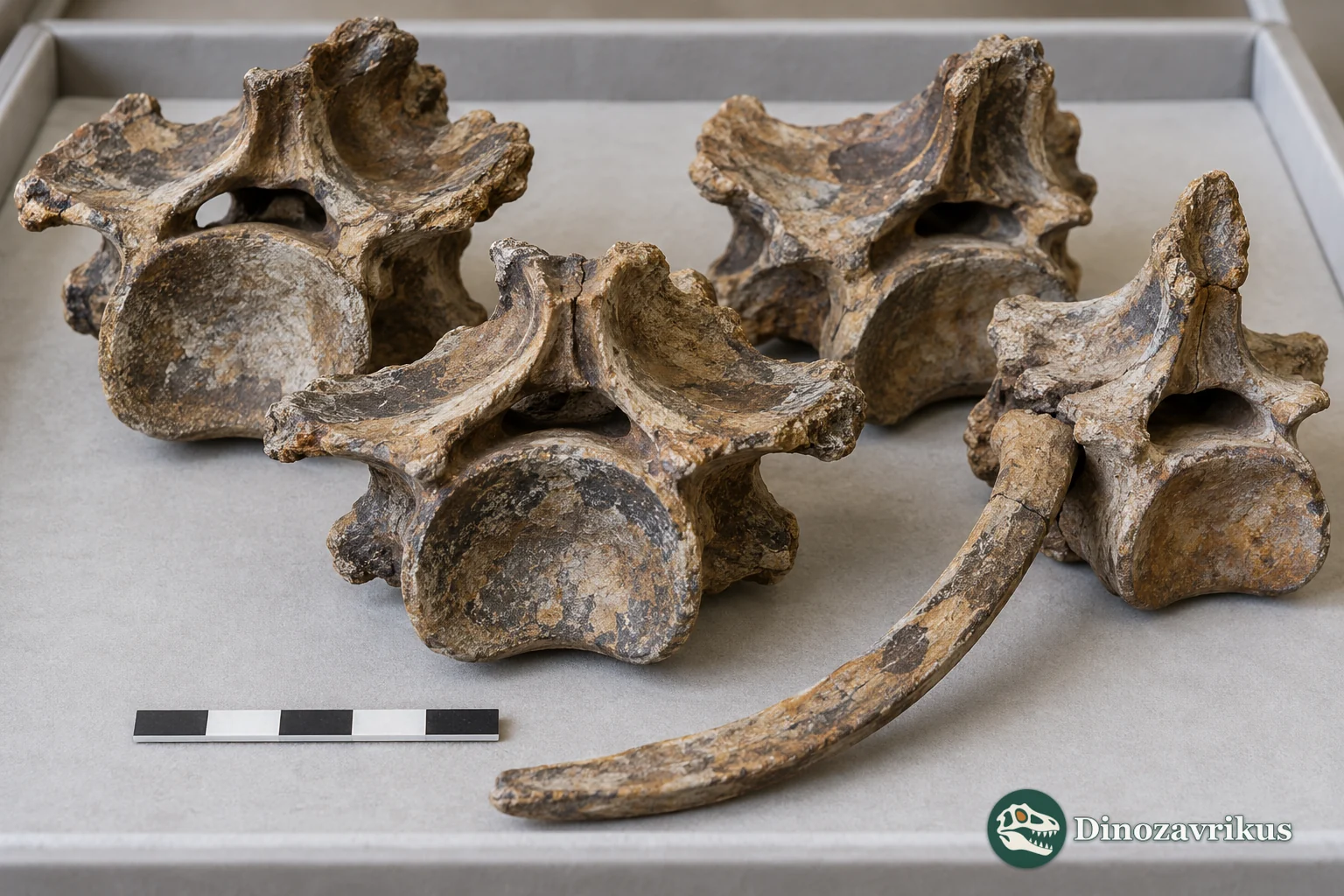
Holotype UF/IGM 1 comes from the Cerrejón mine. It helps diagnose the species, but is not a complete skeleton and does not directly measure total length.
The description included a paratype and 184 additional vertebrae and ribs, assigned to about 28 individuals. This is a rich disarticulated sample, not 28 articulated skeletons.
The original study compared vertebral dimensions and estimated position along the column using living booid snakes. Length is model-dependent, not a measurement of a complete fossil.
The original study used modern size–climate relationships to infer a mean near 30–34 °C. Fossils do not preserve a thermometer reading; the estimate depends on ecological assumptions.
Discovery and type material
Fossils were collected during fieldwork in the Cerrejón coal mine, where researchers investigated Paleocene plants and animals. Jason Head and colleagues formally described the species in 2009. The name cerrejonensis refers to its locality. The holotype, UF/IGM 1, came from La Puente Pit and is held in the Colombian geological collection.
The original description used the holotype, a paratype, and 184 additional vertebrae and ribs. The authors assigned the sample to roughly 28 individuals based on repeated elements and size variation. That count does not mean the collection contains 28 complete skeletons. Most elements are disarticulated, so position along the vertebral column must be estimated carefully.
How length and mass were estimated
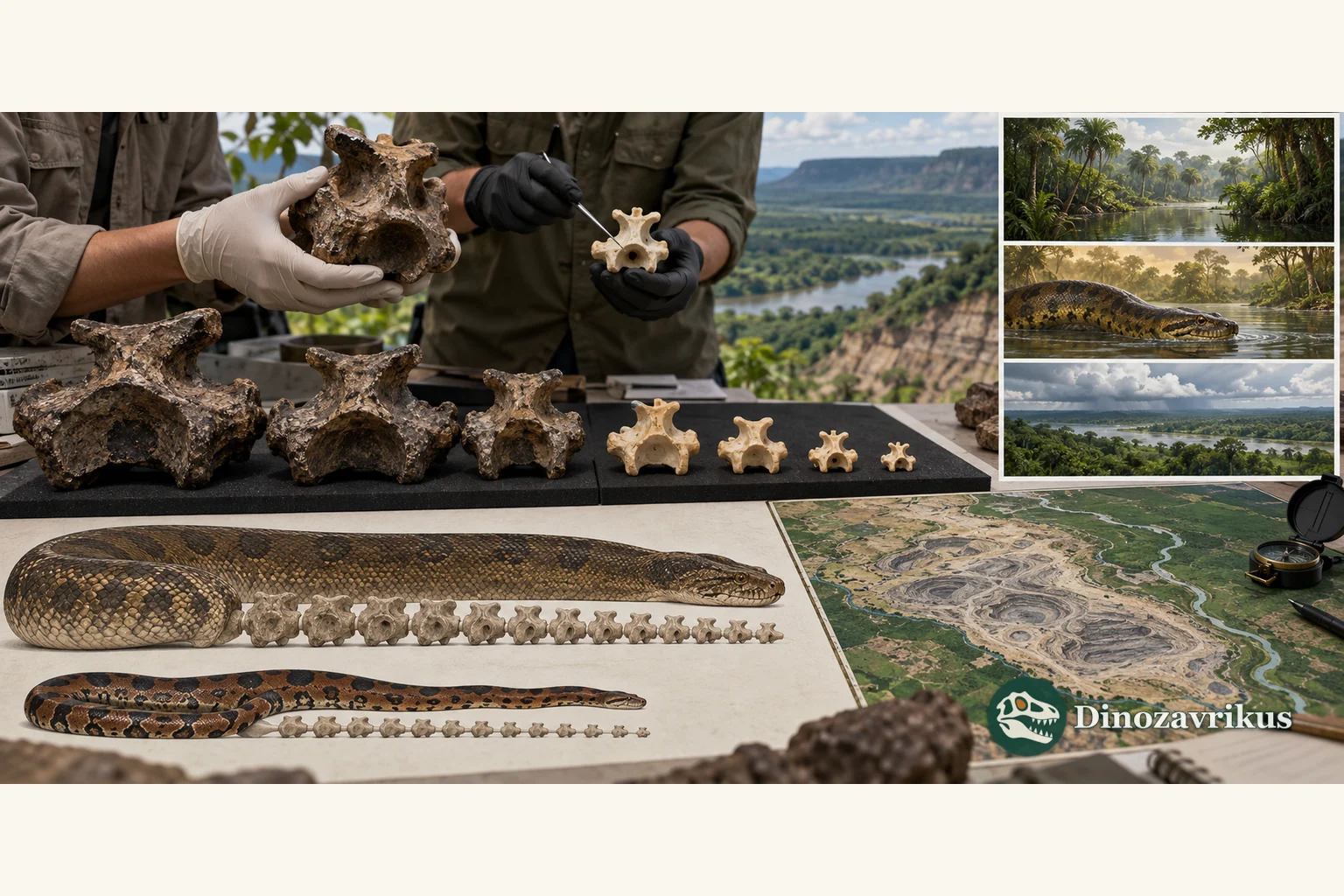
Snake length relates to vertebral size, but one element cannot establish total length without a comparative model. Head and co-authors used a diagnostic vertebra and estimated its position in the precloacal column by comparing size distributions in living booid snakes. Their model yielded a trunk length of 12.01 ± 2.04 metres and total length of 12.82 ± 2.18 metres.
Mass was not measured directly. It was calculated from length and comparative relationships in living snakes. The central estimate of about 1,135 kilograms came with a broad model range of 652–1,819 kilograms. Assumptions about proportions or vertebral position affect the result, so a broad estimate is more informative than a falsely precise mass.
Anatomy and relationships
The known material consists chiefly of vertebrae with a centrum, arch and neural spine. The original diagnosis noted a distinctive T-shaped upper neural spine. This feature helps distinguish Titanoboa from other snakes, but does not replace a skull, which would be especially informative about feeding and relationships.
The first analysis compared Titanoboa with booid snakes and placed it within the broader Booidea. Its finer position depends on the character matrix and taxa included in each analysis; great size alone does not identify a close living relative. Its placement should be read as the result of a published analysis, not proof of direct kinship with anacondas.
The Cerrejón ecosystem
The Cerrejón Formation records a tropical lowland system with rivers, wetlands and dense vegetation. Fossils from the deposits include crocodylomorphs, turtles and diverse fishes. This context makes aquatic and waterside habitats plausible, but Titanoboa’s vertebrae do not show where it spent most of its time.
The snake’s size motivated a climate hypothesis. The authors compared body size with modern relationships between environment and maximum size in ectothermic reptiles, yielding a warm mean estimate around 30–34 °C. This is not a direct measurement and depends on assumptions about physiology and how modern ecological relationships apply to an extinct animal.
Diet and way of life
Large snakes swallow prey whole, and Titanoboa’s body size supports the inference that it could take vertebrates available in its ecosystem. Cerrejón also preserves fishes, turtles and crocodylomorphs, but shared occurrence does not prove a particular prey item. No stomach contents or diagnostic bite-mark series establish a specific Titanoboa diet.
Images often place it in water and compare it with an anaconda. That illustrates a possible ecological analogy, not direct evidence of habitual behaviour. Exact colour, swimming frequency, prey-killing method and the ages of individuals represented by the disarticulated bones remain unknown.
Frequently asked questions
How long was Titanoboa?
The original study estimated a total length of 12.82 ± 2.18 metres. It is a model based on vertebrae and living comparisons; no complete skeleton that long has been found.
Has a complete skeleton been found?
No. The holotype is one vertebra, and most other known elements are disarticulated. The collection represents many animals, not dozens of articulated skeletons.
Was Titanoboa an ancestor of the anaconda?
No direct ancestor–descendant relationship has been established. The original analysis placed it among broad booid snakes, but ecological resemblance and giant size do not show that living anacondas descended from Titanoboa.
Where did the 30–34 °C estimate come from?
It is an indirect estimate from a model linking snake body size to warm environments. The vertebrae do not record temperature; the result depends on applying modern ecological relationships to Titanoboa.