

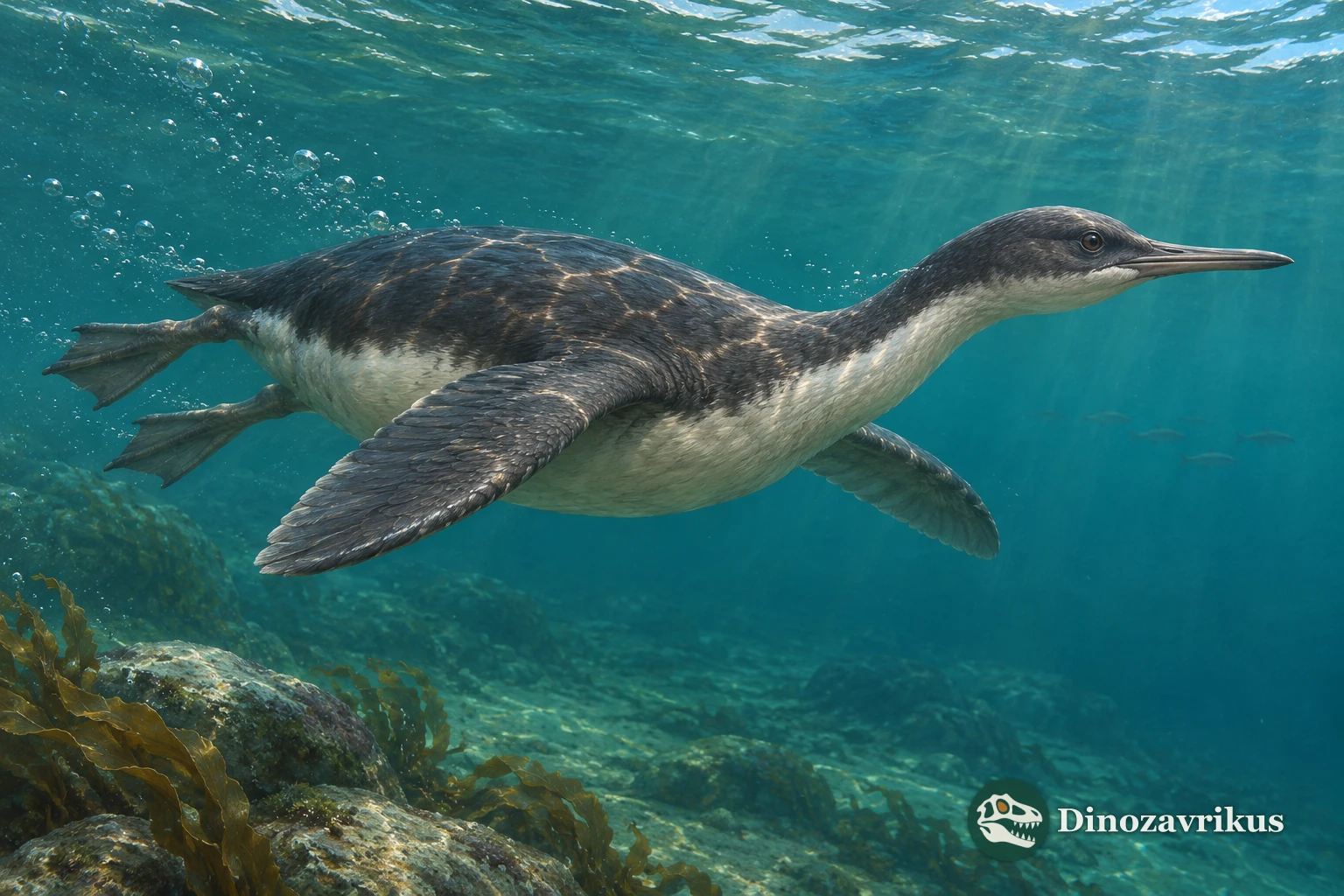
Tonsala was a flightless Oligocene seabird known from skeletal remains in Washington State. Its flattened wings functioned as underwater paddles. The resemblance to penguins evolved independently: Tonsala belonged to Plotopteridae, an extinct group allied to boobies, cormorants and darters.
Quick facts
| Group | Plotopteridae |
|---|---|
| Age | Latest early to earliest late Oligocene |
| Localities | Washington coast, USA |
| Holotype | Partial skeleton, USNM 256518 |
| Locomotion | Wing-propelled swimming |
What can the fossils tell us?
The holotype includes parts of both wings, the shoulder girdle, vertebral column and a kneecap. It has no skull.
The left humerus is deformed and the ulna is atrophied. The cause of the damage is unknown.
Subsequent specimens supplied a tarsometatarsus and stout bones of the first toe.
A discovery on New Year’s Day
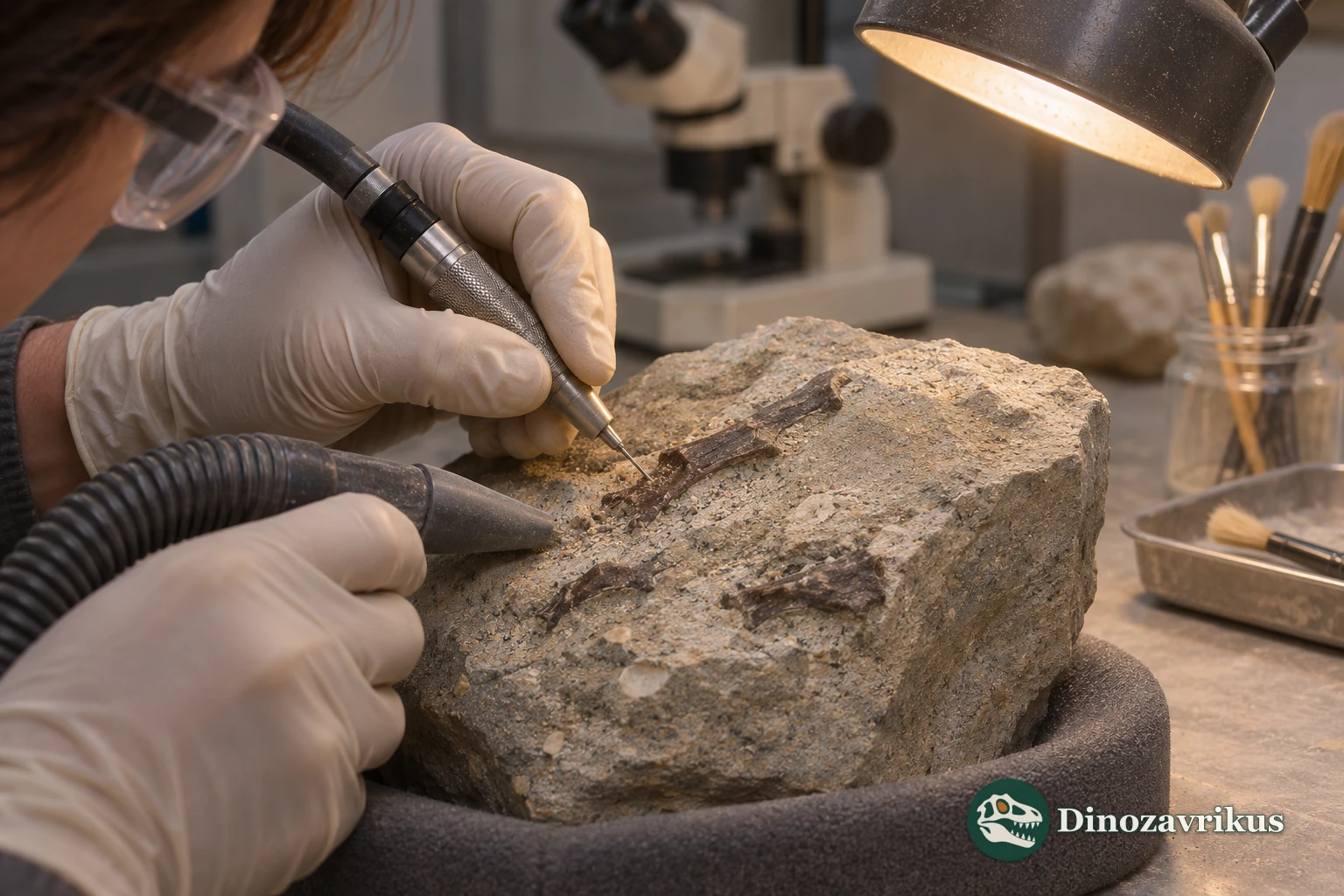
Douglas Emlong found the type specimen on 1 January 1977 at the mouth of Murdock Creek on the Olympic Peninsula. The bones were enclosed in hard sandstone of the Pysht Formation. The block lay loose on the beach, about ten metres from the bank, rather than being excavated directly from a dated bed. G. B. Sullivan gradually prepared the skeleton from its resistant matrix.
Storrs Olson described Tonsala hildegardae in 1980. The generic name combines Latin words for an oar and a wing. The species honours palaeornithologist Hildegarde Howard, who had previously established Plotopteridae. Its holotype is USNM 256518 in the Smithsonian National Museum of Natural History.
The original description assigned the specimen to the late Oligocene. A 2025 study gives its age as latest early or earliest late Oligocene. This is an interpretation of its geological position, not a precise date for the death of the bird. The circumstances of the beach discovery are relevant when assessing that distinction.
A wing adapted for underwater propulsion
The holotype includes portions of the humeri and ulnae, the radius and hand, coracoids, a scapula, vertebrae and the right patella. The humerus is strongly flattened. A broad, thin scapula provided an attachment area for muscles, while the arrangement of the wing joints limited flexion. Together these features support a comparatively stiff paddle used to drive the bird through water.
Olson recorded a row of approximately thirteen depressions on the ulna associated with the attachment of secondary flight feathers. They are attachment traces on a bone, not fossil feathers. The right ulna measures 72.5 millimetres. That measurement describes a particular skeletal element; it does not by itself establish the bird’s standing height, total body length or mass.
Later skeletons UWBM 86873 and UWBM 86874, collected by James and Gail Goedert, expanded the available material. In 2018 a partial skeleton, SMF Av 645, was referred to the species and supplied its first described tarsometatarsus, the bone between the shin and the toes. A 2025 publication added stout first-toe bones in specimen UWBM 110014. These finds reveal more of the hind limb of a seabird that also had to use its feet on land.
The injury in the left wing
The left humerus of the holotype differs sharply from the right one. Its distal portion is distorted and remodelled, and the left ulna is atrophied. Olson interpreted these as changes that developed during life, possibly following a healed fracture. They could have reduced the function of the wing, but neither the cause of the injury nor the length of survival can be established from the skeleton.
There are also separate changes that occurred after death. Some bone ends are broken or worn, although several elements remained close together. The condition of the specimen therefore records both the bird’s own history and what happened to its remains before their final preservation in marine sediment. The two kinds of damage should not be treated as evidence of the same event.
Why a second species was moved to Klallamornis
In 2011 another species was assigned to Tonsala as Tonsala buchanani. Re-examination showed that material originally assembled under that name represented more than one species. The named species was transferred to Klallamornis. Size estimates and swimming calculations for that former second species cannot automatically be applied to Tonsala.
The securely identified bird discussed here is T. hildegardae. Its plotopterid identity is well supported by its bones, but the exact outline of the head, plumage colours and soft-tissue proportions remain uncertain. The marine setting of the fossils does not reveal a particular diving depth. Direct evidence of its food, eggs or nests is also lacking, so the reconstructed scenes show possibilities rather than a complete record of its appearance and behaviour.
Frequently asked questions
Was Tonsala a penguin?
No. It was a plotopterid. Paddle-shaped wings and underwater propulsion resemble the adaptations of penguins, but evolved in a different bird lineage.
What was found at Murdock Creek?
An associated partial skeleton that became the holotype, including wing bones, shoulder elements, vertebrae and a kneecap. Later discoveries added information about the legs.
How large was Tonsala?
The right ulna of the holotype is 72.5 mm long. This measurement alone does not provide a reliable estimate of total body length or mass.
Why does its left wing differ from the right?
The left humerus is deformed and the ulna atrophied. A healed injury was suggested, but the cause of the damage is unknown.