

Trachytherus was a South American notoungulate known especially from skulls, jaws and teeth in Argentina and Bolivia. It is commonly discussed among early mesotheriids, but revisions have questioned whether every species historically placed in the genus belongs to one natural lineage. A large collection from Salla improved the anatomical record without resolving every relationship.
The genus has a place in the ancient mammal catalogue. Notoungulates were a diverse South American radiation of extinct hoofed mammals, not close relatives of modern hoofed mammals merely because some had similar teeth or body forms.
Quick facts
| Scientific name | Trachytherus Ameghino, 1889 |
|---|---|
| Type species | T. spegazzinianus |
| Group | Notoungulata; Mesotheriidae |
| Age | Mainly late Oligocene, depending on the locality and species |
| Range | Argentina and Bolivia |
| Key collection | Skulls and teeth from Salla, Bolivia |
| Diet | Herbivory inferred from teeth; exact foods unknown |
| Main limitation | Skull material is better known than a single complete skeleton |
What do Trachytherus fossils show?
The late Oligocene Salla material includes numerous skulls and teeth. The 2008 description of T. alloxus compared cranial anatomy and age-related variation, while noting that Trachytherus monophyly remained questionable.
Crown form and wear can inform comparisons of food processing. They do not identify a precise menu, and tooth shape changes with age and wear.
The 2008 authors questioned the genus’ monophyly. Historical T.? mendocensis was later placed in Rusconitherium, while some Argentine material remains T. cf. spegazzinianus.
Postcranial remains have been described, but their association and completeness vary. A digging interpretation has been discussed as a functional hypothesis, not direct observation of behaviour.
Ameghino’s genus and its later revisions
Florentino Ameghino named Trachytherus in 1889; T. spegazzinianus is the type species. Early South American fossil collections were assembled under changing standards of locality recording and comparative anatomy, and isolated teeth could be assigned to more than one genus as researchers revised their diagnoses.
A major anatomical study by Guillaume Billet, Christian de Muizon and Bernardino Mamani Quispe in 2008 described T. alloxus from Salla, Bolivia. The authors examined a large sample of basal mesotheriids and discussed the genus’ ontogeny, variation and systematics. They explicitly treated its monophyly as questionable. This is a phylogenetic caution: a familiar genus name does not prove that every included species forms one branch.
What the Salla collection adds
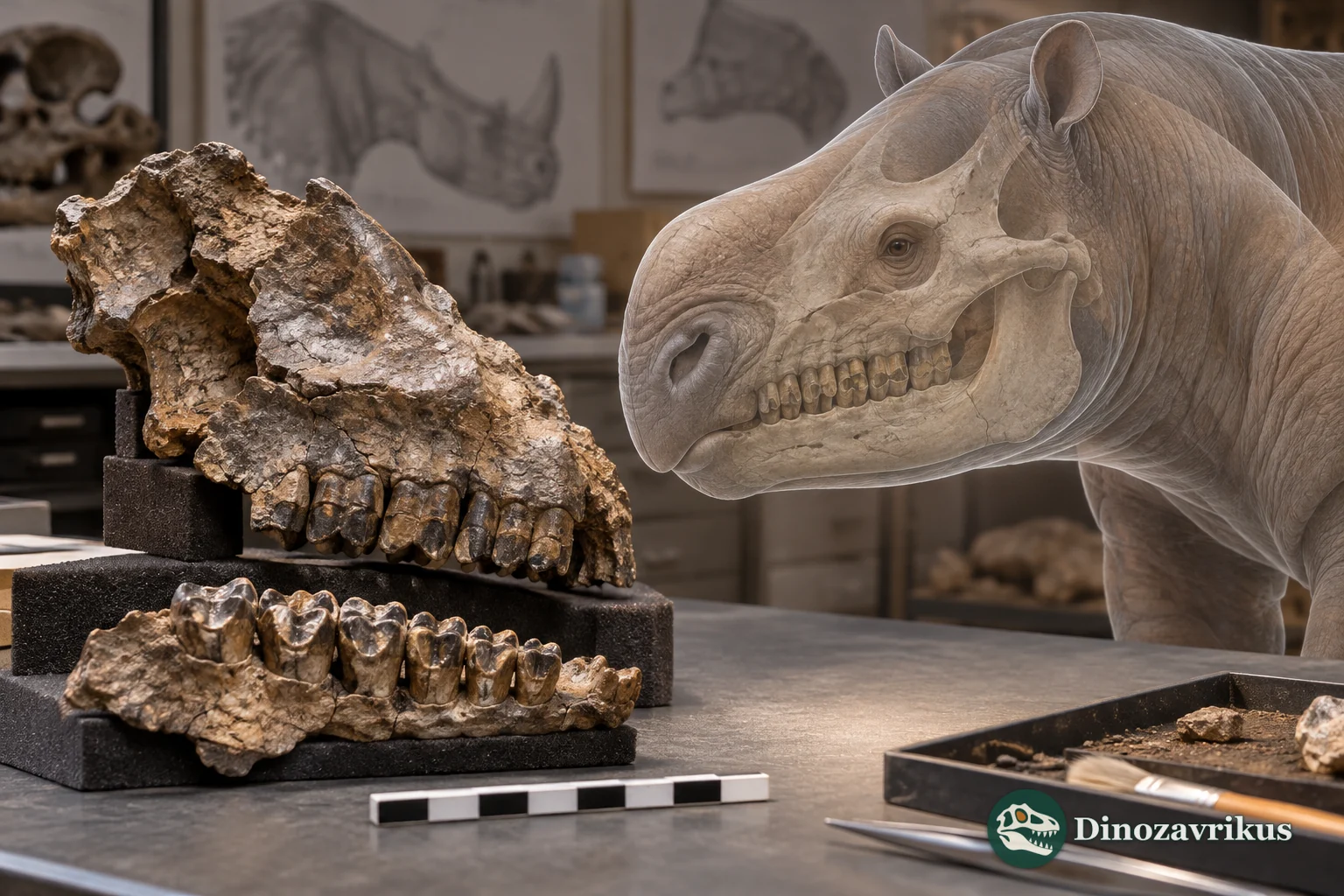
Salla, in Bolivia’s La Paz Department, preserves an unusually informative series of late Oligocene mesotheriids. The 2008 paper describes skulls and cranial fragments, jaws and teeth; the holotype of T. alloxus is MNHN-BOL-V 00635. Some reconstructed anatomical views combine information from several specimens. They should not be read as a single undamaged skull.
Comparisons across growth stages help explain why specimens differ. A tooth that is erupting or worn can look different from the same position in a mature jaw. The authors considered this variation when separating ontogenetic change from traits useful for species diagnosis. Some regions of the skull base are damaged or distorted, limiting how confidently individual openings and articulations can be reconstructed.
Teeth, diet and growth
The cheek teeth are central to identifying and comparing Trachytherus. Crown shape, height, cement and wear can support a broad herbivorous interpretation. They do not preserve which leaves, stems or other plants an animal consumed, and no direct gut contents are known.
Age-related changes also matter for taxonomy. The Salla sample lets researchers compare individuals of different maturity, showing why crown differences should be checked against tooth position, eruption and wear before they are counted as species-level distinctions.
Geography, age and uncertain referrals
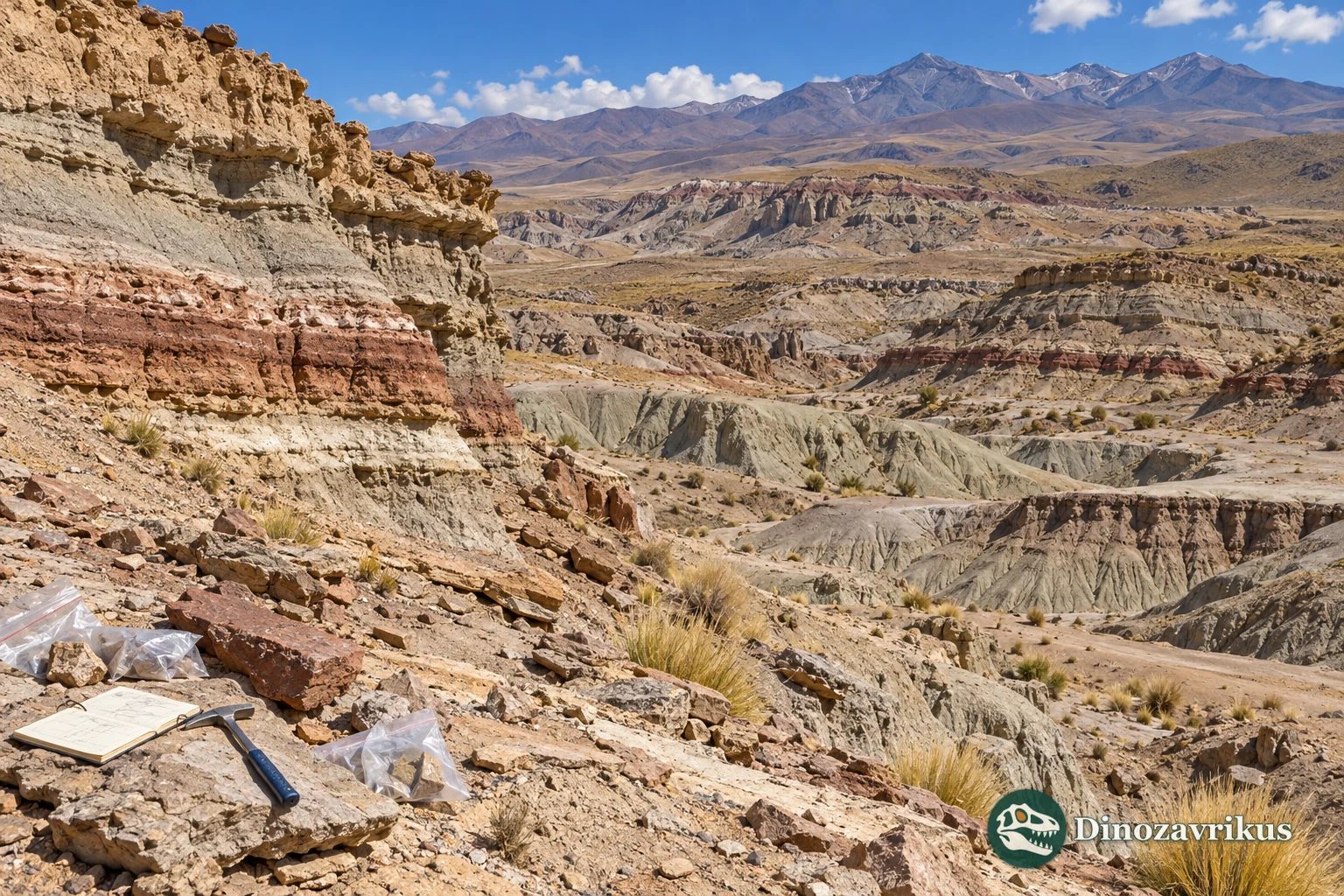
The best-studied material comes from the late Oligocene beds at Salla in Bolivia and several Argentine localities. Age estimates for the richest Salla levels apply to those horizons, not automatically to every fossil assigned to the genus.
Some Argentine teeth and jaw fragments have been reported as Trachytherus cf. spegazzinianus. The abbreviation cf. records a close but unconfirmed comparison with the type species. A fragmentary specimen may lack enough diagnostic anatomy to justify a definite assignment.
The historical name Trachytherus? mendocensis should also be treated carefully. Later work transferred it to the separate genus Rusconitherium. This revision is why old catalogues and newer systematic papers may list different combinations for related fossils.
Movement and the limits of a life reconstruction
Postcranial bones have been described from Salla, but the skull record is more detailed and not every limb element is equally complete or securely associated with a diagnostic cranium. Robust limb anatomy prompted a hypothesis that some mesotheriids could dig or scratch at soil. That functional interpretation is not a direct record of a burrow or observed behaviour.
Precise body mass, coat, colour and soft tissues are not preserved for the genus. A reconstruction can present a plausible medium-sized notoungulate, but should label its body outline and Andean backdrop as artistic choices rather than a photograph-like restoration of one known individual.
Frequently asked questions
When did Trachytherus live?
The best-studied material is late Oligocene. The age of each record depends on its formation and horizon, so a broad genus-level range should not be treated as a single exact date.
Where is the best-known fossil collection?
A large sample of skulls and teeth comes from Salla in Bolivia. Argentine material adds to the record, although some specimens have only provisional identifications.
Why are the genus boundaries debated?
The 2008 systematic study questioned whether Trachytherus is monophyletic. Later work also moved the historical T.? mendocensis to Rusconitherium and retained some other referrals as provisional.
What is known about its diet and digging?
Teeth support a broad herbivory inference but do not identify exact foods. Digging has been proposed from functional comparisons of bones; no direct behavioural trace establishes it.