

Trogontherium is an extinct Eurasian beaver genus. Its best studied species, T. cuvieri, is known from jaws, teeth and limb fragments across a broad region. The common label ‘giant beaver’ can exaggerate the contrast: researchers compare body size roughly with the living Eurasian beaver, while identifying a relatively larger head and a tail without its wide flattened paddle.
The genus belongs in the ice-age animal catalogue. Eucastor is an older beaver-family comparison that helps show why modern behavior cannot simply be transferred to a fossil genus.
Quick facts
| Group | Beavers, Castoridae |
|---|---|
| Well-studied species | Trogontherium cuvieri |
| Main range | Late Pliocene to middle Pleistocene |
| Regions | Eurasia, including the Netherlands and Yakutia |
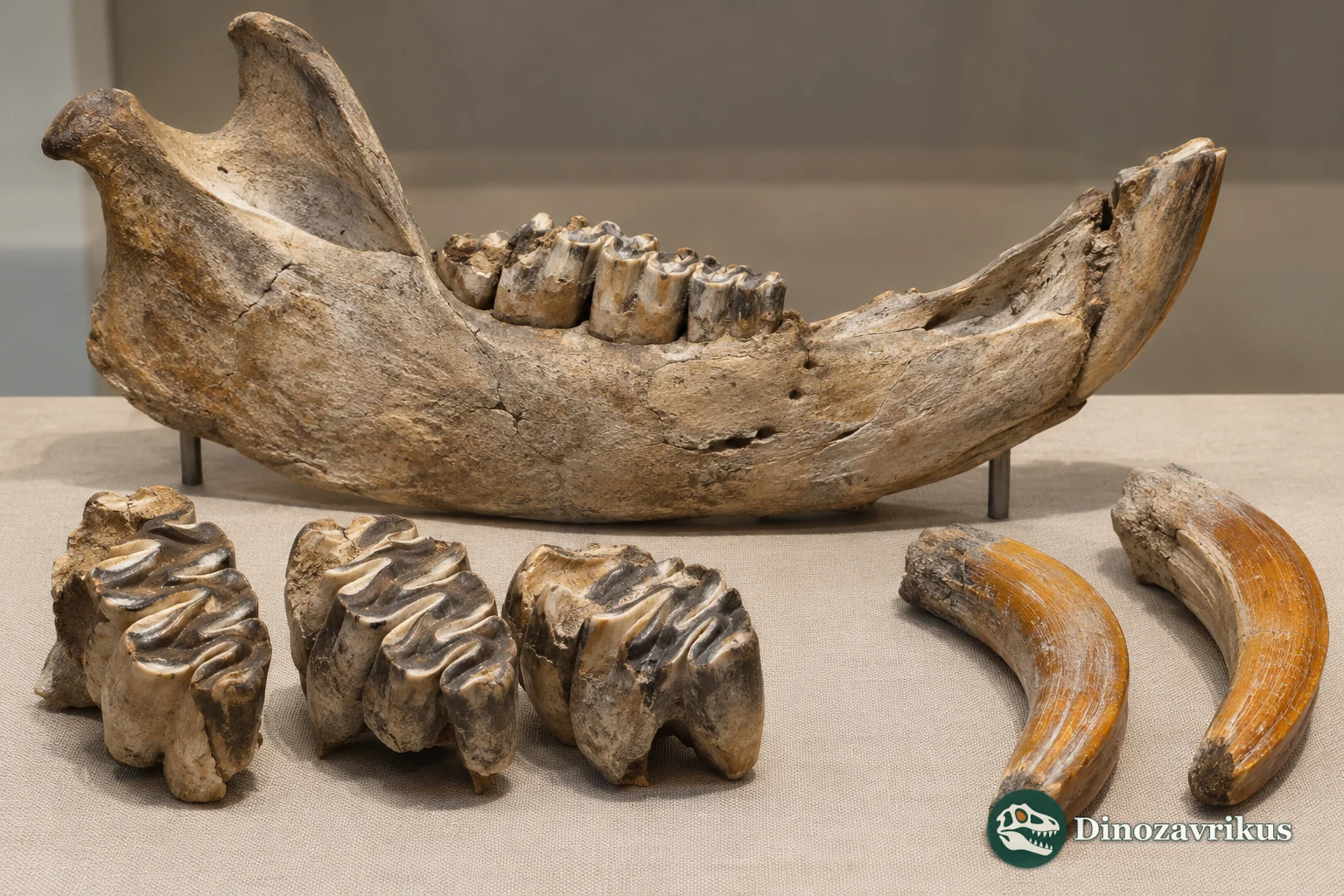
| Fossils | Jaws, incisors, molars and limb bones |
| Tail | Not broadly flattened like that of a living beaver |
What can the fossils tell us?
Dutch workers measured molars at the crown base because their chewing surfaces change with wear. CT slices of a Yakutian molar revealed its inner structure and wear sequence.
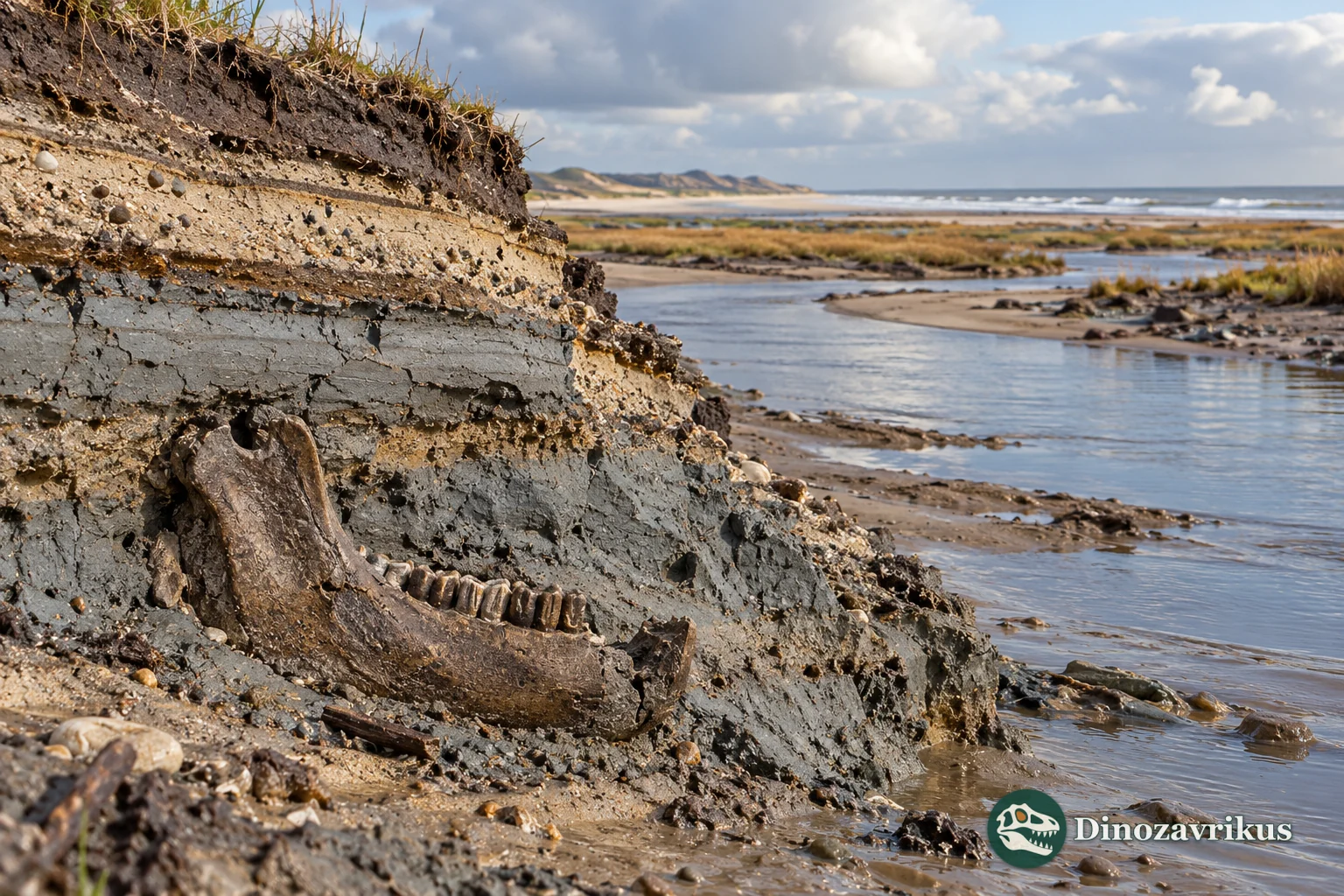
Over a thousand new specimens were recorded from Dutch collections. Maasvlakte 2 was built with dredged North Sea sediment from more than one layer, so its fossils are not a single dated population.
The larger relative head, limbs and unflattened tail suggest a different balance of land and water movement. No known fossil structure proves that Trogontherium built dams.
Tegelen and the mixed North Sea finds
Classic fossils came from early Pleistocene clay around Tegelen in the Netherlands, about two million years old. A recent study reviewed 23 Dutch localities and identified over a thousand newly reported specimens, many from collectors at Maasvlakte 2 near Rotterdam. Isolated teeth and jaws dominate; specimen count is not an animal census.
The sand at Maasvlakte 2 was dredged from the North Sea and moved onto the shore. It mixes source layers and likely populations. Measurements there are often larger and more variable than at Tegelen, but this cannot date every fossil individually. Researchers measured molars close to the crown base because their chewing surfaces change as they wear.
A Yakutian tooth and a younger claim
An isolated upper second molar from Khondu in central Yakutia was assigned to early Pleistocene T. cuvieri. Alexey Lopatin used CT sections to study its inner structure and model its changing wear pattern. One tooth adds a rare eastern Siberian record without revealing the full body or habits of its owner.
Most well-supported records fall between the late Pliocene and middle Pleistocene. A jaw from northeastern China was interpreted as late Pleistocene, with associated mammal bones dated near 40 thousand years. That is an argument about a shared deposit, not a direct date on the beaver jaw; its youngest-occurrence status depends on identification and context.
What its anatomy permits us to infer
Comparisons with Castor fiber indicate a relatively larger head, different limb proportions and an unflattened tail. It was associated with watery habitats but may have moved on land differently from living beavers. Dental microwear from northeast China suggests flexibility in plant feeding across changing environments.
Incisors could process woody plants, yet no fossil dam or lodge has been securely attributed to this genus. Tree felling, coat color and daily routines remain uncertain. The cover intentionally shows a rounded tail rather than the modern flat paddle.
Frequently asked questions
Was Trogontherium much larger than living beavers?
Not necessarily. Published comparisons describe a broadly similar body size to the Eurasian beaver, with a relatively larger head and different tail.
Why are Maasvlakte 2 fossils hard to date individually?
The shore was made from North Sea sediment dredged from different original layers, mixing fossils of several ages.
Did Trogontherium build dams?
No dam or lodge has been securely attributed to it. Modern beaver behavior is not direct evidence for the extinct genus.
Did it survive into the late Pleistocene?
A Chinese jaw has been interpreted that way, but the roughly 40,000-year dates are from associated bones, not directly from the jaw.