

Tsunyidiscus was a small Early Cambrian trilobite. A mature shell had three freely jointed thoracic segments. Some Chinese specimens preserve parts of the underside of the head inverted beneath the trunk. Their position helped palaeontologists identify discarded shells from moulting.
Quick facts
| Group | Trilobita, eodiscids |
|---|---|
| Age of key material | Cambrian Stage 3 |
| Genus named | Zhang Wentang, 1966 |
| Type species | Tsunyidiscus niutitangensis |
| Key records | Guizhou and Hubei, South China |
| Mature thoracic segments | Three |
What can the fossils tell us?
The arrangement in two fossils supports interpretation as moults. The animal's movements have to be inferred from the displaced shell.
Their symmetrical arrangement suggests a connection on the underside. The shape of that connection remains uncertain.
In Tsunyidiscus acutus an additional tail segment formed after the three thoracic segments were already in place.
Tsunyidiscus from the Niutitang Formation
Zhang Wentang established Tsunyidiscus in 1966. Its type species T. niutitangensis had first been named Hebediscus niutitangensis. It occurs in the Early Cambrian Niutitang Formation of Guizhou.
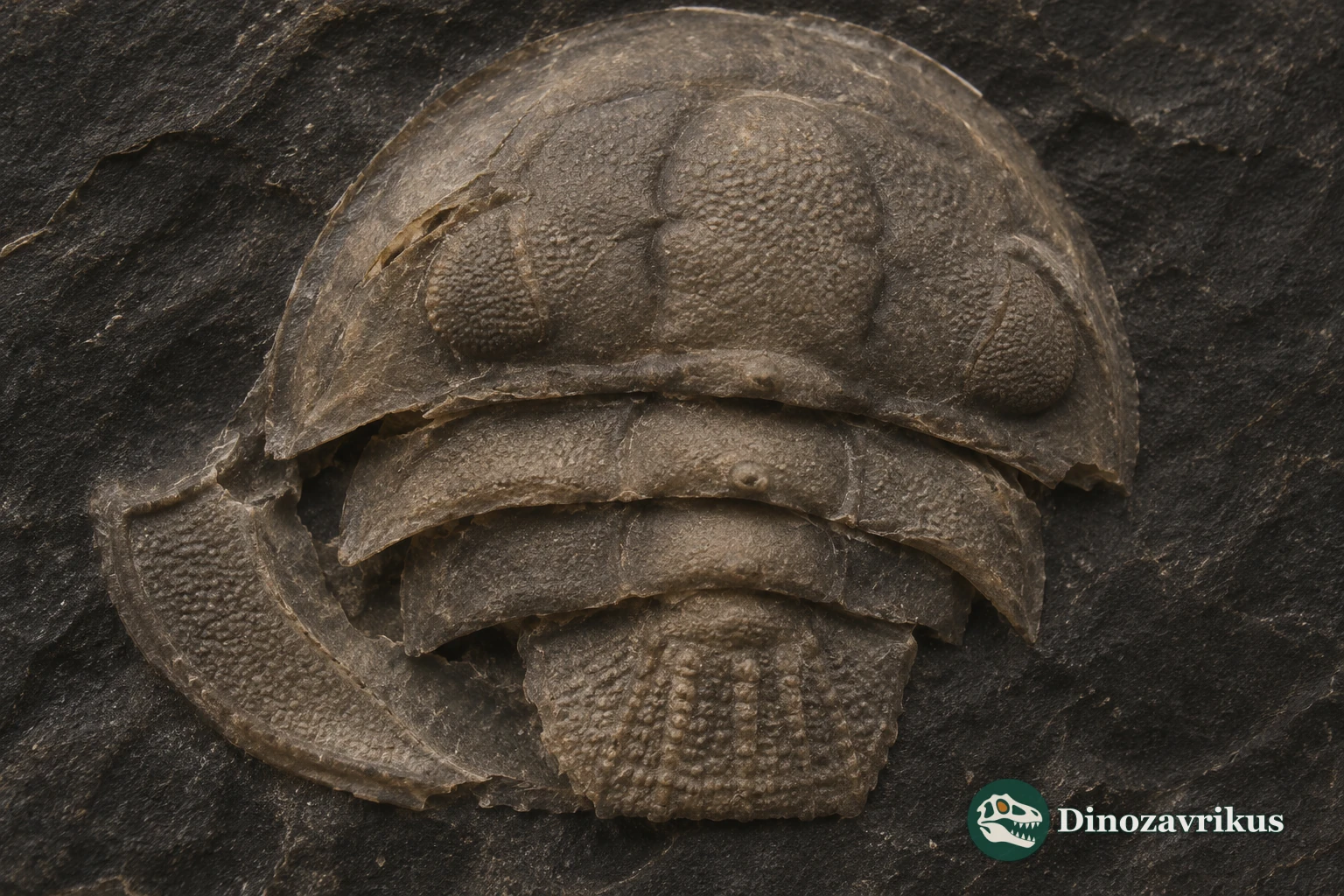
The juvenile specimen KSNT-78-1958A has two free thoracic segments. A mature individual, GZU-2022-1, from the Mingxinsi Formation has three. The second fossil was assigned to the genus with its species left open.
How the moults were recognised
The juvenile preserves the impression of an inverted left free cheek and parts of the underside of the head. In the mature specimen both cheeks are inverted symmetrically, even though the central upper head shield, thorax and tail remain joined.
This arrangement is consistent with the lower part of the head shell detaching during moulting. The authors inferred that the cheeks may have been connected beneath the head. The impressions show how the shell parts moved relative to one another, but do not preserve enough detail to reconstruct the entire underside.
Growth after the thorax was complete
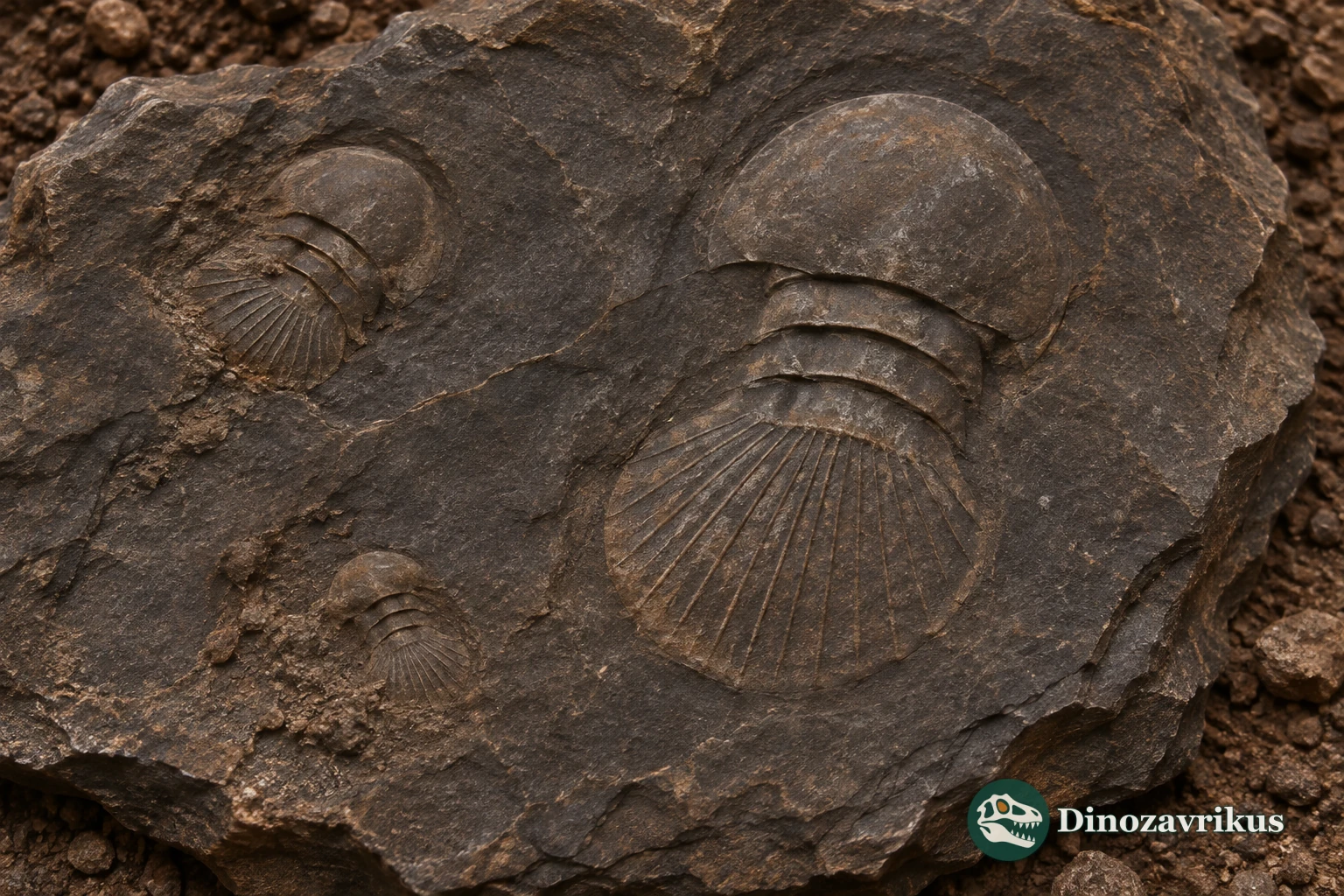
A series of T. acutus from the Shuijingtuo Formation of Hubei shows changes to the tail shield. The earliest mature stage had three thoracic segments and four segments in the tail shield. Some specimens in the next stage had an additional tail segment.
The series indicates that the formation of freely jointed thoracic segments could stop before the entire trunk stopped gaining segments. Fossils of another small trilobite, Pagetia, also allow comparison of the head, thorax and tail at different growth stages.
Frequently asked questions
How many thoracic segments did a mature Tsunyidiscus have?
Three. The younger Niutitang specimen had two free thoracic segments.
How can the fossils be recognised as moults?
Parts of the lower head are dislodged and inverted beneath the trunk, while the upper shell remains articulated.
Where were the fossil moults found?
In the Niutitang and Mingxinsi formations of Guizhou, South China.
Did the tail change after the thorax reached its final segment number?
Yes. Some T. acutus fossils show that another segment was added to the tail shield afterward.