

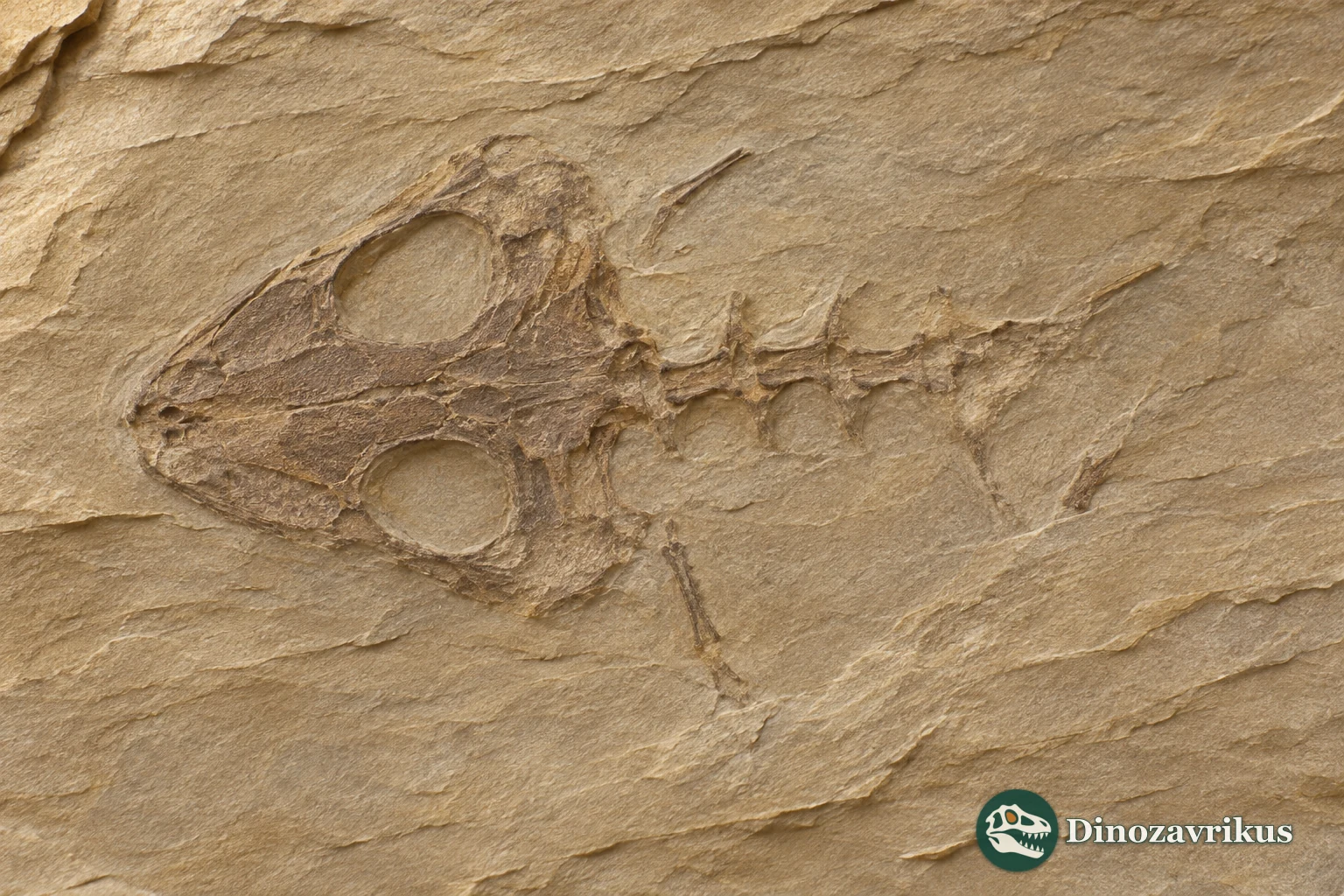
Tungussogyrinus bergi was a small aquatic amphibian from the Lower Tunguska basin in Siberia. In one specimen, a skull about 8 mm long is preserved with the trunk and tail. Impressions of external gills and unusual teeth offer clues to how it lived.
Quick facts
| Group | Temnospondyls, branchiosaurids |
|---|---|
| Age | Late Permian, Changhsingian (stratigraphic correlation) |
| Region | Asia (Lower Tunguska basin, Siberia) |
| Length | About 5–11 mm (skull length in studied specimens) |
| Type species | Tungussogyrinus bergi |
| Scientific name | Tungussogyrinus |
| Diet | May have scraped algae |
What can the fossils tell us?
Specimen PIN 4262/4 preserves three-cusped front teeth, short external gills and parts of the body behind the head.
The shape of the front teeth and lightly built premaxillae led to the proposal that the animal scraped algae from underwater surfaces.
External gills are preserved on some of the larger individuals. They are consistent with the retention of larval traits, although the series does not establish the entire life cycle.
Efremov’s discovery
Ivan Efremov described the species in 1939. The type came from the Lower Tunguska between the mouths of the Upper and Lower Lyulyukta streams. The counterpart PIN 206/1b was available for redescription, while the main slab of the type could no longer be located. More specimens from the Upper Lyulyukta area and the Anakit River preserve skeletal regions that complement the type material.
A small skeleton with external gills
Studied skulls measure about 5–11 mm. PIN 4262/4 preserves external gills and the tail, along with small branchial denticles in the throat region. The structure of the palate and branchial denticles supports the assignment to Branchiosauridae. A long anterodorsal process on the ilium distinguishes Tungussogyrinus from other members of the family. The gills support an interpretation of neoteny, the retention of larval features. Some other branchiosaurids, such as Melanerpeton, also yield specimens with evidence of metamorphosis.
What the teeth suggest
In 2009 Ralf Werneburg confirmed that some of the front teeth have three cusps. They belong to the jaws, while branchial denticles occupied the throat. Werneburg compared the multi-cusped teeth to the structures used by some living aquatic animals to scrape algae. The fossils provide a basis for the comparison, with the actual diet unresolved.
Lake deposits near the Permian–Triassic boundary
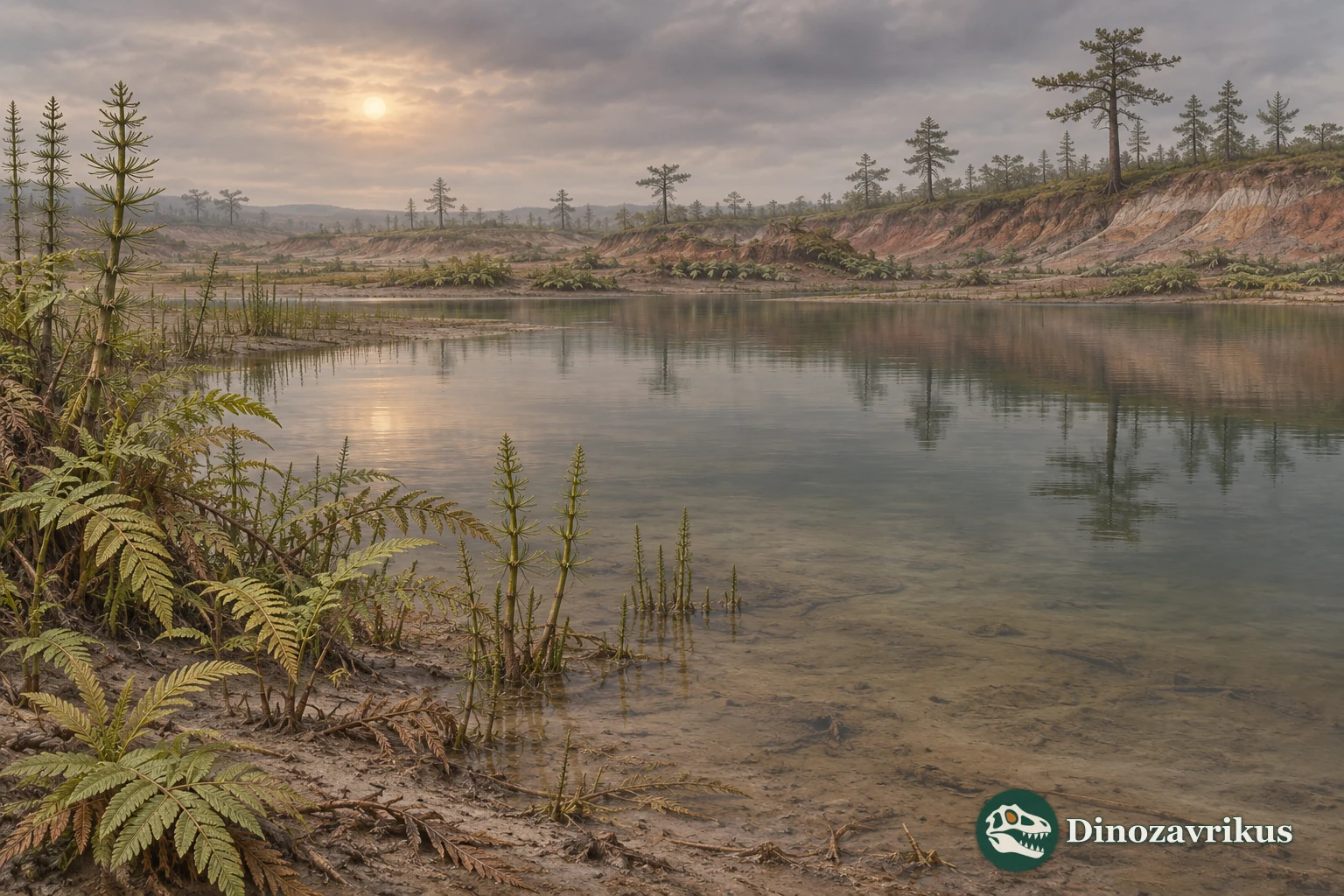
The fossils occur in the lower Bugarikta Formation alongside fishes and freshwater invertebrates. An Early Triassic age was proposed using comparisons of fauna and algae. In 2021 a study of the lake deposits at Anakit and Nizhnyaya Lyulyuikta assigned these sections to the Changhsingian at the end of the Permian. Short external gills are consistent with well-oxygenated water. The comparisons with living larvae allow for several settings, including shallow lakes.
Frequently asked questions
Where was Tungussogyrinus found?
Its fossils come from the Lower Tunguska basin in Siberia, including material near the Upper Lyulyukta and on the Anakit River.
How small was Tungussogyrinus?
The skulls examined in the redescription range from about 5 to 11 mm in length. The trunk and tail added to the total length.
How do we know it had external gills?
Impressions behind the head appear on the type counterpart and on specimen PIN 4262/4.
Did Tungussogyrinus eat algae?
Algal scraping was proposed from the form of its front teeth and snout. The fossils leave its diet unresolved.