

Unktaheela specta was a small polycotylid plesiosaur from the middle Campanian Western Interior Seaway. Two skulls with associated skeletal elements show a distinctive combination of large orbits, a broad rear skull, a short neck and an elongated snout. Its estimated length is modest, but the authors interpreted both specimens as osteologically mature rather than assuming that small size meant juvenile age.
Quick facts
| Type species | Unktaheela specta |
|---|---|
| Group | Plesiosaur; polycotylid |
| Age | Middle Campanian, about 80.5 million years ago |
| Formation | Sharon Springs Formation |
| Region | Wyoming and South Dakota, United States |
| Specimens | Holotype UCM 35059; paratype SDSM 142501 |
| Estimated length | About 2.3–2.6 m from incomplete material |
| Maturity | Both specimens interpreted as osteologically mature |
Evidence guide
The holotype includes a mostly articulated skull and jaw plus parts of the vertebral column, girdles and paddles. The skull is compressed at an angle and the skeleton is incomplete, so whole-animal art necessarily adds unsupported details.
SDSM 142501 provides comparative material. The authors diagnosed the genus from a combination of cranial, vertebral, pelvic and paddle features rather than a single unusual bone. It cannot reveal soft tissue or behaviour.
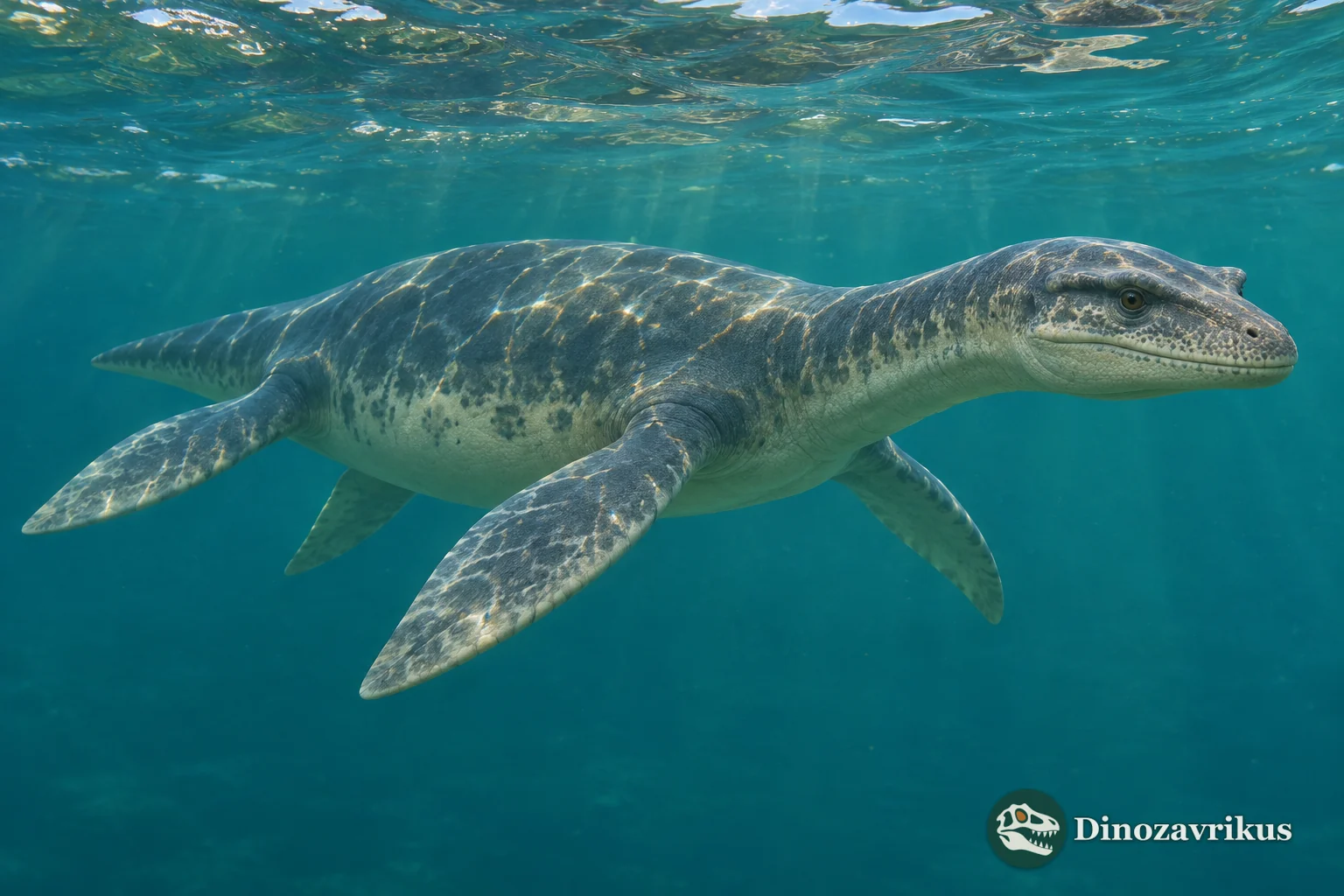
Large orbits and a broad bony ledge above each eye are anatomical features of the skull. The idea that the ledge shaded the eyes during near-surface hunting is a functional hypothesis, not a behaviour preserved directly in the fossil.
The estimated body length is about 2.3–2.6 m. The authors considered both specimens mature based on skeletal fusion, so their small size is not explained simply as a juvenile growth stage.
Discovery and naming
The holotype, UCM 35059, was collected in October 1975 by a University of Colorado Museum field crew led by Kenneth Carpenter. It came from a site 8.5 miles east of Redbird in Niobrara County, Wyoming, in the Baculites obtusus zone of the Sharon Springs Formation. The authors place the fossil at approximately 80.57–80.5 million years old, in the middle Campanian.
The specimen had previously been discussed within the framework of other polycotylids. In 2024, Robert O. Clark, F. Robin O’Keefe and Sara E. Slack compared it with paratype SDSM 142501 and named a distinct genus and species. Their revision also reconsidered the boundaries of several related forms, including taxa previously placed in Dolichorhynchops.
A distinctive skull and skeleton
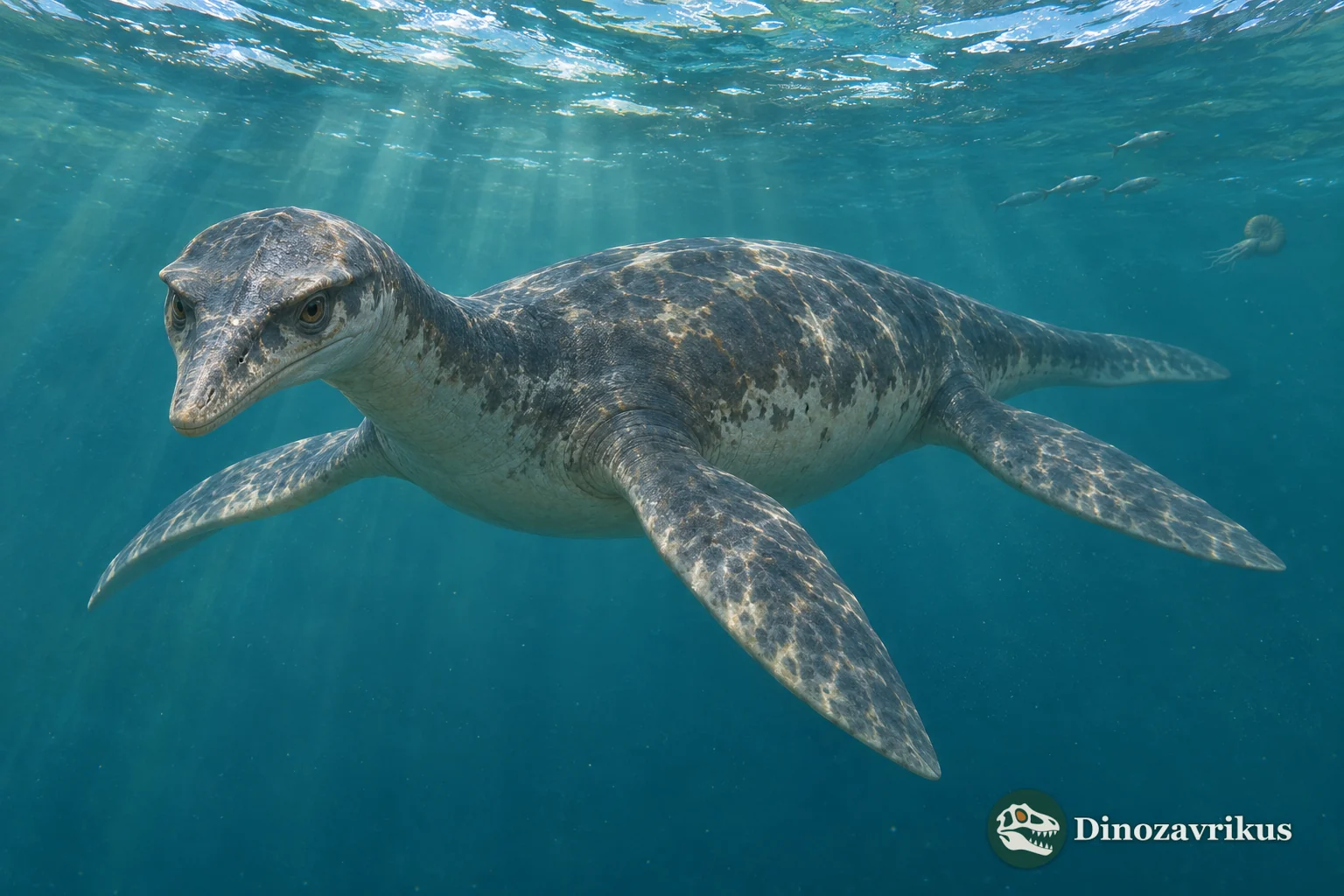
Unktaheela had a short neck, an elongated snout and numerous pointed teeth, a body plan familiar among polycotylid plesiosaurs. Its skull combines large orbits with a wide occiput, a short postorbital region and broad bony ledges above the eyes. The preserved skulls are compressed, so the published anatomy has to be interpreted with that distortion in mind.
The diagnosis also draws on the shape of the parasphenoid, broad neural spines, pelvic bones and paddle elements. These details help separate the genus from its relatives and support its placement within Polycotylidae. A comparison with [Martinectes](/martinectes/), [Scalamagnus](/scalamagnus/) and [Dolichorhynchops](/dolichorhynchops/) shows how recent revisions have reshaped relationships among short-necked plesiosaurs.
Age and evolutionary position
The fossil-bearing interval is assigned to the middle Campanian of the Late Cretaceous. In that region, the Western Interior Seaway covered a broad corridor through central North America. The formation and ammonite zone constrain geological age; they do not by themselves establish where the animal spent most of its life.
The authors placed Unktaheela among polycotylid plesiosaurs and proposed a subgroup called Dolichorhynchia for a set of related taxa. A phylogenetic tree expresses a hypothesis based on scored anatomical characters. It is not evidence that one named genus was the direct ancestor of another.
The genus name honours a keen-eyed, horned water serpent in Lakota tradition. Its large orbits inspired the species name and discussion of visual function, but fossil bones cannot establish visual acuity or eye colour.
Size, maturity and possible behaviour
The paper estimates body length at about 2.3–2.6 m. That figure is calculated from incomplete fossils, not read from a complete skeleton. The two skulls measure about 44.4 and 43.0 cm. Skeletal fusion led the authors to interpret both known individuals as osteologically mature, making the small size a feature of the taxon rather than a conclusion based only on juvenile proportions.
The ledges above the eyes may have shaded the orbits when the animal looked upward or hunted near the surface. That is a testable functional proposal. The fossil record does not preserve the animal swimming, hunting, or choosing prey, so the scene below illustrates a possibility rather than a documented event.
Frequently asked questions
Where was Unktaheela found?
The holotype was collected east of Redbird in Niobrara County, Wyoming. The fossils come from the Sharon Springs Formation of the Western Interior Seaway region.
How large was Unktaheela?
The authors estimated a body length of about 2.3–2.6 m from incomplete material. The skulls measure about 44.4 and 43.0 cm.
Why are the small specimens considered mature?
The authors interpreted skeletal fusion in both known individuals as evidence of osteological maturity. Small size alone would not establish whether a fossil was juvenile.
What might the ledges above the eyes have done?
They may have shaded the eyes when the animal looked upward or hunted near the water surface. This remains a functional hypothesis, not a directly preserved behaviour.