

Xenocheilos was a late Cambrian trilobite from North America. The genus was established from the central portion of a head shield. Its front rim slopes downward, and the area in front of its raised central lobe lacks a distinct median boss.
Quick facts
| Group | Trilobites, family Nepeidae |
|---|---|
| Age | Late Cambrian, Elvinia Zone |
| Region | North America, including Texas, Oklahoma, Utah and Pennsylvania, United States |
| Diet | Unknown |
| Type species | Xenocheilos minutum |
| Holotype | USNM 185741 |
What can the fossils tell us?
USNM 185741 is a cranidium from the Morgan Creek Member of the Wilberns Formation at Threadgill Creek.
The sloping border and other features of the head shield help distinguish Xenocheilos from related trilobites.
One Oklahoma cranidium has been compared tentatively with the type species. Its preservation leaves the species assignment uncertain.
The type specimen from Texas
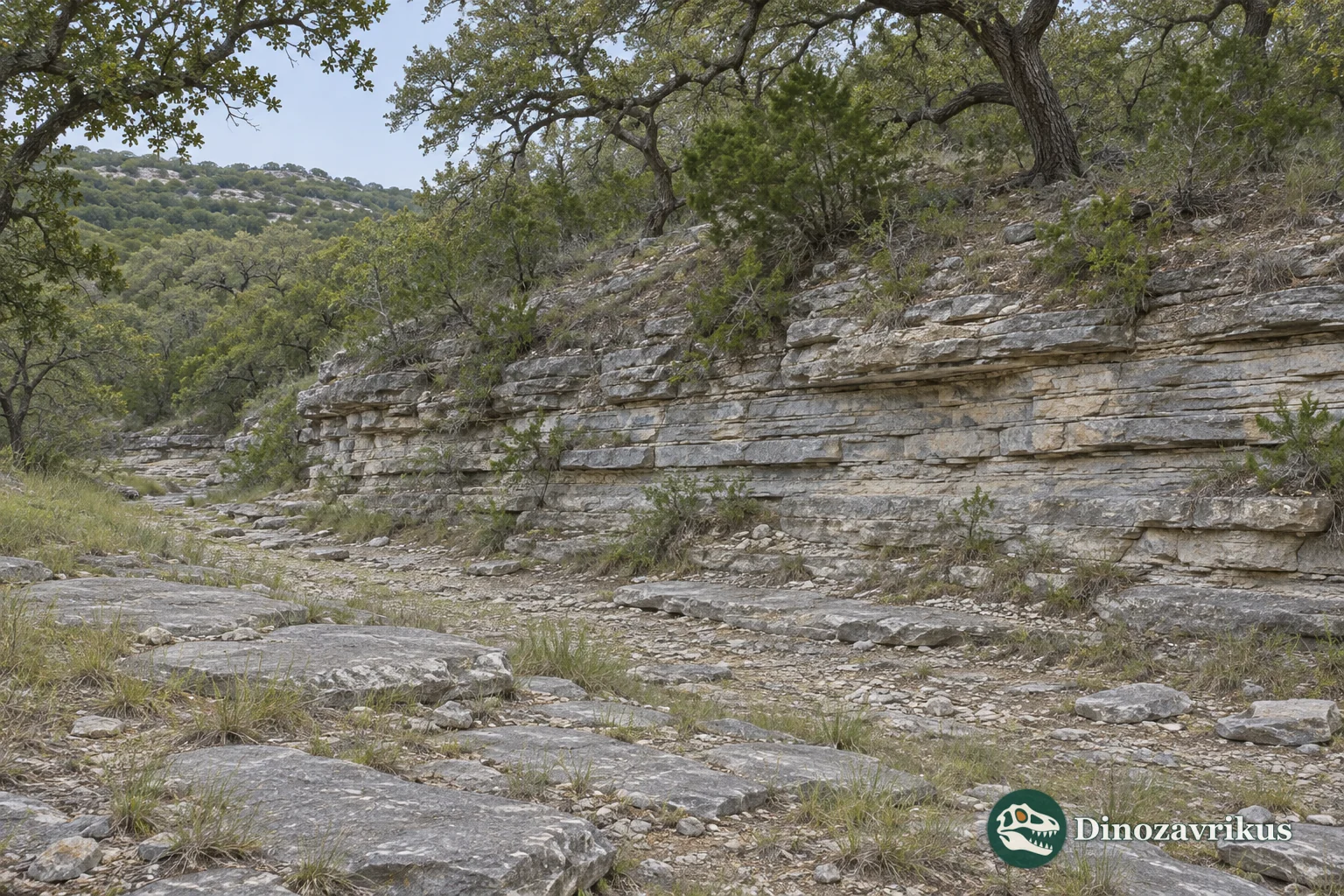
James Wilson described Xenocheilos minutum in 1949. The holotype, USNM 185741, came from the Morgan Creek Member of the Wilberns Formation at Threadgill Creek in Mason County. A specimen from Baldy Mountain in neighboring Burnet County adds to the Texas record. Both specimens preserve the cranidium, the central portion of the head shield without the free cheeks.
How the head shield is shaped
The cranidium of X. minutum is strongly arched in front and side views. Its axial lobe, the glabella, rounds off in front and is separated from the surrounding shield by shallow furrows. The surface ahead of it drops sharply toward the border, which slopes downward and then flattens near the front edge.
In their 2009 revision, Stephen Westrop and Jonathan Adrain placed Xenocheilos in the family Nepeidae. They diagnosed the genus in part by the sloping border and the absence of a distinct median boss in front of the glabella. In the type species, the rear corners of the cranidium are elongated and swept backward.
Which species belong to the genus
X. spineum was described from the Ore Hill Member of the Gatesburg Formation in Pennsylvania. After revision, the holotype retained its name and one of the specimens formerly placed with it could be assigned only to the genus. Reexamination of head shields also led to the exclusion of species previously called X. granulosum and X. orthos.
The genus occurs in the late Cambrian Elvinia Zone. Bynumina is also found within that zone. The zone helps correlate separate rock sections, while the bed and associated species place any individual specimen more precisely.
Frequently asked questions
When was the type species described?
James Wilson named Xenocheilos minutum in 1949.
Which part identifies Xenocheilos?
Its main diagnostic features are on the cranidium, the central portion of the head shield.
Where was the holotype found?
It came from the Morgan Creek Member of the Wilberns Formation at Threadgill Creek, Mason County, Texas.
Did all historically assigned species remain in the genus?
No. A new look at the head shields excluded the species previously called X. granulosum and X. orthos.