

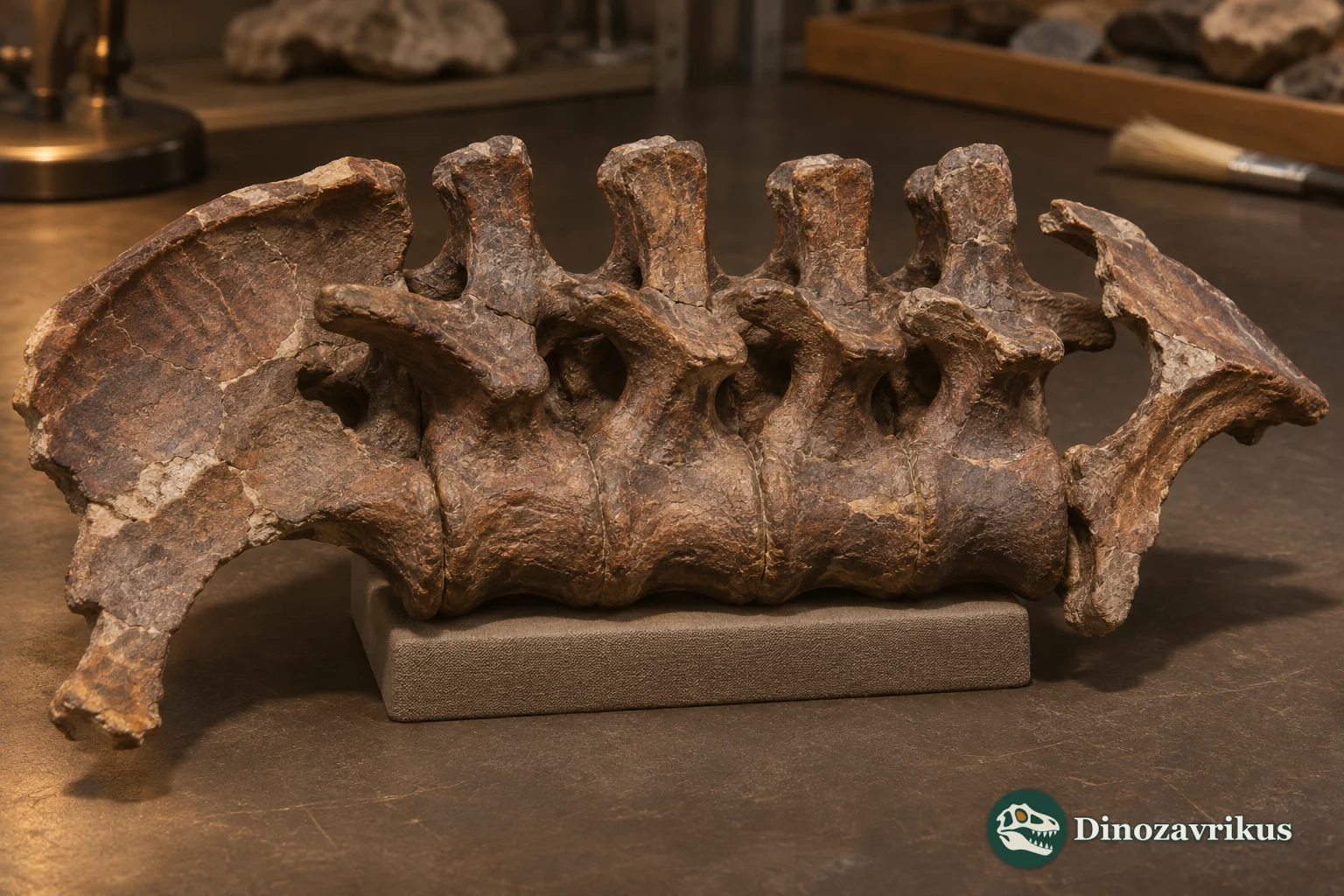
Xingxiulong was an Early Jurassic sauropodomorph from Yunnan, China. Its sacrum contains four vertebrae. This combination is especially common in later sauropodomorphs. Xingxiulong shows how early members of the broader group could have a strongly built pelvis alongside more ancestral skeletal features.
Quick facts
| Group | Sauropodomorphs (Sauropodomorpha) |
|---|---|
| Age | Early Jurassic |
| Region | Asia (Yunnan, China) |
| Diet | Herbivore |
| Type species | Xingxiulong chengi |
| Type species holotype | LFGT-D0002 |
| Formation | Lufeng Formation, Shawan Member |
| Sacral vertebrae | Four in both described species |
What can the fossils tell us?
The middle pair are interpreted as the original sacral vertebrae. The other two originated in the back and tail regions.
The three original skeletons preserve some of the same elements. Researchers can distinguish shared features from ones known in only a single specimen.
The second species differs around the femur and ankle, and preserves two phalanges in its fifth toe. Both have the same number of sacral vertebrae.
Three skeletons from one layer
Three partial skeletons were recovered together near Sankeshu in Lufeng in 2013. Ya-Ming Wang, Hai-Lu You and Tao Wang described them in 2017. The holotype LFGT-D0002 includes parts of the skull and jaws, vertebrae, the pelvis, femora and parts of the feet. LFGT-D0001 and LFGT-D0003 preserve additional material. Their burial together cannot establish how the animals lived or associated.
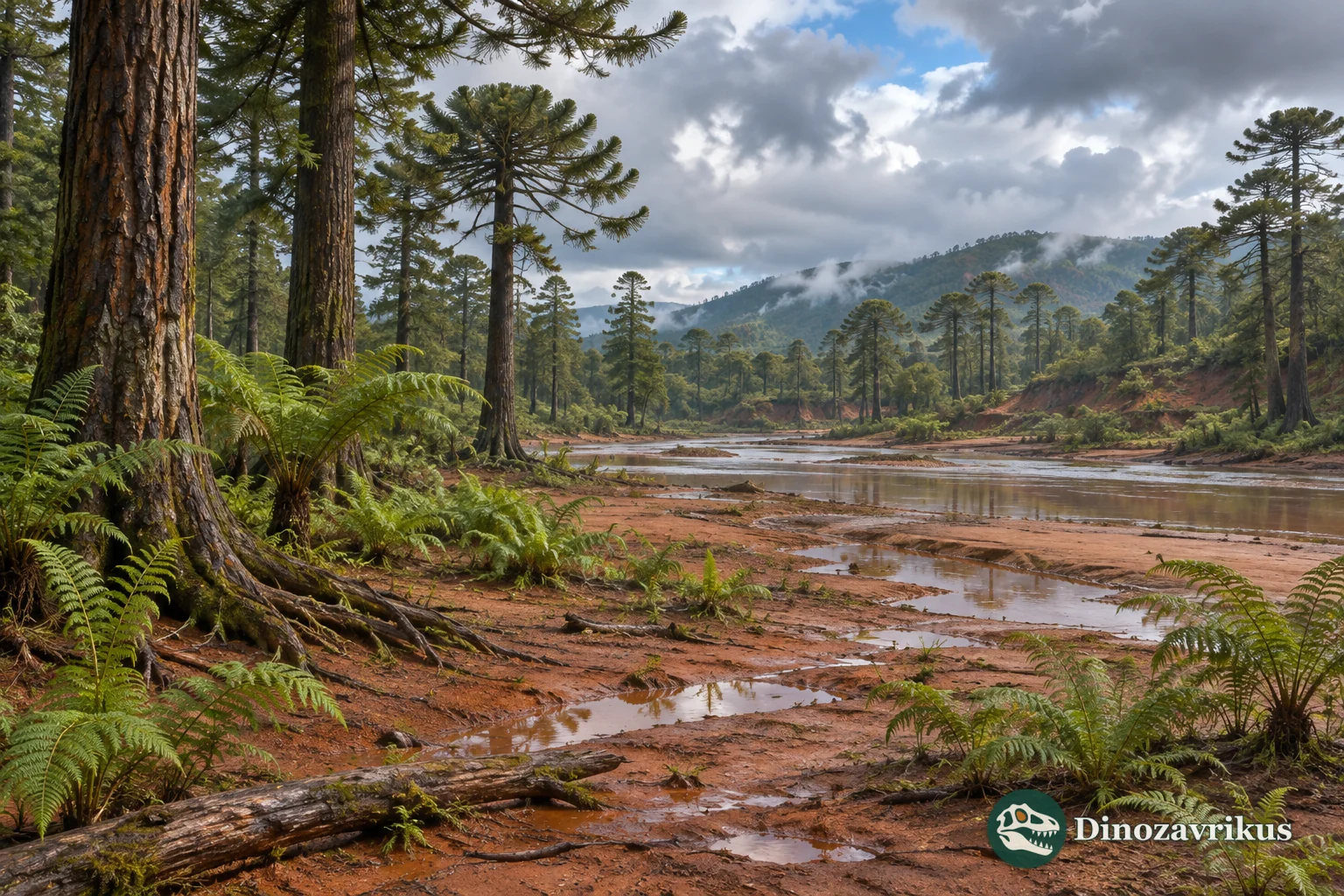
The fossils came from the base of the Shawan Member of the Early Jurassic Lufeng Formation. Some cervical vertebrae resemble those of Lufengosaurus, whereas the sacrum differs. The name refers to the local Xingxiu Bridge and the Chinese word for dragon. The species name chengi honours stratigrapher Zheng-Wu Cheng.
The four-vertebra sacrum
A detailed study of the vertebral column interpreted the middle two vertebrae as primordial sacrals. It identified the first as a vertebra incorporated from the back and the last as one taken in from the tail. The original description also noted the long lower portion of the pubis. In combination, these features reveal a strong pelvis in an early-diverging sauropodiform.
The femoral shaft in the studied material is 9.4–10.1 centimetres wide from side to side. Despite this robust femur, the skeleton lacks several features associated with habitual quadrupedal movement in sauropods. Its proportions allow a bipedal pose, while the frequency of two- or four-legged locomotion is unresolved. A plant diet is inferred from its affinities and skull anatomy, while the particular plants it ate are unknown.
A second species from Lufeng
Xingxiulong yueorum was described in 2025 from a skeleton without a skull. It differs from the type species in the shape of a major projection on the femur and the rear surface of the ankle bone. The authors also described two phalanges in its fifth toe. Both species share a four-vertebra sacrum, and the comparative analysis supported grouping them in a single genus.
Frequently asked questions
Where was Xingxiulong found?
In the Lufeng Formation in Yunnan, China. The type material came from the site near Sankeshu.
Do both species have four sacral vertebrae?
Yes. This feature is present in both species and helps establish their affinities.
Which bones distinguish the two species?
The second species differs in the shape of a projection on the femur, the ankle and the bones of the fifth toe.
What does the name Xingxiulong mean?
It combines the name of the Xingxiu Bridge with the Chinese word for dragon.