

Yulong mini was an oviraptorid from the Late Cretaceous of Henan Province, China. Researchers first described it from very small individuals with skulls and partial skeletons. A larger specimen was subsequently referred to the species. It preserves much of the tail alongside parts of the shoulders and arms.
Quick facts
| Group | Theropods (Oviraptoridae) |
|---|---|
| Age | Late Cretaceous |
| Region | Asia (Henan, China) |
| Type species | Yulong mini |
| Holotype | HGM 41HIII-0107 |
| Formation | Qiupa Formation |
| Age of larger specimen | About five or six years from bone microstructure |
| Diet | Unknown |
What can the fossils tell us?
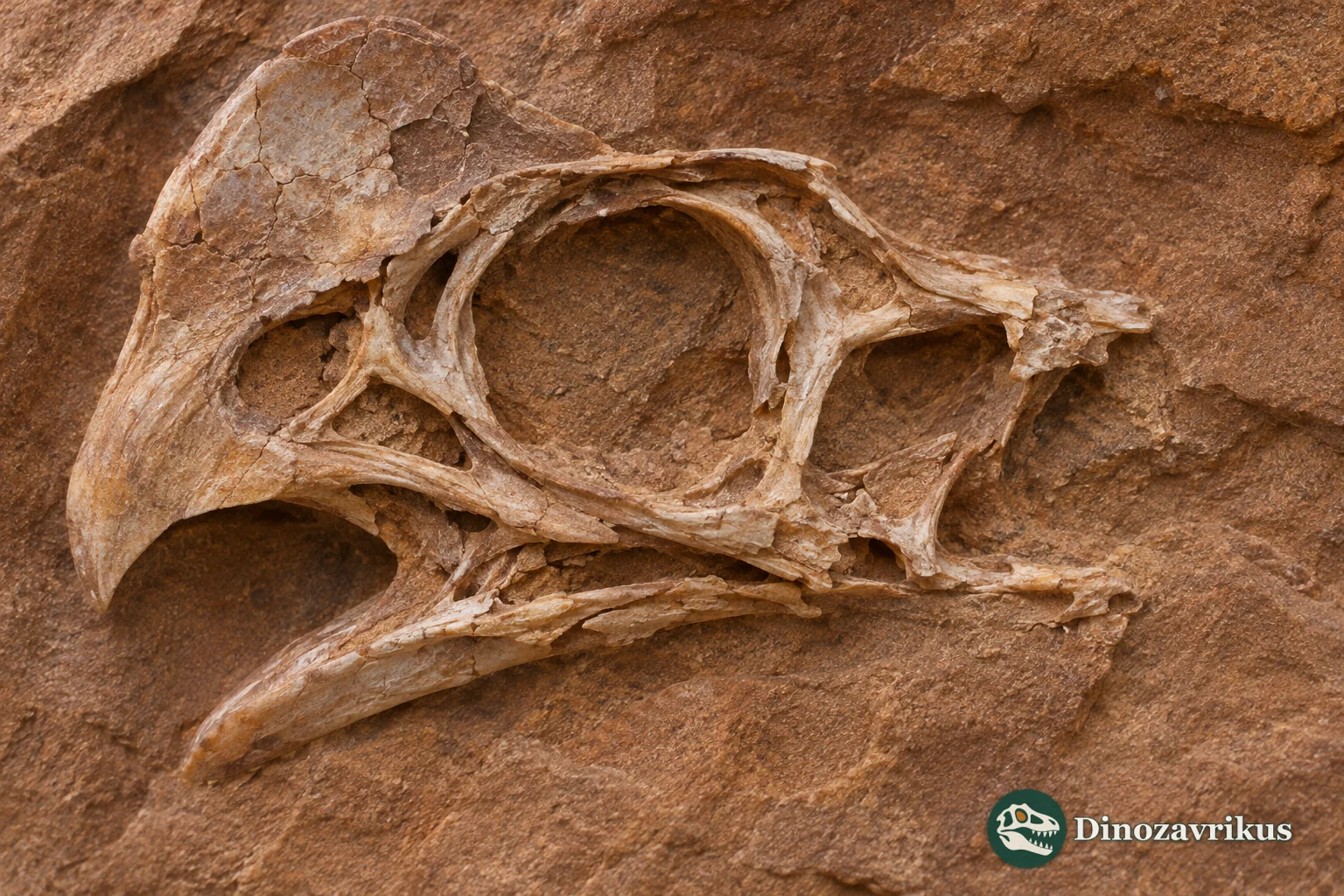
Many skull bones and vertebral arches had not fused. The rib section lacks growth lines, suggesting that the type individual was less than a year old.
Growth marks in the larger specimen support an age of five or six years. Its final size at full maturity is unknown.
The eggs are of a type associated with oviraptorids. Yulong is a plausible candidate, but the clutch cannot be securely assigned to the species.
The tiny fossils from Luanchuan
Junchang Lü, Philip Currie and colleagues described Yulong in 2013. The holotype HGM 41HIII-0107 from the Qiupa Formation preserves most of the skeleton, including the skull and lower jaws. Another small individual lay nearby. Additional finds include partial skulls, some neck bones and an isolated ilium. The type material is held in the Henan museum collection. The name combines Yu, a short name for Henan, with the Chinese word for dragon. The species name mini refers to the size of the first specimens.
Juvenile Yulong had a round orbit more than a third of the length of the skull. The jaws were toothless. The premaxilla bears a conspicuous opening in front of the nostril. Some of the skull openings are arranged like those in Citipati, although the contacts between the bones differ. Skull shape and limb proportions inform comparisons of possible diets among oviraptorids. The food eaten by Yulong itself remains unknown.
The larger individual
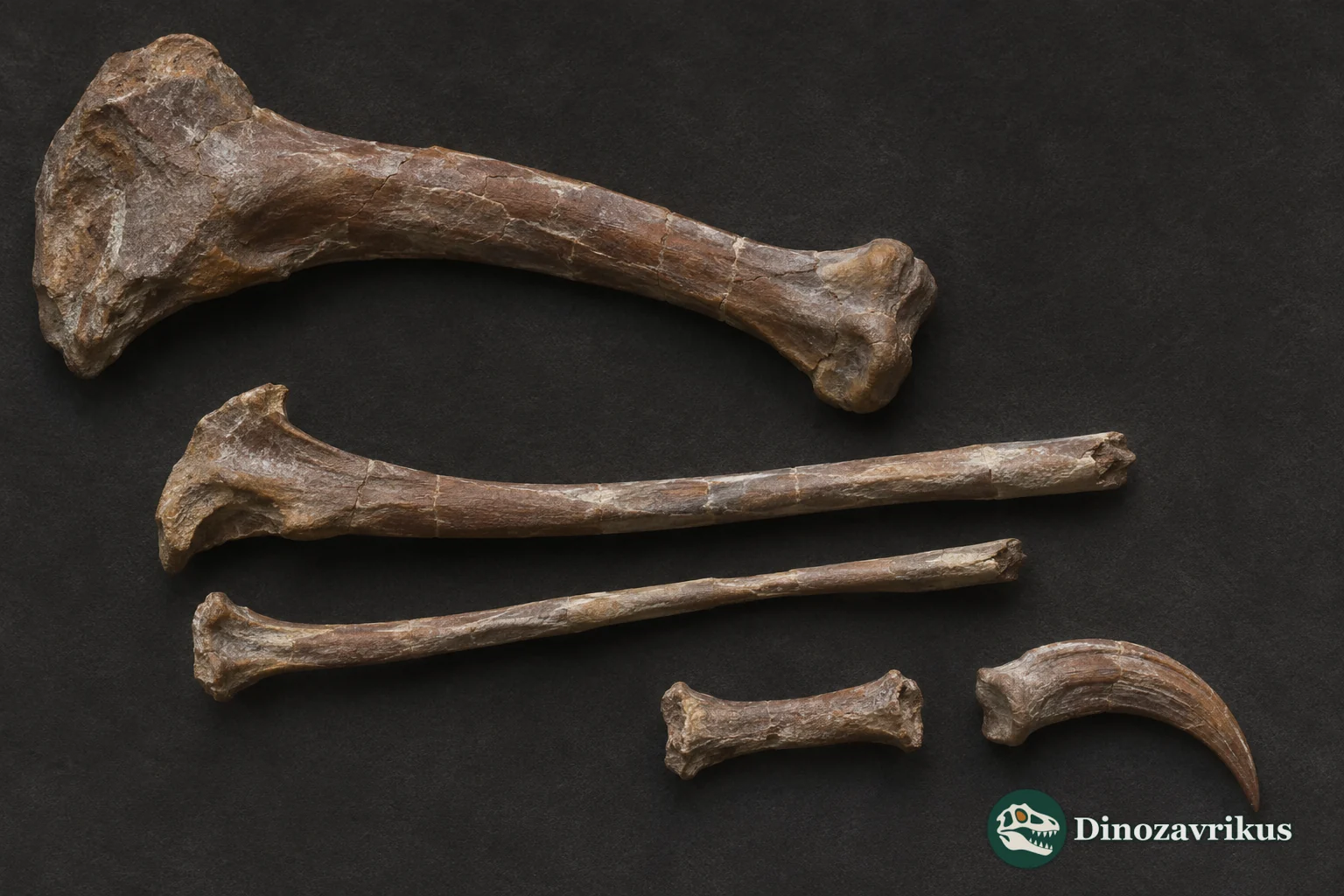
In 2022, Xuefang Wei and colleagues reported specimen 41HIII-0706 from the same formation. It includes three dorsal and twenty-nine caudal vertebrae and parts of the shoulder girdle and forelimbs. They assigned it to Yulong after anatomical comparisons and phylogenetic analysis. Bone microstructure suggested that the individual was around five or six years old and still growing. This provides a point in its growth history, without establishing adult body length.
Could Yulong have produced the eggs?
A 2025 study described a partial clutch preserving eight eggs from the Tantou Basin. Egg shape and eggshell microstructure supported identification as the fossil egg type Macroolithus yaotunensis. The researchers proposed Yulong as a plausible producer because it is a known oviraptorid from the basin and fits the inferred size. Evidence that identifies the egg layer at species level, such as a diagnostic embryo, is still lacking.
Frequently asked questions
Was a fully grown Yulong this small?
The smallest fossils belong to very young animals. A larger, still-growing individual is also known, and adult length remains unknown.
How was the age of the type individual estimated?
Researchers inspected the bone sutures and a thin section of a rib. The lack of growth marks is consistent with an age below one year.
What is known about the larger specimen?
It preserves much of the tail and parts of the arms. Bone microstructure suggests an age of about five or six years.
Have its eggs been found?
A clutch from the same basin could have been laid by Yulong. The assignment to the species remains a hypothesis.