

Acidiphorus was an Ordovician genus of bathyurid trilobites. Several species have a projecting front margin reminiscent of a boat's prow. The position of the eyes and the shape of the tail shield help distinguish species even when their shells are found in pieces.
Quick facts
| Group | Trilobita, Bathyuridae |
|---|---|
| Age | Ordovician |
| Type species | Acidiphorus spinifer |
| Named | Percy Raymond, 1925 |
| Localities | Eastern North America, including Vermont and Newfoundland |
| Fossil material | Parts of head and tail shields |
What can the fossils tell us?
The palpebral lobes sit opposite the rear third of the glabella in A. whittingtoni and nearer its midpoint in the type species.
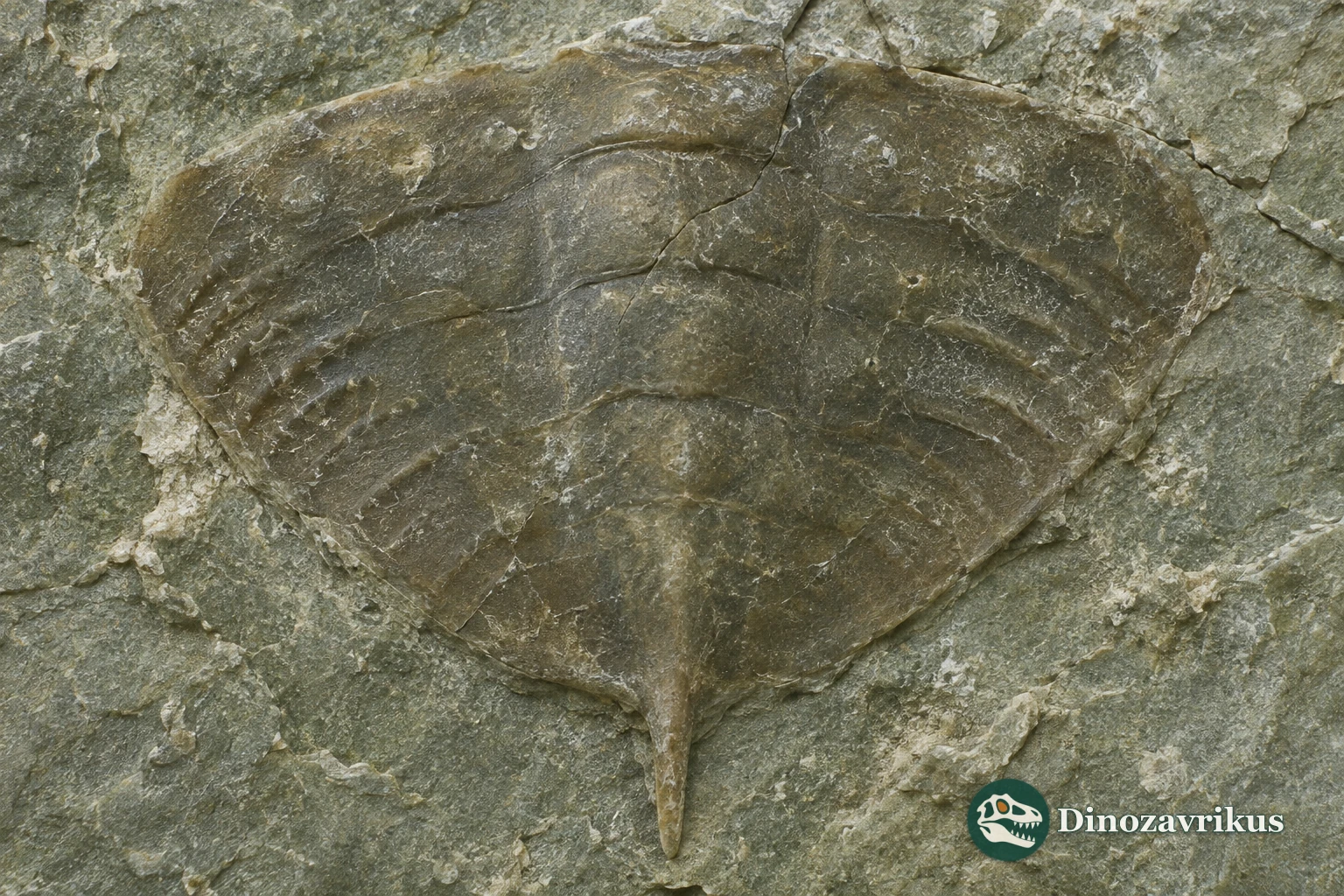
The spine projects from the back of a roughly triangular tail shield.
Similar pygidia add to evidence from other trilobites used to correlate marine beds.
The genus and its type species
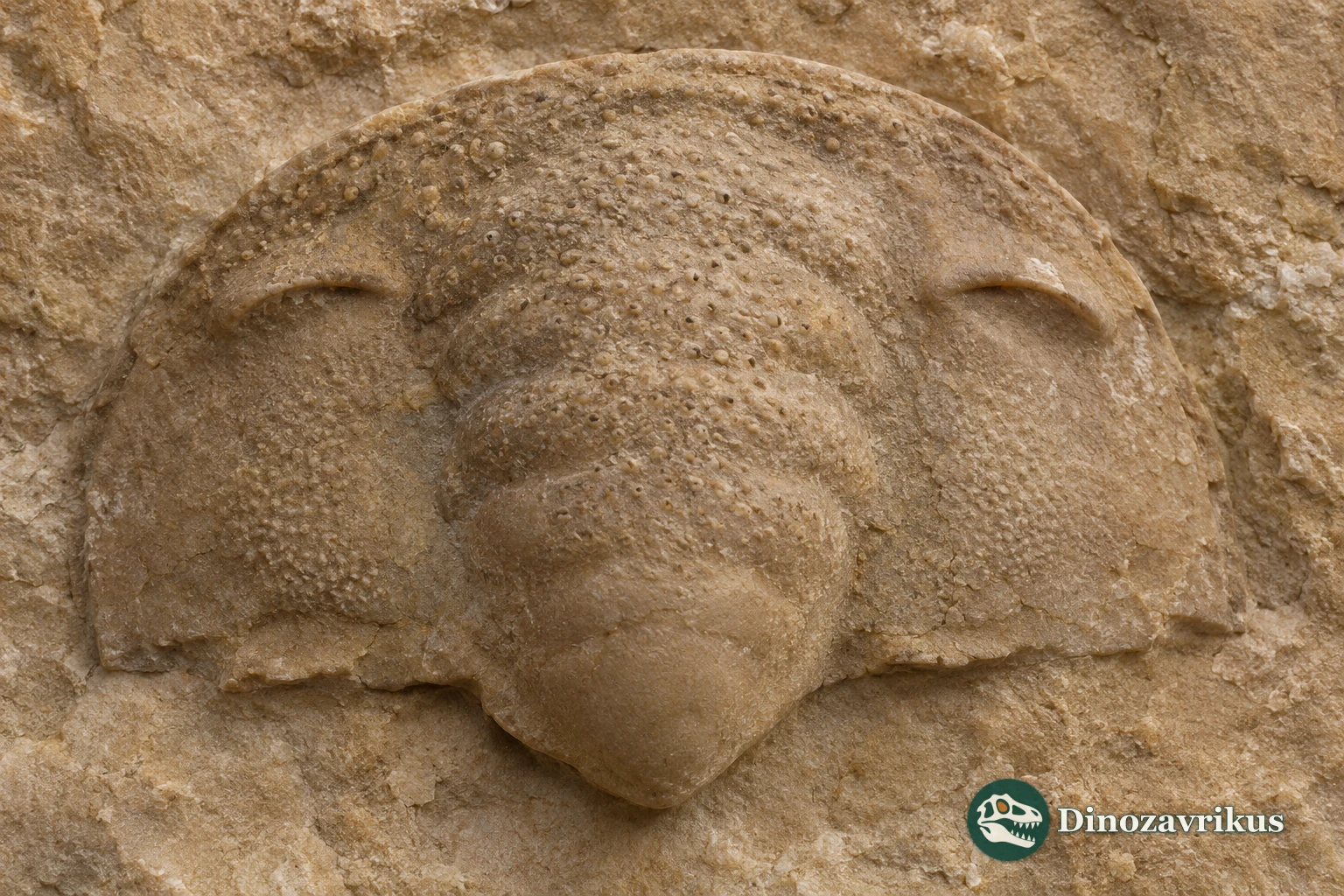
Percy Raymond named Acidiphorus in 1925. Its type species, A. spinifer, is known from Darriwilian rocks in Newfoundland. The raised axis of the head shield, or glabella, and the parts around it provide characters for comparison with other bathyurids.
The forward projection of the head shield was one reason researchers proposed including trilobites formerly assigned to Goniotelina in Acidiphorus. Recent work uses the name Acidiphorus group for a wider branch of bathyurids that contains other genera as well.
The shell of Acidiphorus whittingtoni
The type specimen of A. whittingtoni is a cranidium from the Fort Cassin Formation of Vermont. Its glabella tapers to a blunt point. The scattered tubercles become smaller towards the tip. The narrow palpebral lobes lie opposite the posterior third of the glabella, farther back than in A. spinifer.
The tail shield is roughly triangular and about one and a half times as wide as its length excluding the spine. A convex axis extends most of the way to the rear. Three or four rings precede its terminal piece, and a long slender spine projects from the rear margin.
How the species was recognised
Harry Whittington originally illustrated the Fort Cassin material under a different species name. In 1996 K. Brett and Stephen Westrop compared it with the type of that species and found differences in the outline of the glabella, the length of the area in front of it and the surface ornament. They named a separate species for Whittington.
The Oxford Formation of Ontario yielded similar tail shields. They add to evidence from Isoteloides and other trilobites used to correlate Lower Ordovician marine rocks in eastern North America. The separate shields give detailed information on the shell, with limited evidence of total length or appendage anatomy.
Frequently asked questions
Where is the type species known from?
Acidiphorus spinifer is known from Middle Ordovician rocks in Newfoundland.
Did all species have the same tail spine?
Tail shields and spines vary. A. whittingtoni has a slender median spine, while several closely related species had more robust spines.
Who was Acidiphorus whittingtoni named for?
It honours palaeontologist Harry Whittington, who first illustrated fossils of the species.
How long was Acidiphorus whittingtoni?
The described material is mainly separate head and tail shields. It does not provide a dependable measurement of total body length.