

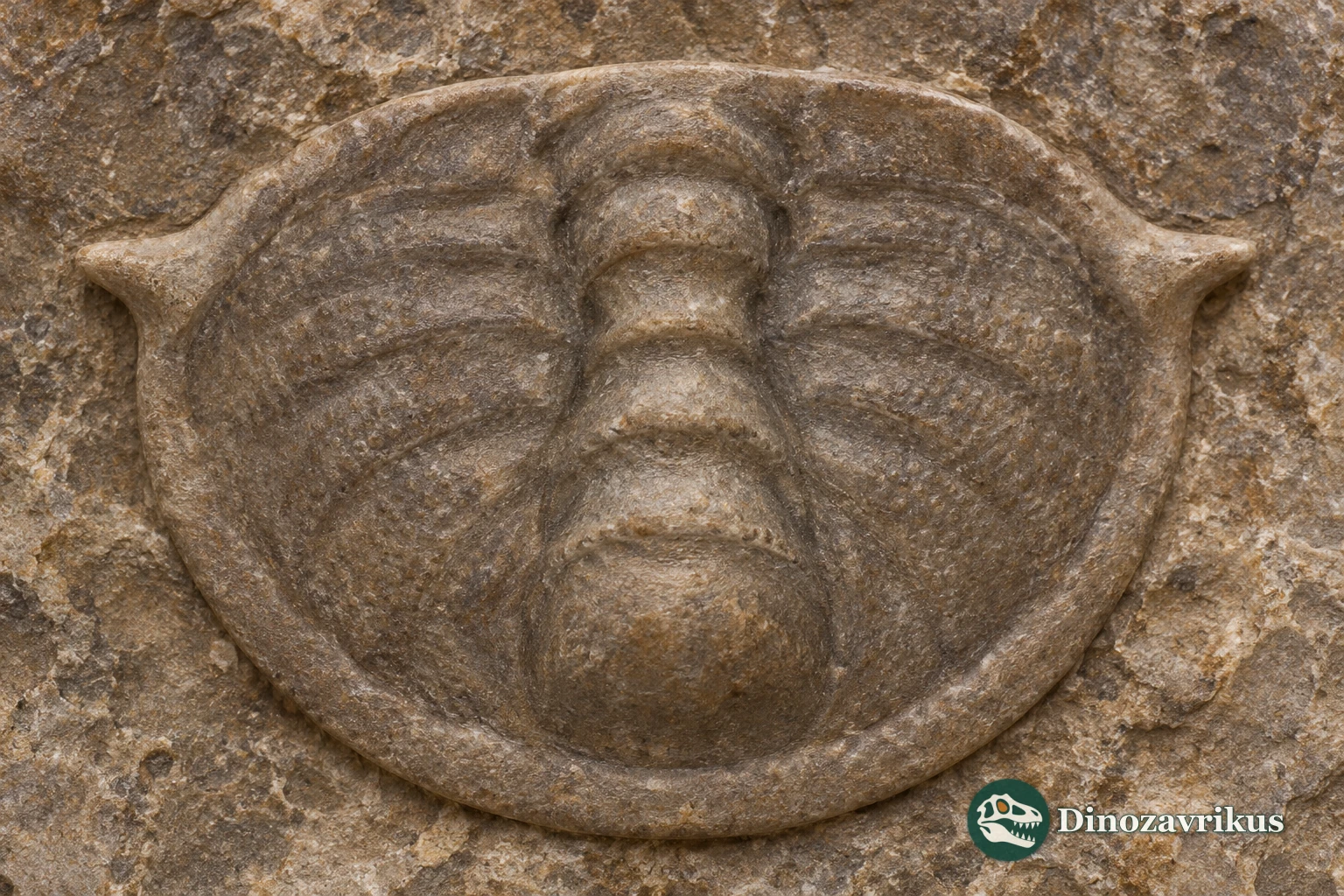
Acmarhachis was a Late Cambrian agnostoid with two short spines on the rear corners of its tail shield. Palaeontologists also compare the shape, curvature and surface ornament of the shields when identifying its species.
Quick facts
| Group | Agnostida, Pseudagnostidae |
|---|---|
| Age | Late Cambrian |
| Genus named | Charles Resser, 1938 |
| Type species | Acmarhachis typicalis |
| Records of A. whittingtoni | Western Newfoundland and Maryland |
| A. whittingtoni holotype | Cephalon GSC 134603 |
What can the fossils tell us?
The glabella is the raised centre of the head shield. The median furrow in front of it can be shallow or absent.
In A. whittingtoni the border broadens toward both spines and stays wide between them.
The fossils date the marine sediment that became limestone. The boulder may have entered the surrounding deposit later.
Naming the genus and reading its shields
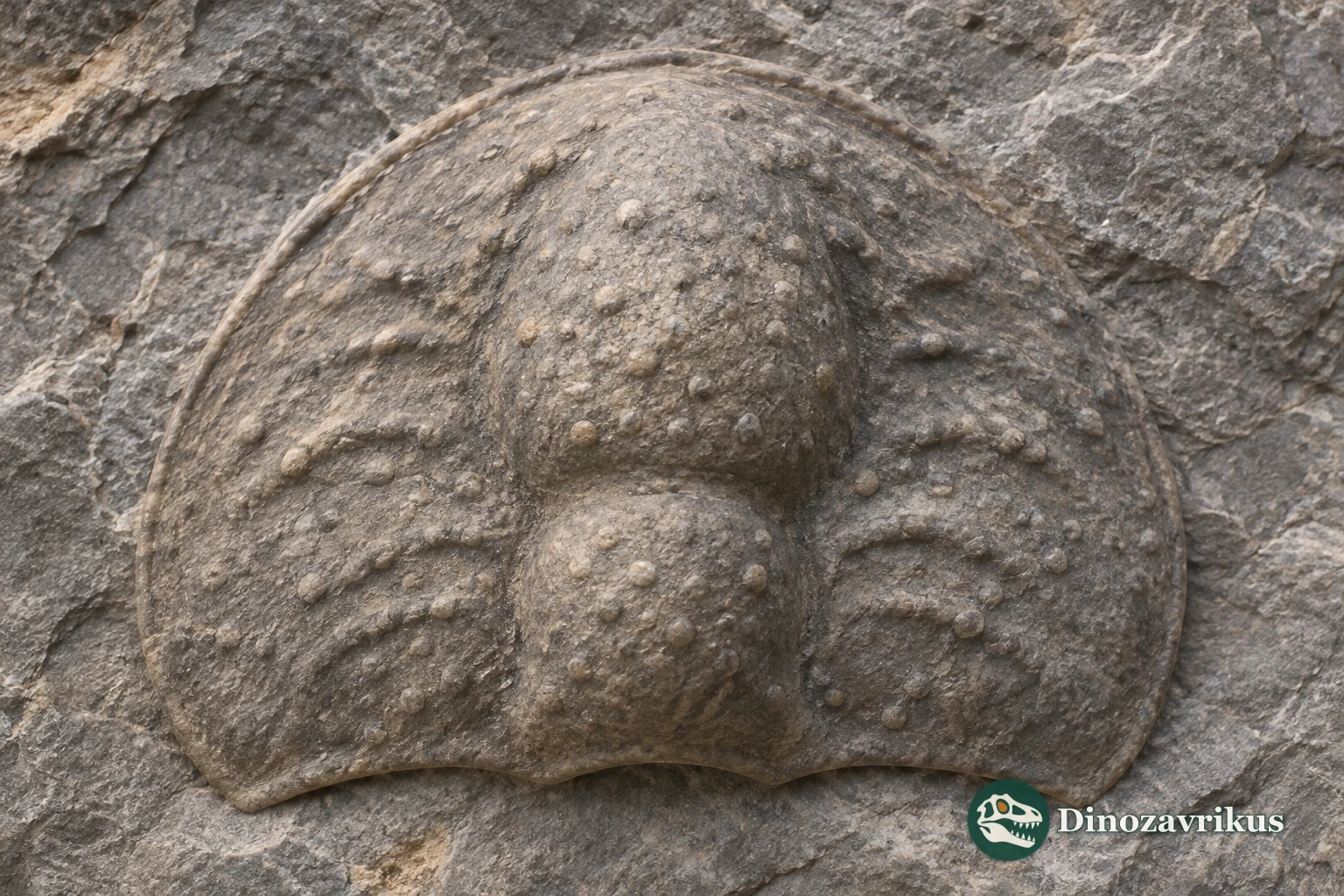
Charles Resser established Acmarhachis in 1938, designating A. typicalis as the type species. The revised diagnosis highlights a distinctly two-lobed glabella and a narrow, well-defined border on the head. Some specimens preserve scarcely any median furrow in front of the glabella.
The raised axis of the tail shield, or pygidium, narrows on its second ring and expands farther back. The second ring usually carries a node, while the hind corners of the shield terminate in short spines.
A limestone boulder at Cow Head
Stephen Westrop and his colleagues described A. whittingtoni from the Shallow Bay Formation of western Newfoundland. They named the species after the palaeontologist Harry Whittington. Limestone boulder CH 57 yielded seven head shields and four tail shields. One of the heads, GSC 134603, is the holotype.
The tail shield is 32–37% wider than it is long. Its border widens quickly toward the two spines and remains broad across the rear. Coarse granules and low ridges supply additional characters for comparisons between specimens.
Matching specimens across two regions
A head and tail shield from the Frederick Limestone of Maryland were also assigned to A. whittingtoni. They had previously been included in another species of Acmarhachis. The combination of shield outlines and surface details helped revise the identification.
The Cow Head study focuses on faunas near the beginning of the Furongian Series. The first appearance of one species of Glyptagnostus defines the base of its first stage, the Paibian. When comparing sections, a fossil from a transported limestone block can date the original sediment in the block. The surrounding deposit can be younger.
Frequently asked questions
When did Acmarhachis live?
Its species are recorded in Late Cambrian marine rocks.
What was found at Cow Head?
Boulder CH 57 yielded seven heads and four tail shields assigned to A. whittingtoni.
Where were the spines?
Two short spines projected from the rear corners of the tail shield.
How were the Maryland fossils identified?
Researchers compared the outlines and surface details of the shields with the Newfoundland material.