

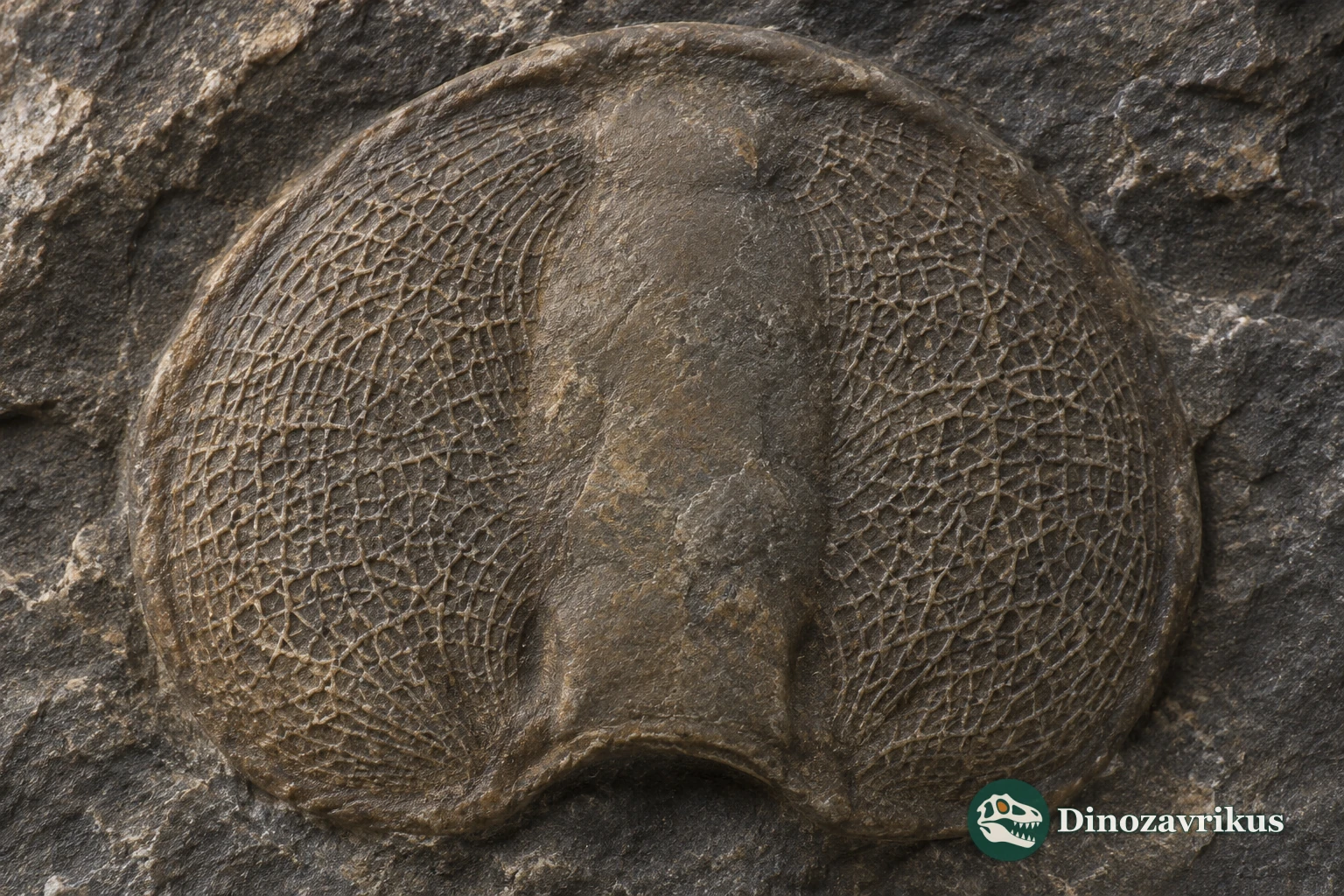
Glyptagnostus is recognised by intersecting furrows on its small shields. The strength and pattern of that network help distinguish forms within the genus. The lowest occurrence of G. reticulatus in the Paibi section of China marks the internationally defined base of the Furongian, the uppermost Cambrian series.
Quick facts
| Group | Arthropoda, Agnostida |
|---|---|
| Type species | Glyptagnostus reticulatus |
| Age of key records | Latest Guzhangian to early Paibian |
| Genus established | Frederick Whitehouse, 1936 |
| Reference section | Paibi, Hunan Province, China |
| Shell characters | Radial and transverse furrows |
What can the fossils tell us?
Cross furrows link the radial ones in G. reticulatus. The mesh varies in strength between specimens.
G. stolidotus occurs lower in the measured section. G. reticulatus appears above it and helps identify the boundary.
The reference point is at the base of the lowest bed with G. reticulatus in the Paibi section. Other sections are correlated to this horizon.
The name and its type species
Frederick Whitehouse established Glyptagnostus in 1936. His nominal type species, G. toreuma, was later treated as a synonym of Agnostus reticulatus, described by Nils Peter Angelin in 1851. The species is now known as Glyptagnostus reticulatus.
Like Agnostus, it has two rounded shields joined by two short movable segments. The diagnostic ornament is especially clear on the lateral fields of the shields and along the pygidial axis.
How the mesh is formed
Radiating furrows predominate in the earlier G. stolidotus. In G. reticulatus, short cross furrows connect the radial ones, enclosing irregular cells on the cheeks and lateral fields of the tail shield. Low longitudinal grooves on some specimens also divide parts of the tail axis.
The network varies in strength. The Paibi material includes weakly and strongly reticulate forms of G. reticulatus. Recognition of the weakly ornamented specimens is important when looking for its earliest occurrence. The surface pattern provides little evidence about the animal's diet or behaviour.
The formal boundary at Paibi
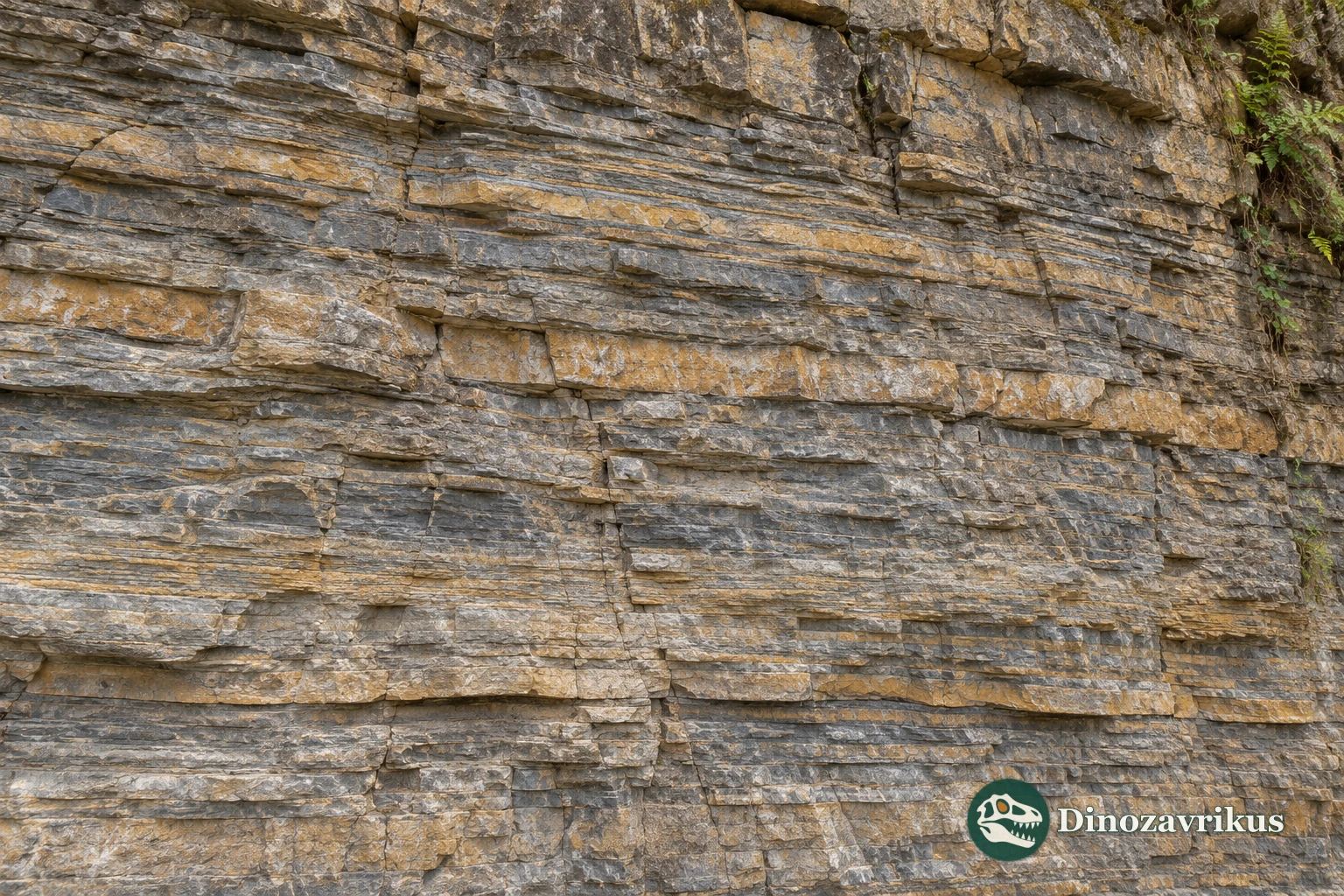
The Paibi section in northwestern Hunan exposes thin-bedded limestone of the Huaqiao Formation. G. stolidotus occurs below the first G. reticulatus. The base of the lowest limestone bed yielding G. reticulatus, near the 369-metre level in the published section, is the ratified reference point for the bases of the Paibian Stage and the Furongian Series.
G. reticulatus has been recognised in widely separated regions, including Scandinavia, Australia, North America and China. That distribution allows geologists to compare distant successions. The first specimen in an individual section records its position in that succession. Preservation and missing beds can affect where it is first found.
Frequently asked questions
What does the species name reticulatus refer to?
It refers to the network of intersecting furrows on the head and tail shields.
Where is the base of the Furongian defined?
At the base of the lowest bed yielding G. reticulatus in the Paibi section of Hunan, China.
Which species occurs below it at Paibi?
Glyptagnostus stolidotus occurs in lower beds and has a predominantly radial groove pattern.
Does its shell ornament reveal what it ate?
The grooves help identify the fossils. They provide little evidence of the animal's diet.