

Adocus was a freshwater turtle genus from Cretaceous and Paleogene deposits in Asia and North America. The edges of its shell scutes left grooves on the underlying bone. Canadian fossils preserve even more delicate evidence, including shelled eggs inside the body of a female.
Quick facts
| Group | Turtles, adocids (Adocidae) |
|---|---|
| Age | Cretaceous and Paleogene |
| Region | Asia and North America |
| Type species | Adocus beatus |
| Scientific name | Adocus |
| Diet | No direct dietary evidence |
What can the fossils tell us?
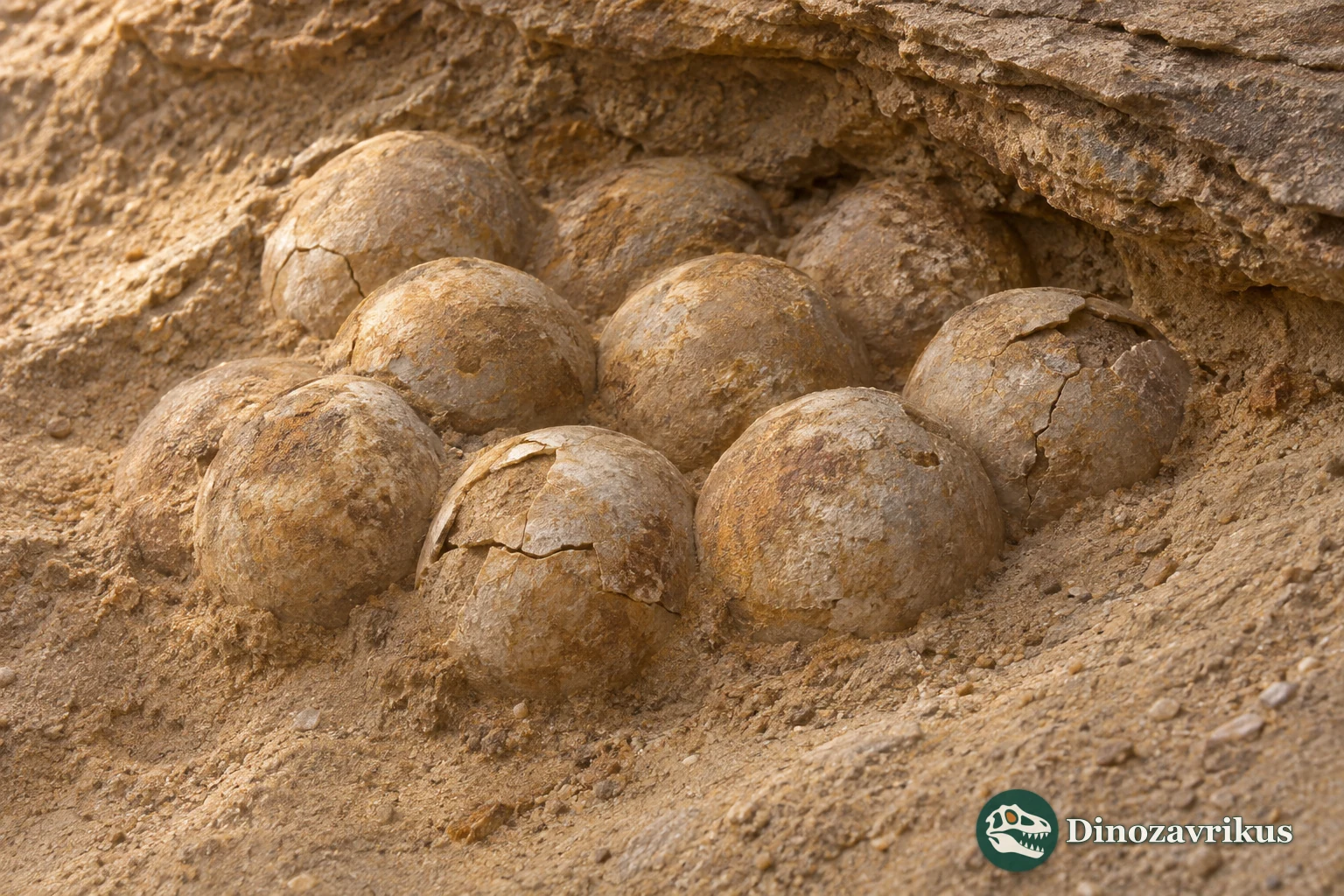
Specimen TMP 1999.63.2 preserves eggs inside the body. TMP 2008.27.1 is a separate clutch of 26 eggs from a different formation.
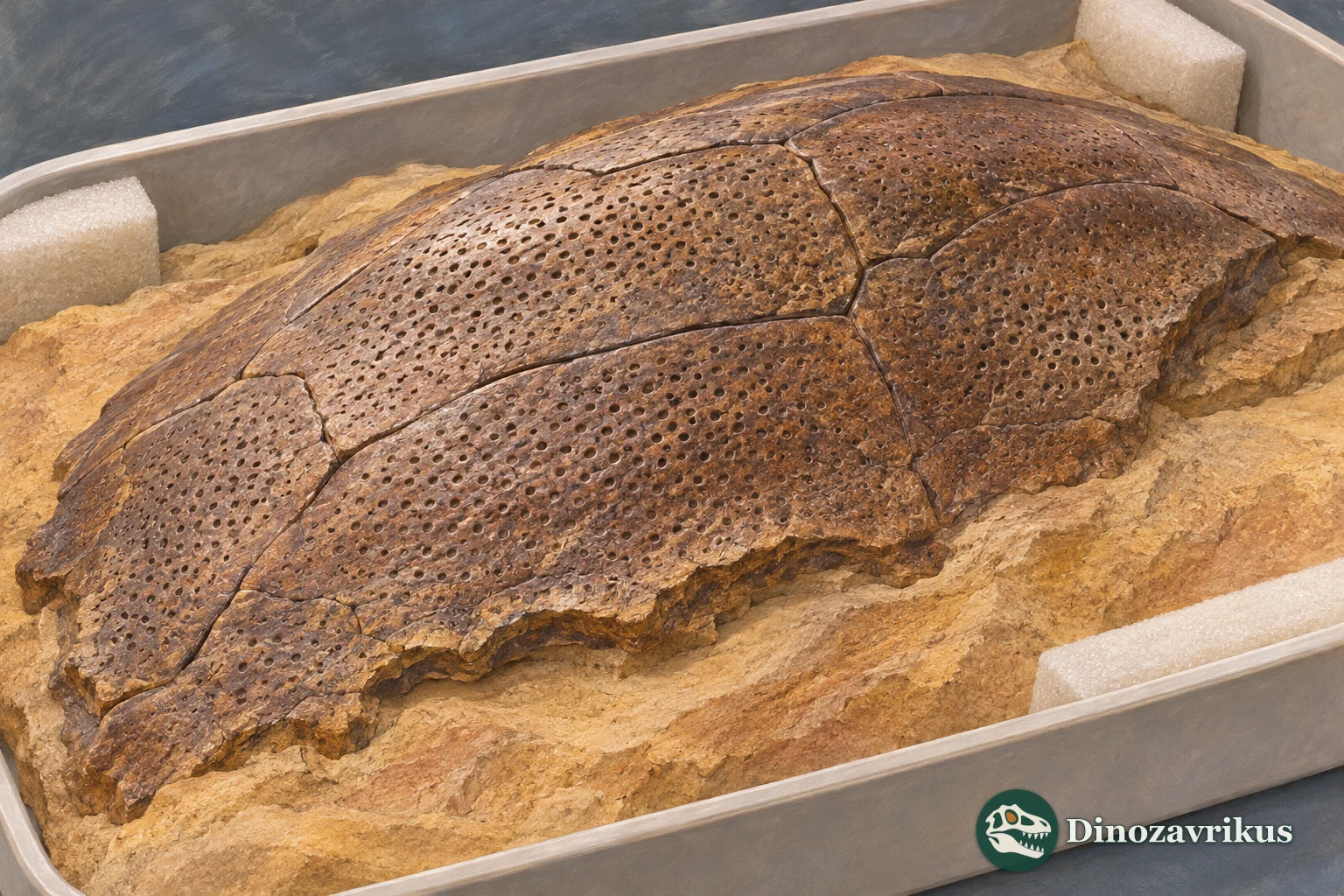
Grooves on the shell show that some marginal scutes overlapped both edge bones and costal plates above the ribs. The outlines help distinguish species.
A model based on living turtles estimated about 19 eggs for the gravid female. The separate clutch preserves a directly counted 26.
Where the genus is found
Joseph Leidy described the North American type species A. beatus in 1865 as Emys beatus. Edward Cope established the genus Adocus in 1868. Other named species come from Cretaceous sites in Central Asia and Japan. An almost complete late Eocene shell from the Maoming Basin of southern China is the type of A. inexpectatus. A late Oligocene shell-edge bone from Kazakhstan was assigned to the genus with its species left open.
Reading the shell
Small pits and the grooves between scutes mark the surface of the carapace. Some marginal scutes extended onto the bony plates over the ribs. Their grooves cross the bone sutures, so even partly preserved shells retain useful landmarks for comparison. Phylogenetic studies place adocids on the stem lineage leading to softshell turtles and their nearest living relatives. Adocus retained a hard shell with scutes.
A gravid female and a separate clutch
The Dinosaur Park Formation yielded TMP 1999.63.2, a female with crushed eggs inside the body cavity. Her carapace measured 40.5 cm long. TMP 2008.27.1, from the Oldman Formation, preserves 26 nearly spherical eggs, around 4 cm in diameter. Similarities in the structure and thickness of the shell support assigning the isolated clutch to Adocus.
What the eggshell reveals
Thick eggshell with few pores would have allowed relatively little water vapour to pass through. The researchers proposed that this could have helped to retain moisture during incubation in relatively dry conditions on land. The specimens leave details of the nest unresolved. Stupendemys offers a different record of freshwater turtle biology, based chiefly on shells and jaws.
Frequently asked questions
When did Adocus live?
Adocus occurs in Cretaceous and Paleogene deposits. One of the later named Asian species comes from the late Eocene of China.
Did Adocus have a hard shell?
Yes. Its bony plates formed a rigid shell that still bears grooves marking the edges of the outer scutes.
How many eggs were in the Alberta clutch?
Researchers counted 26 in TMP 2008.27.1. It was found separately from the female that preserves eggs inside the body.
Where has Adocus been found?
North American specimens include finds from Canada and the United States. Asian records reach across Central and East Asia, including Kazakhstan, China and Japan.