

Stupendemys geographica was a giant freshwater side-necked turtle from Miocene deposits of Venezuela and Colombia. Some shells approached the length of a small car, but no complete skeleton is known. Published measurements use different axes, and an associated skull has helped distinguish the genus from Caninemys. See its place among the other fossil reptiles.
Quick facts
| Scientific name | Stupendemys geographica Cadena et al., 2021; originally S. geographicus Wood, 1976 |
|---|---|
| Group | Testudines, Pleurodira, Podocnemididae |
| Age | Miocene; major records about 8–6 million years old |
| Range | Venezuela and Colombia |
| Holotype | MCNC 244, shell fragment with associated postcranial bones |
| Largest shell | 2.40 m along the midline in one specimen; 2.86 m along another axis in a different shell |
| Mass estimate | About 1,145 kg, model-derived |
| Associated remains | VPPLT-1337 preserves a skull and shell together |
What can the fossils tell us?
MCNC 244 includes carapace, femur, shoulder-girdle elements and a neck vertebra, but no skull or complete shell.
About 2.40 m along the midline and 2.86 m along a parasagittal axis refer to different specimens and measurements.
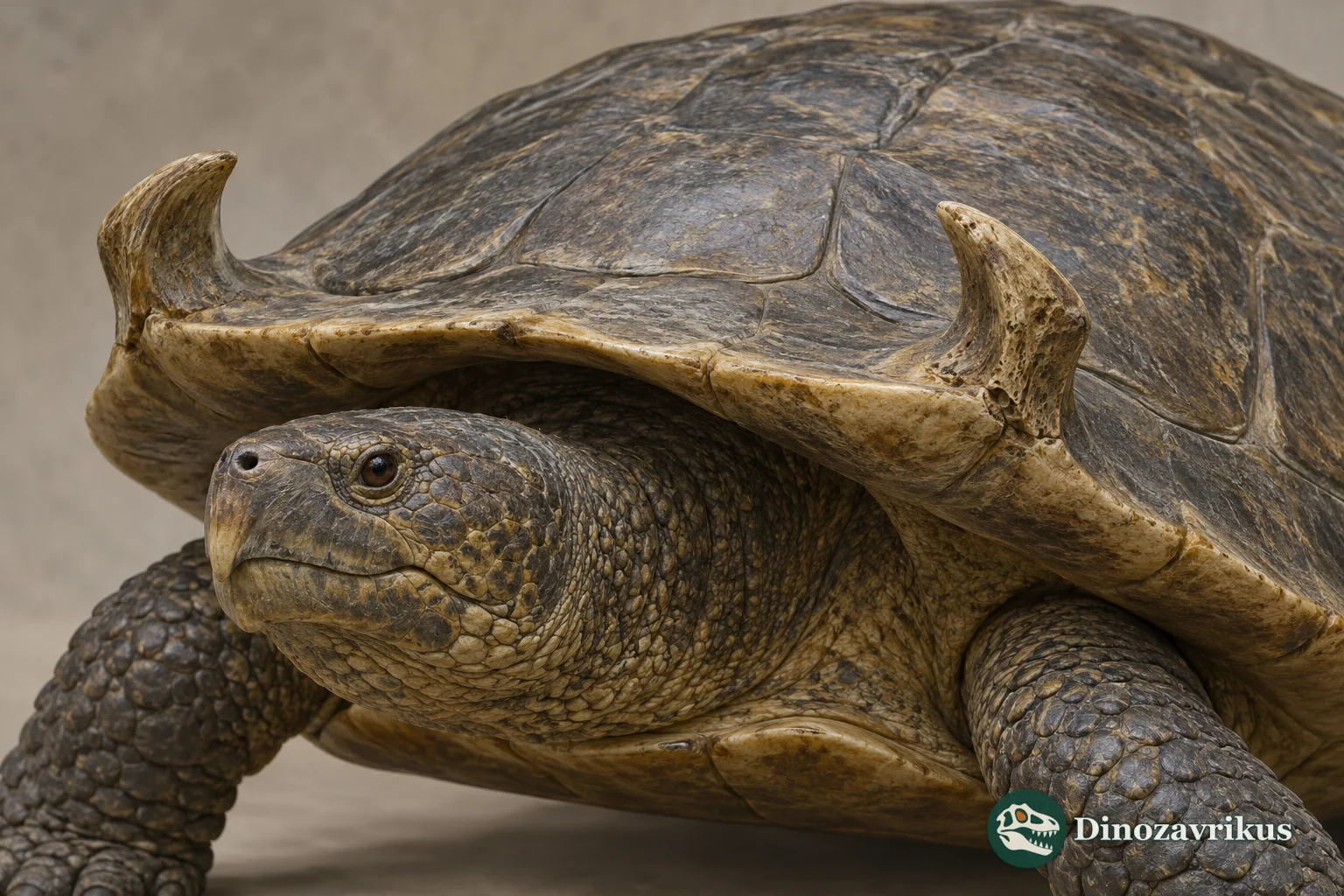
Some large shells carry paired anterior projections and others lack them. The fossils do not directly preserve sex.
VPPLT-1337 preserves both regions; its skull supports keeping Caninemys separate from Stupendemys.
Name and discovery
Roger Wood named Stupendemys in 1976 from fossils near Urumaco, Venezuela. The epithet geographicus honoured the National Geographic Society. Cadena and colleagues changed the ending to geographica in 2021 to agree with the feminine grammatical gender of the genus. This is a nomenclatural correction, not a second species.
Most early evidence consisted of shells and bones from behind the skull. New material described in 2020 included a rare association of skull and shell. A 2021 review used the associated skull to restore Caninemys as a separate genus; resemblance alone had earlier led to a proposed synonymy.
Holotype and locality record
Holotype MCNC 244, held in Caracas, includes a middle carapace portion associated with a left femur, shoulder-girdle parts and a cervical vertebra. It is diagnostic, but not a complete shell or articulated skeleton. Further shells and postcranial bones come from Venezuela and Colombia’s Tatacoa region.
Specimen VPPLT-1337 from the La Victoria Formation preserves skull and shell together. Such association is unusually useful: it allows comparison of anatomical parts from one individual instead of combining unrelated fossils by resemblance.
Miocene waterways
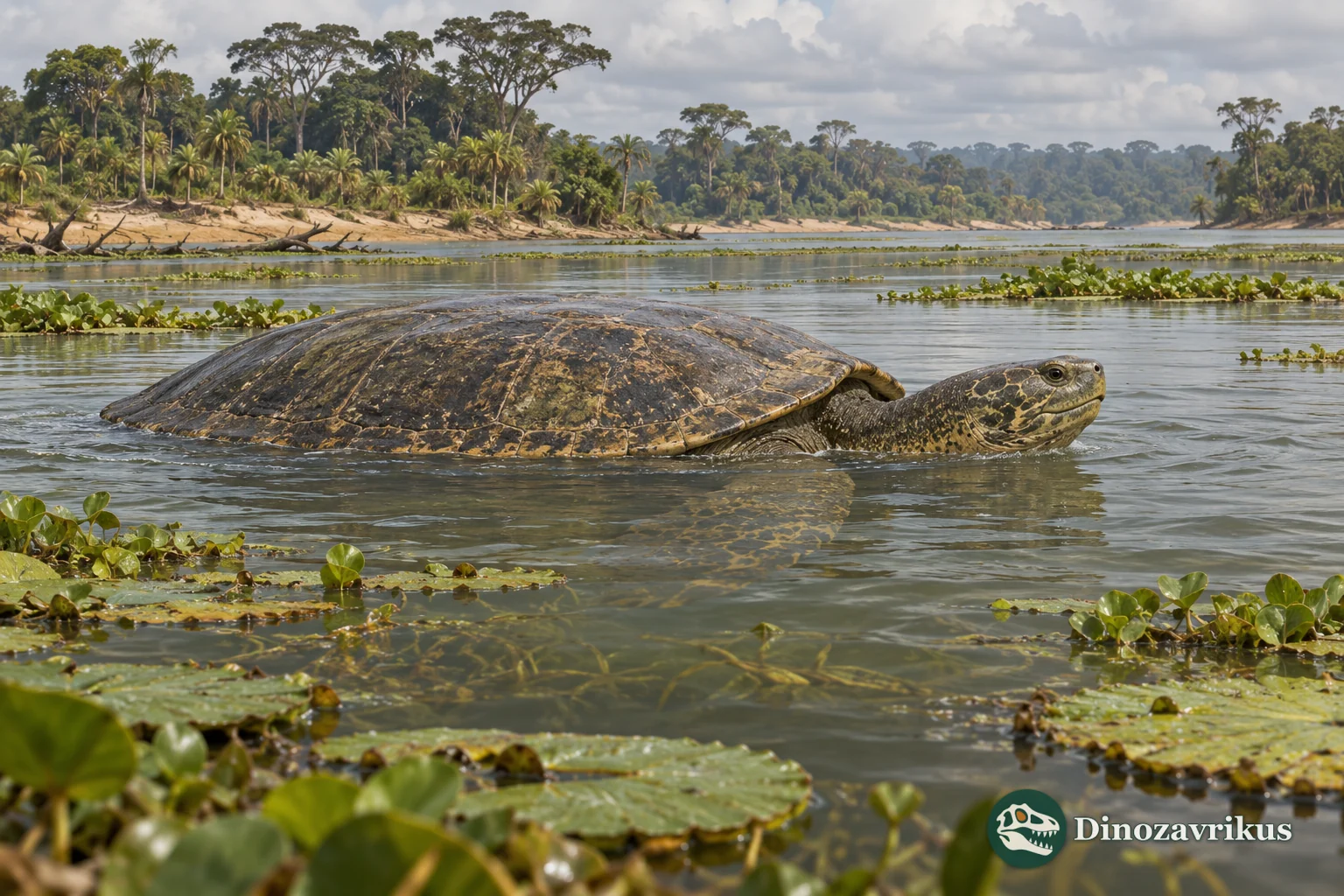
Urumaco fossils occur in the upper Urumaco Formation, with late Miocene river, floodplain and coastal deposits. Colombian fossils come from the La Victoria Formation in another basin. Stratigraphy and associated fossils constrain the age of each layer; they do not give an exact date for an individual.
Fishes, turtles and large crocodylomorphs inhabited the region’s waterways. The gavialoid Gryposuchus illustrates the diversity of long-snouted aquatic predators, though regional coexistence does not mean every fossil came from one layer.
Shell, size and growth
The shell was broad and relatively low, with an irregular margin and a deep notch at the front. Some large individuals had massive paired projections extending forward. Other shells lack them. Authors have proposed sexual dimorphism, but neither sex nor reproductive anatomy is directly associated with these shells.
A large carapace was measured at about 2.40 m along the midline and assigned a model-based mass estimate near 1,145 kg. A different nearly complete shell reaches 2.86 m along a parasagittal axis. These are not interchangeable measurements of one specimen. A juvenile shell under one metre suggests changing proportions during growth, but does not establish the juvenile’s sex.
The marine Archelon is a useful scale comparison only if measurement and habitat are kept distinct: Stupendemys lived in freshwater.
Diet and limits
Skull and jaw shape inform hypotheses about feeding, including omnivory and processing hard foods, but no stomach contents establish a precise diet. Some shells bear marks interpreted as large caiman bites. They document interaction, not necessarily a fatal attack. Nesting, clutch size, colour and daily behaviour remain unknown.
Frequently asked questions
How large was Stupendemys?
Published shells reach about 2.40 m along the midline or 2.86 m along a parasagittal axis, depending on specimen and method. The mass estimate near 1,145 kg is model-derived.
Did it have horns?
Some shells have paired bony projections. Their variable presence prompted a sexual-dimorphism hypothesis, but the sex of fossils is unknown.
Was Stupendemys a marine turtle?
No. It was a freshwater side-necked turtle from river and floodplain deposits.
Why is Caninemys separate?
A skull associated with a Stupendemys shell allowed direct comparison and supports a distinct genus.