

Agathaeromys was an extinct oryzomyine rodent, part of the group commonly called rice rats. Its Pleistocene teeth were recovered on Bonaire near Venezuela. About 500 molars from five localities support two species, although complete bodies are unknown. The cover's coat and posture are artistic choices.
The case is a useful example of why a large tooth sample can correct an old genus assignment while still leaving diet and behavior uncertain.
Quick facts
| Group | Oryzomyini, Cricetidae: Sigmodontinae |
|---|---|
| Island | Bonaire, near the northern coast of South America |
| Type species | Agathaeromys donovani Zijlstra, Madern & Van den Hoek Ostende, 2010 |
| Second species | A. praeuniversitatis, smaller in molar size |
| Sample | About 500 molars from five Pleistocene localities |
| Collection | Naturalis Biodiversity Center, Leiden |
| Earlier assignment | Reported as Thomasomys sp. before revision |
What can the fossils tell us?
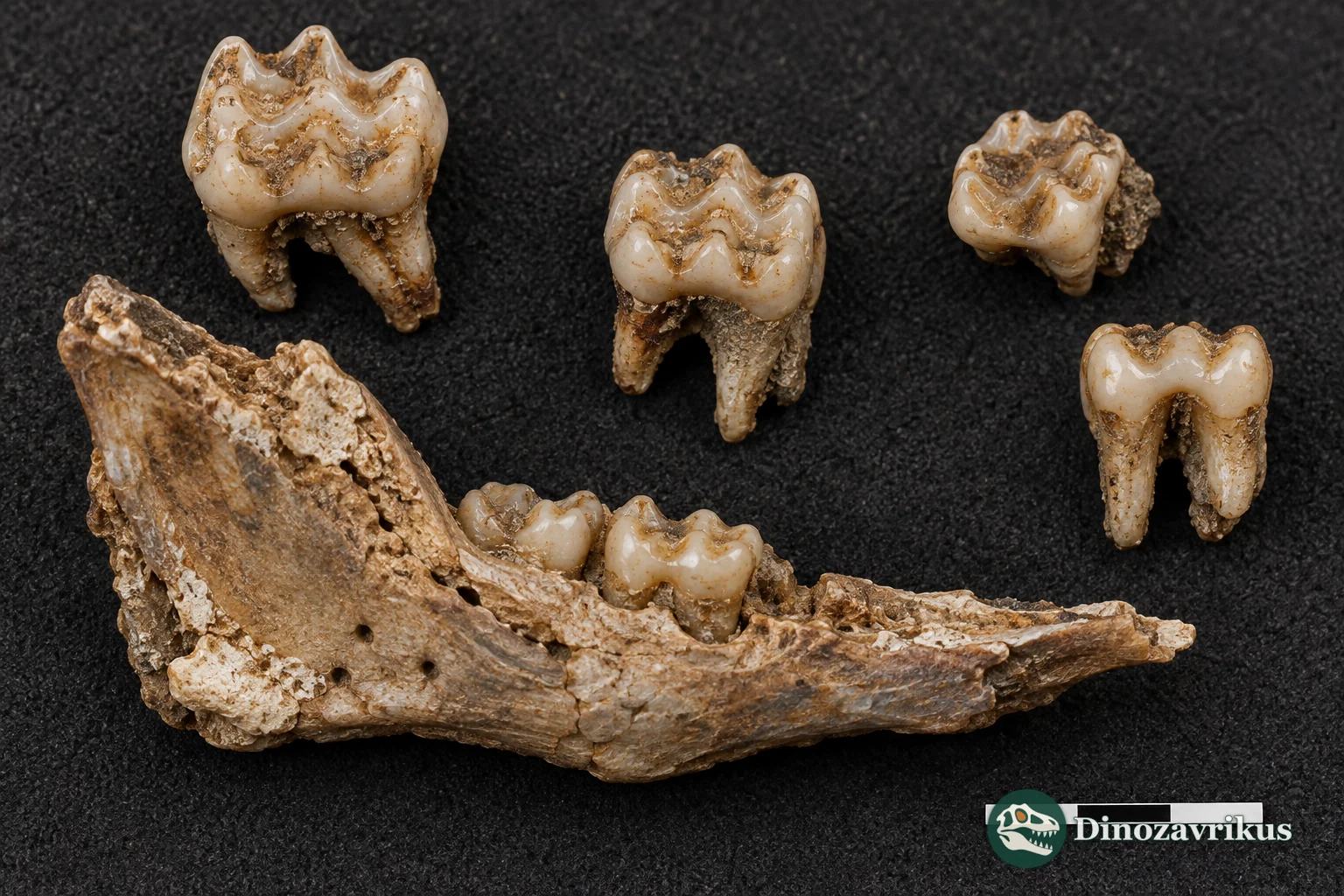
A comparison of roughly 500 molars found the smaller form at one locality and the larger form at four. Tooth size is not a measured body weight.
Crown anatomy and a morphological character analysis supported a new oryzomyine genus. An isolated toothless jaw from the same island was not assigned to it.
Island geography and relationships suggest ancient overwater dispersal. No molar records the crossing, its timing or the cause of extinction.
Revising an old identification
Earlier Bonaire teeth and jaw fragments were referred to the South American genus Thomasomys on broad resemblance. In 2010 Jelle Zijlstra, Paulina Madern and Lars van den Hoek Ostende compared crown patterns, measurements and a morphological character matrix with other oryzomyines. They named Agathaeromys and two species rather than retain the tentative assignment.
This was a dental revision, not the discovery of a complete skeleton. A separate toothless dentary was left as an unidentified sigmodontine from another species. Its presence at a Bonaire site does not make it part of Agathaeromys.
Two species across five sites
Most sampled teeth belong to the larger type species A. donovani, represented at four localities. The fifth locality yielded the smaller A. praeuniversitatis, distinguished also by discrete crown characters. A worn isolated tooth may be ambiguous, so the diagnosis relies on comparative series.
The approximate 500-molar count is not a count of 500 skeletons or even exactly 500 animals. Multiple teeth can come from one individual. The material is housed at Naturalis in Leiden and can be reexamined.
An island lineage in the Pleistocene
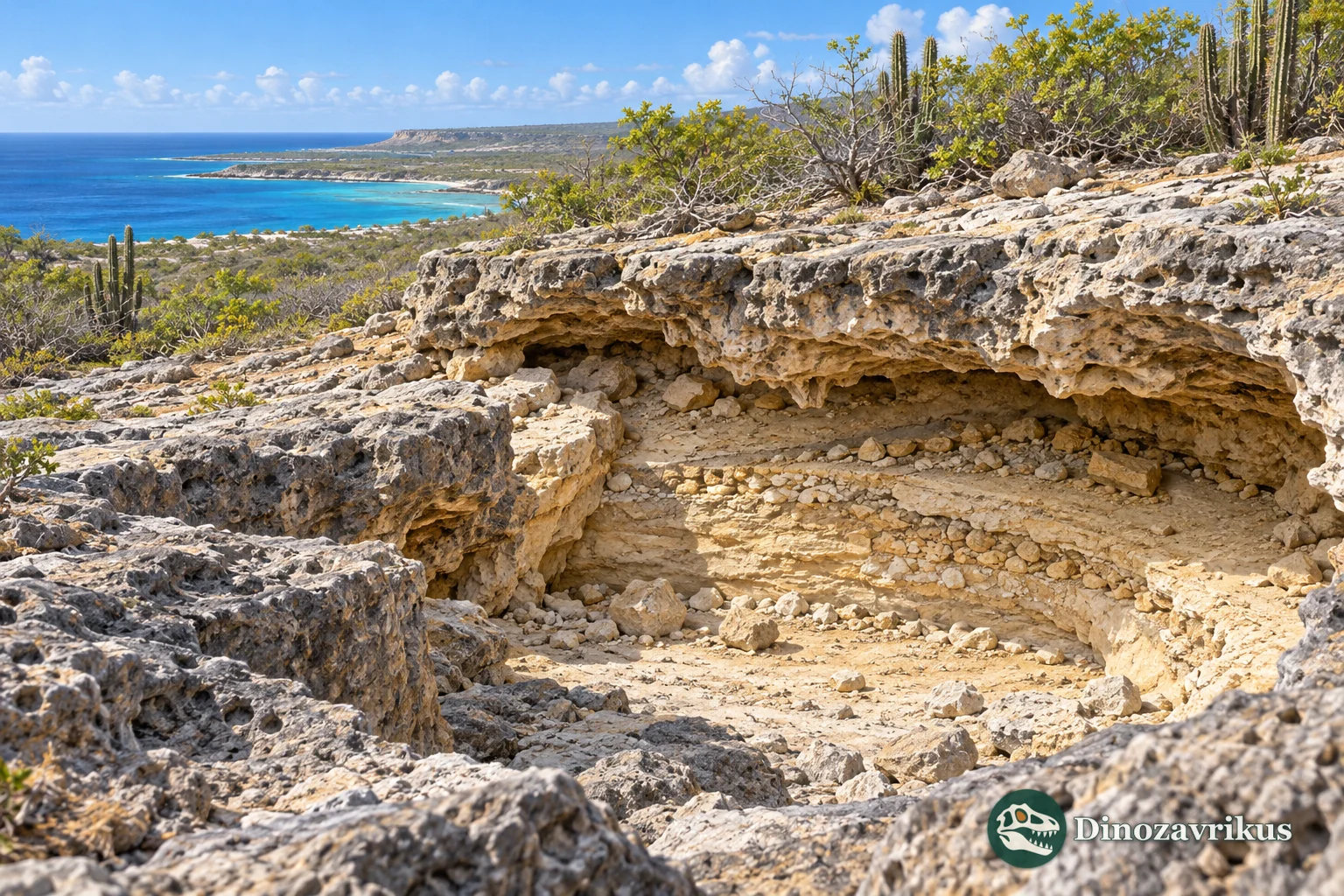
The five sampled localities belong to the Pleistocene of Bonaire. A later study of fossil rodents from Bonaire and Curaçao treats Agathaeromys as an extinct island lineage. Relationships to mainland oryzomyines are compatible with ancient movement over water, but neither the route nor the number of crossings is recorded by a tooth.
The fossil layers belong to the Quaternary. Their geological context gives ages to the finds; crown form alone does not date each animal. The dry coastal scene is an interpretive landscape, not a documentary image of one of the five sites.
What the sample cannot settle
The name rice rat denotes a taxonomic group and is not evidence that this genus ate rice on prehistoric Bonaire. Molars do not preserve a stomach, fur, nesting behavior or a cause of extinction. Claims about exact weight or coat color would require evidence beyond this described sample.
Another Caribbean rodent, Isolobodon, belongs to a different island lineage. Their shared geography does not by itself make them close relatives.
Frequently asked questions
Why was Agathaeromys once called Thomasomys?
Early identifications relied on broad resemblance. A larger dental and character analysis supported a separate oryzomyine genus.
How many Bonaire species were recognized?
The 2010 revision named larger A. donovani at four sites and smaller A. praeuniversitatis at one.
Do 500 teeth represent 500 animals?
No. This is a count of molars from several sites, and more than one tooth can belong to one individual.
Did this rice rat eat rice?
That is not established. Rice rat is a group name; the particular diet of this extinct genus is unknown.