

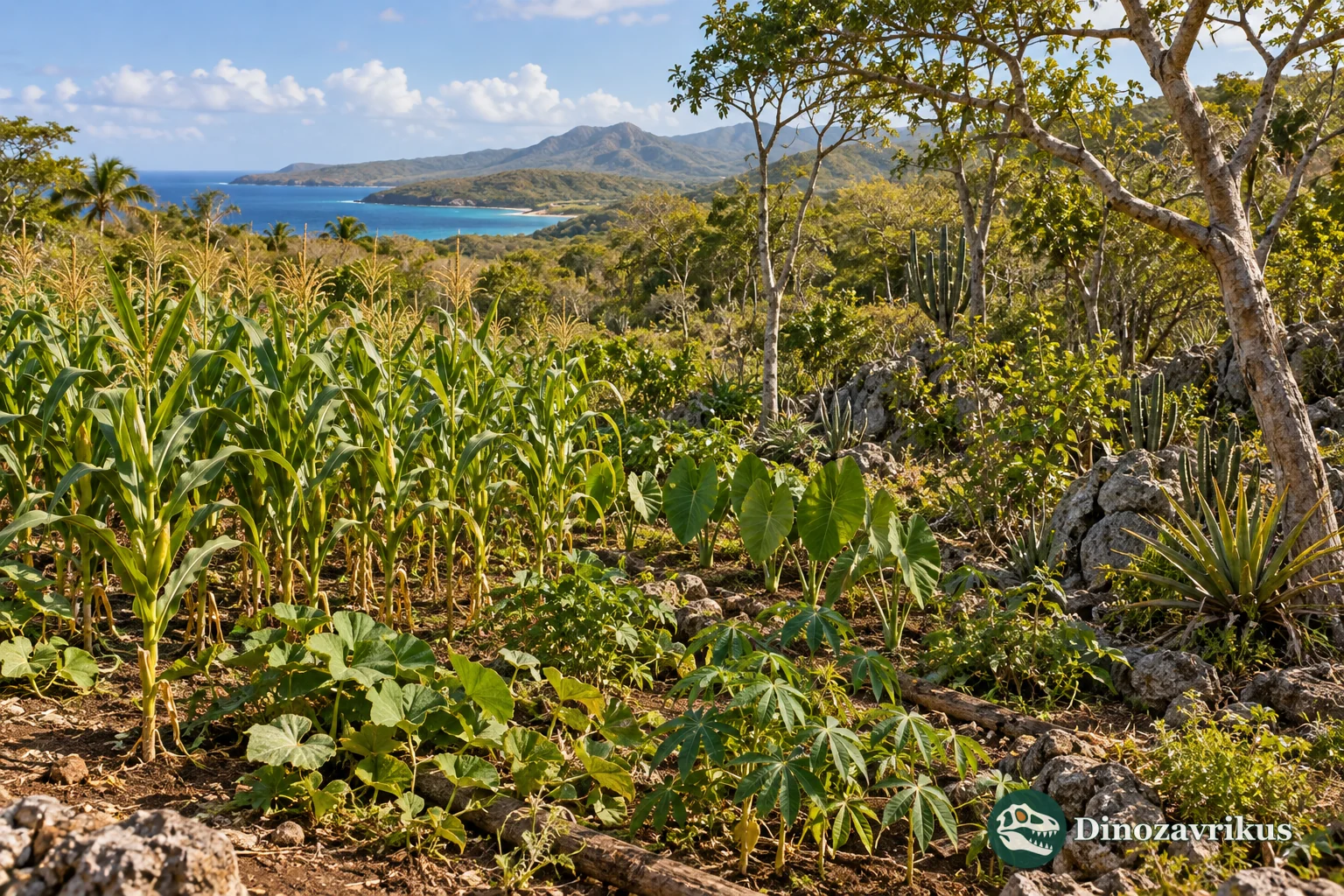
Isolobodon was an extinct Caribbean hutia, a rodent rather than a sloth or a capybara. Bones from Hispaniola, Puerto Rico and other island contexts connect taxonomy with the history of human settlement. The cover is an artistic reconstruction; coat color and the precise plants shown are not preserved in the fossils.
The genus is documented by skulls, jaws and distinctive cheek teeth. Archaeological contexts and chemical analyses add evidence about some late diets, while leaving the question of domestication unresolved.
Quick facts
| Group | Rodentia; Caribbean hutias, Capromyinae |
|---|---|
| Type species | Isolobodon portoricensis J. A. Allen, 1916 |
| Type locality | Cave near Utuado, Puerto Rico |
| Collector | Franz Boas collected the original material |
| Another species | I. montanus distinguished by larger and differently formed cheek teeth |
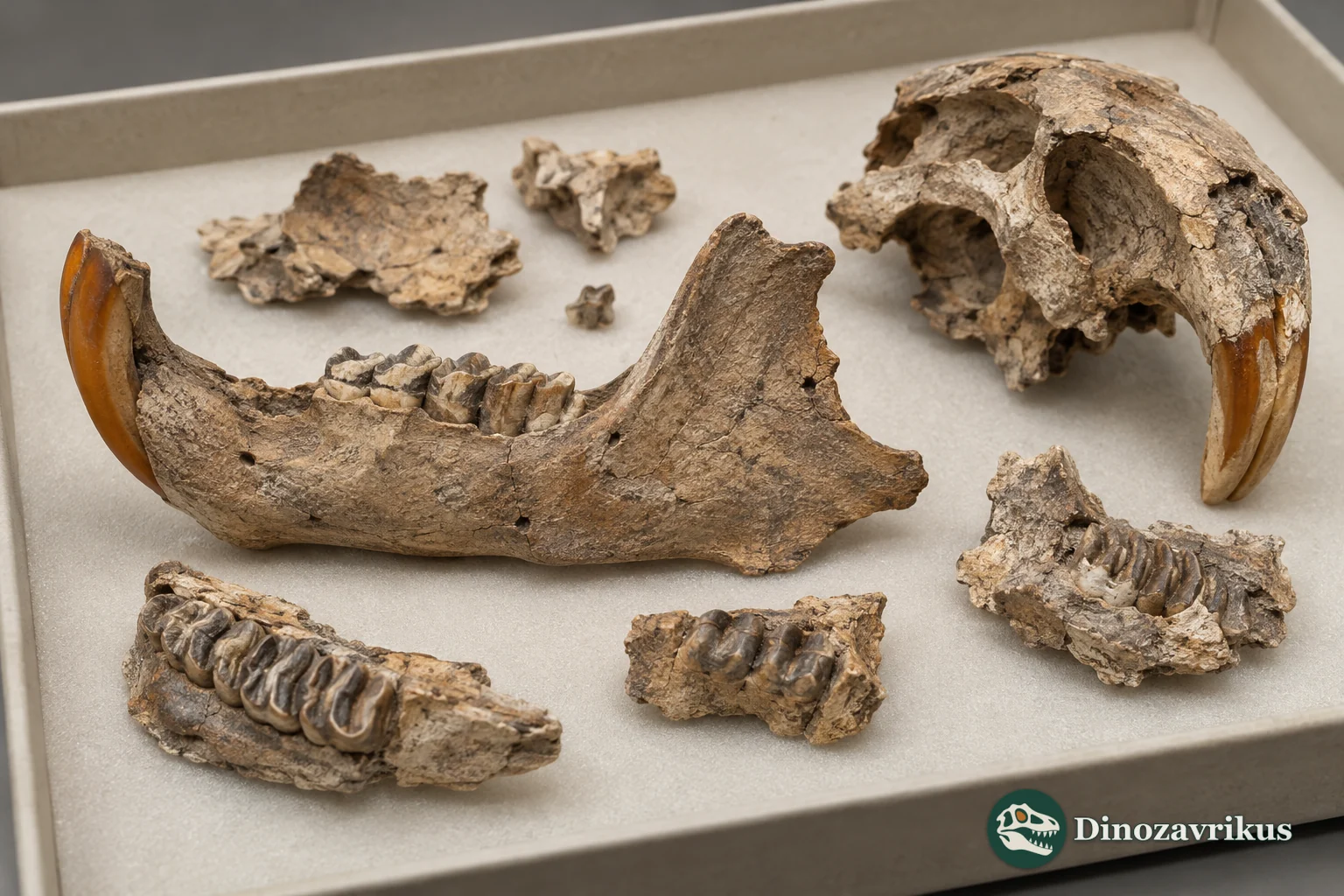
| Evidence | Cave and archaeological skulls, jaws and teeth |
| Human connection | Some isotope samples suggest cultivated plants, not proven domestication |
What can the fossils tell us?
Allen described I. portoricensis from a cave near Utuado. Later authors corrected confusion over the identity of its holotype, showing why museum records matter.
The larger, differently formed molars of I. montanus help distinguish it from I. portoricensis. Broken jaws and worn teeth can remain uncertain.
Stable isotopes from late precolonial Dominican sites show that some individuals consumed C4 or CAM plants; maize is a plausible contributor. Feeding by people and foraging nearby cannot always be separated.
A name from a Puerto Rican cave
J. A. Allen named I. portoricensis in 1916 using material collected by Franz Boas in a cave near Utuado, Puerto Rico. The original material includes a partial skull. Later work by Flemming and MacPhee corrected repeated confusion over which specimen was the holotype. A specimen's catalogue identity matters because later comparisons must be anchored to the name-bearing fossil.
Puerto Rican type locality does not by itself establish that the species evolved there. Fossils and ancient DNA show a wider Caribbean history. Humans may have moved hutias among islands, but each occurrence needs its own archaeological and genetic context.
Teeth and species boundaries
I. montanus is recognized from Hispaniolan material with larger and differently configured cheek teeth than I. portoricensis. Wear, age and fragmentary preservation can obscure this comparison. Researchers sometimes leave an isolated jaw at genus level rather than assign it confidently to a species.
The teeth show a chewing apparatus suited to plant food, but an isolated tooth is not a list of particular plants. Compared with the extinct mainland rodent Prolagurus, this hutia belongs to a different rodent lineage and island history.
Late archaeological diets
A stable-isotope study sampled I. portoricensis at three late precolonial Dominican sites: El Flaco, El Carril and La Entrada. Some individuals had carbon signatures consistent with substantial C4 or CAM plant intake. Maize could be part of that signal, but the isotopes do not identify one plant uniquely or show whether a hutia was confined, deliberately fed or fed itself near a settlement.
Ancient DNA from teeth on Hispaniola and Guana Island supports a broader Caribbean hutia radiation. It informs relationships and dispersal, not the exact movement of every individual. The final disappearance of Isolobodon cannot be dated from the latest archaeological occurrence alone. These layers fall within the Quaternary, while the cover's garden is a visual interpretation.
Frequently asked questions
Did Isolobodon live only on Puerto Rico?
No. The type species was named from Puerto Rican material, but fossils also occur on Hispaniola and in other Caribbean contexts.
Was this hutia domesticated?
That has not been proved. Some isotope results suggest access to cultivated plants, but cannot distinguish feeding by people from independent foraging.
How does I. montanus differ?
Researchers identify larger and differently formed cheek teeth, although fragmentary specimens may remain uncertain.
When did the genus disappear?
It occurs in late precolonial deposits, but these finds do not provide a secure date for the last surviving population.