

Agnostotes was a Cambrian agnostoid trilobite. The first occurrence of one species at Duibian, China, marks the base of the Jiangshanian Stage. A shallow notch at the front of the head shield becomes a deep furrow in specimens from higher beds.
Quick facts
| Group | Agnostoid trilobites |
|---|---|
| Age | Cambrian |
| Genus named by | A. Öpik, 1963 |
| Type species | Agnostotes inconstans |
| Korean species holotype | Tail shield mould UMUT-PAO957 |
| Stratigraphic role | Marker for the base of the Jiangshanian Stage |
What can the fossils tell us?
Higher in the section the midline furrow reaches the transverse furrow and divides the front glabellar lobe.
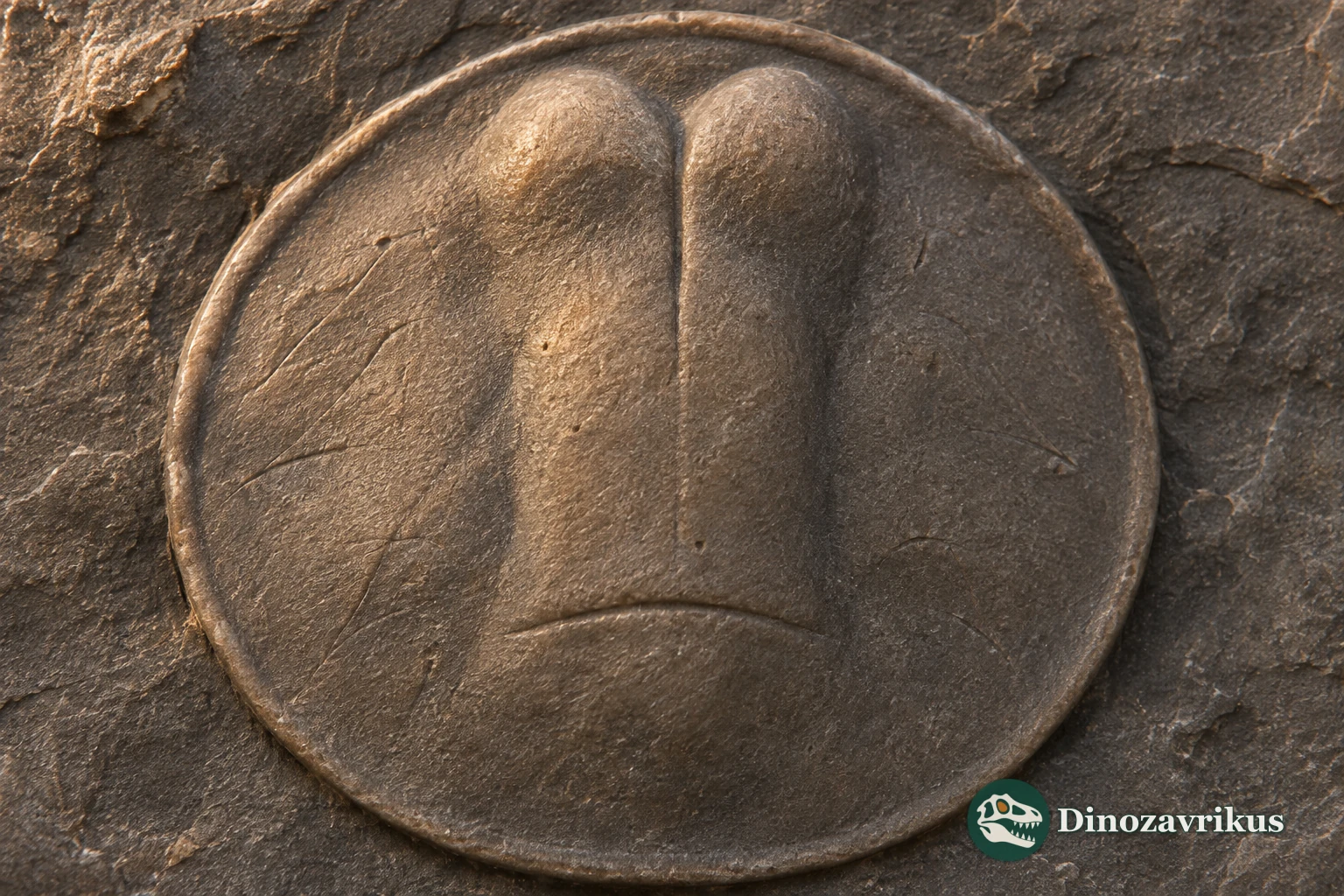
The Korean holotype is an incomplete external mould. Other specimens allowed the authors to associate the head with the tail.
The first bed containing this species is 108.12 m above the base of the Huayansi Formation. This is a thickness of rock.
One genus, two important species
Armin Öpik erected Agnostotes in 1963. Its type species, A. inconstans, comes from the Pomegranate Limestone of Queensland, Australia. The international stratigraphic marker is another species, A. orientalis.
Teiichi Kobayashi described the latter in 1935 from an incomplete external mould of a tail shield from the Machari Formation near Yeongwol, Korea. Later collections of heads and tails from that formation helped recognise the same species in other regions, including the Canadian Mackenzie Mountains.
Characters that changed
The rear part of the tail axis is wider than the front in A. orientalis. There is a tiny marginal spine at each rear corner. The front of the axis is proportionally broader in larger specimens, and the pattern of fine incisions becomes clearer on both shields.
Heads from the lowest fossil bed at Duibian show a short front notch. About 11 m above that first occurrence, some specimens have a longer midline furrow. It meets the transverse furrow and cleaves the anterior glabellar lobe in two.
How a fossil defines a stage boundary
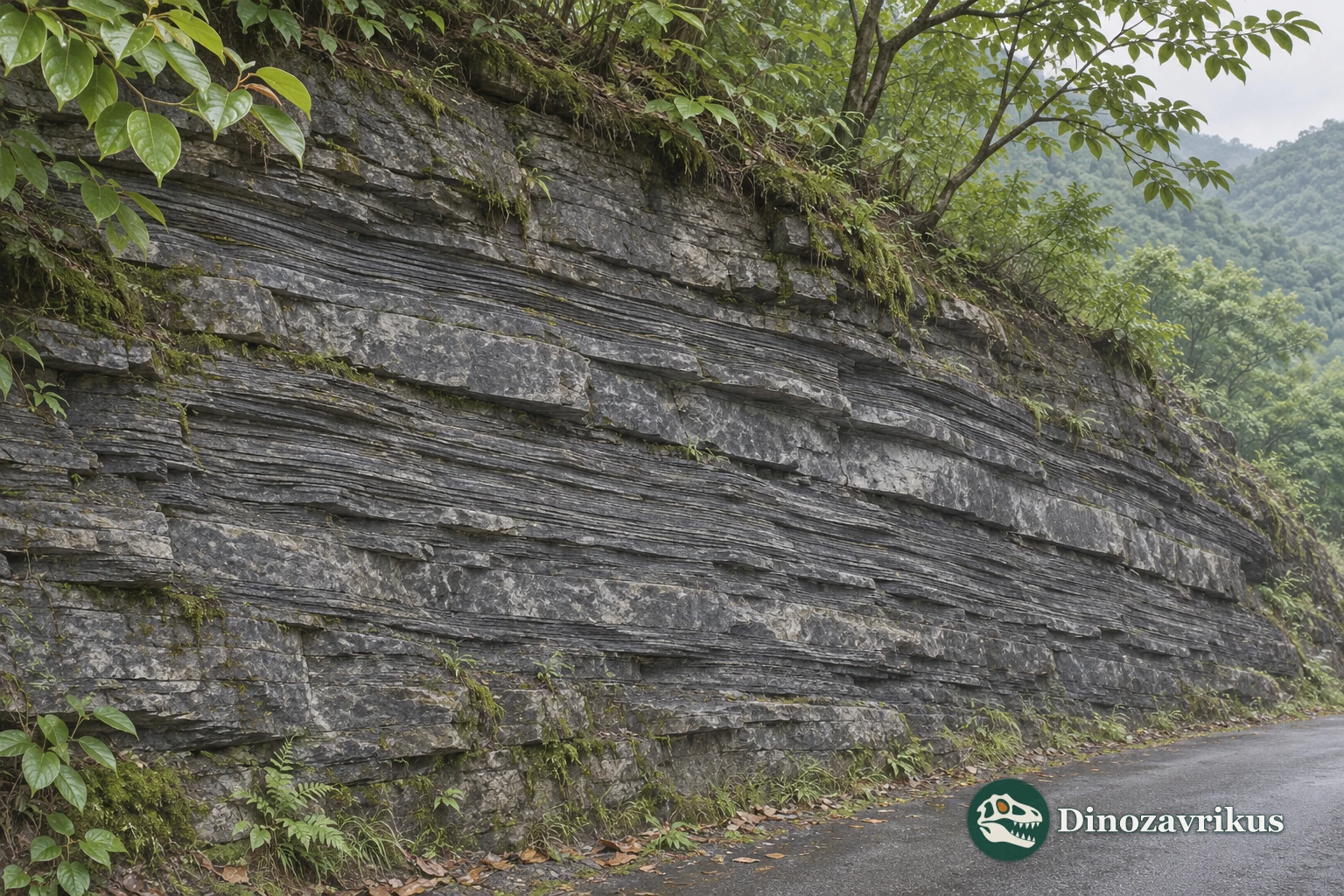
The international reference point is in the Duibian B section in Zhejiang. The base of the Jiangshanian is placed at the base of a limestone bed 108.12 m above the bottom of the Huayansi Formation. A. orientalis first occurs there together with another trilobite, Irvingella angustilimbata.
The same section yields Ivshinagnostus higher up. In other regions geologists compare the order in which several species appear, since the first fossil actually recovered depends on preservation, exposure and sampling.
Frequently asked questions
Is the type species the one used to mark the boundary?
The type is A. inconstans from Australia. The marker is the first occurrence of A. orientalis in the Chinese reference section.
Where was the holotype of the marker species found?
In the Machari Formation near Yeongwol, Korea. It is an incomplete external mould of a tail shield.
How do heads from the lower and higher beds at Duibian differ?
The lowermost specimens have a short anterior notch. Higher specimens develop a furrow that divides the anterior glabellar lobe.
Where in the section is the base of the Jiangshanian Stage?
At the base of a limestone bed 108.12 m above the bottom of the Huayansi Formation.