

Aktiogavialis was an extinct gharial relative from opposite sides of the Caribbean. It was named from the back of an Oligocene skull from Puerto Rico. A more complete skull from Late Miocene Venezuela preserves the long, narrow snout of a second species. The two finds document gavialoids on an island and the adjacent mainland at different times.
Quick facts
| Type species | Aktiogavialis puertoricensis |
|---|---|
| Group | Gavialoidea |
| Ages | Oligocene in Puerto Rico and Late Miocene in Venezuela |
| Puerto Rican type | UPRMP 3094, rear part of a skull |
| Venezuelan type | MCNC 95-72V, nearly complete skull and anterior lower jaw |
| Preserved skull length | 51.8 cm |
What can the fossils tell us?
UPRMP 3094 comes from the lower San Sebastián Formation. The front of the skull is missing, leaving the length of the snout unknown.
The preserved skull can be measured directly. Its estimated body length of around 3 m depends on a comparison with the living Indian gharial.
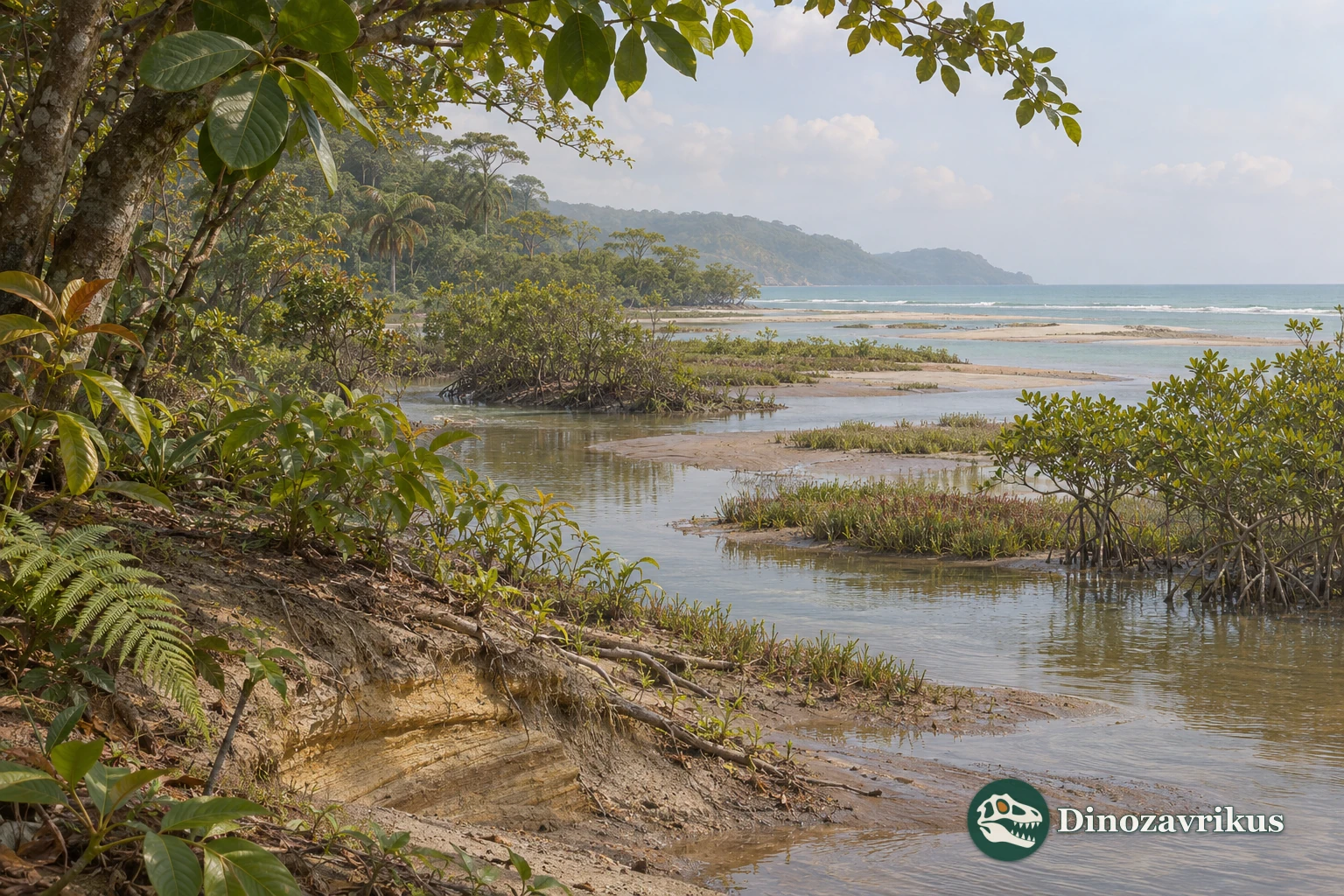
The Puerto Rican fossil was buried in a coastal setting. That is compatible with coastal dispersal, while the route and tolerance of salt water remain unrecorded.
An Oligocene gharial relative from Puerto Rico
Jorge Vélez-Juarbe, Christopher Brochu and Hernán Santos described A. puertoricensis in 2007. The type, UPRMP 3094, came from a sandstone beside the Río Guatemala near San Sebastián. It belongs to the University of Puerto Rico palaeontological collection at Mayagüez.
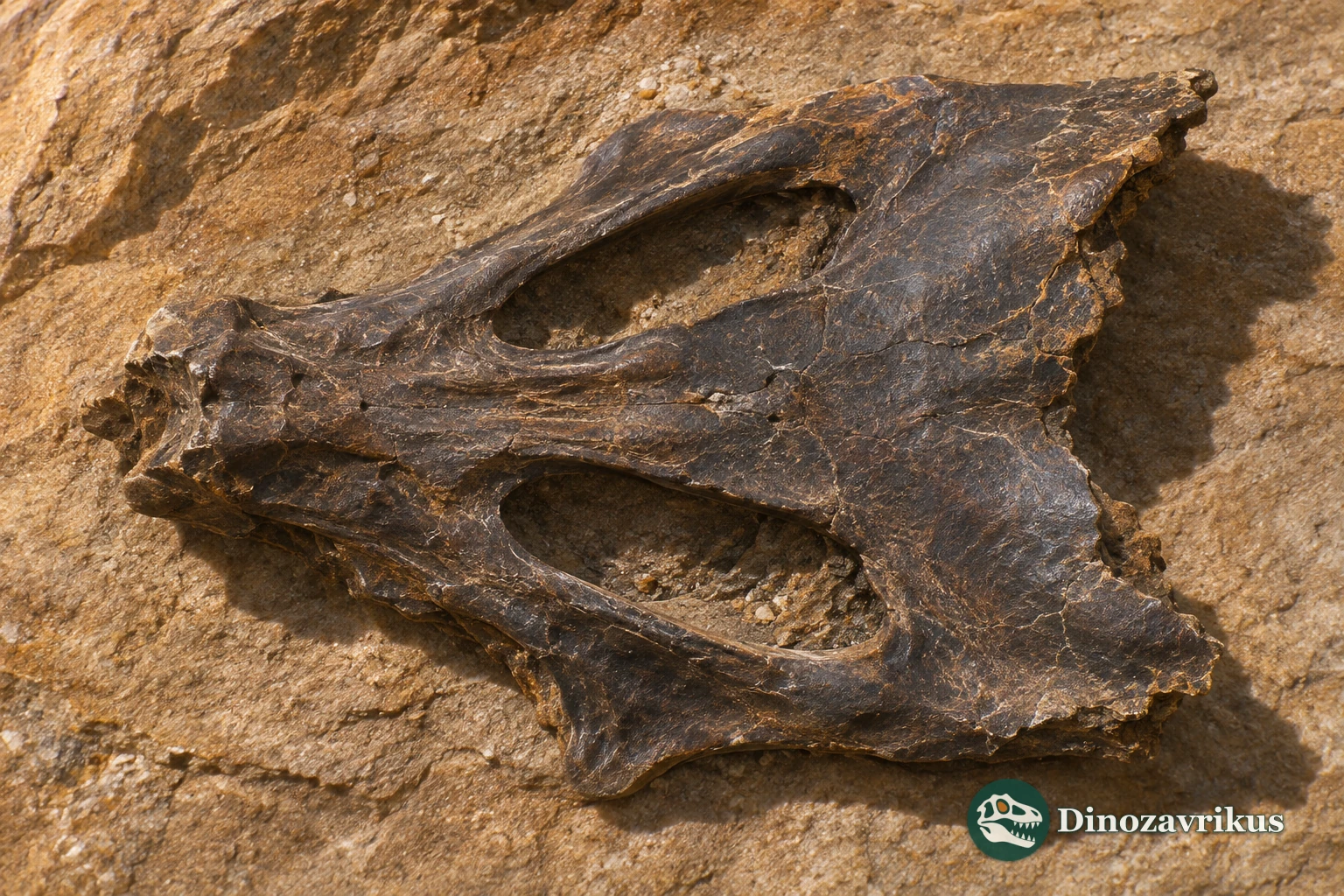
The braincase and part of the skull table behind the eyes survived. This material allows comparisons of the width of the skull roof and the depressions near its temporal openings. It cannot establish the shape of the snout or the number of teeth.
More of the head from Venezuela
MCNC 95-72V was found in 1972 in the middle member of the Urumaco Formation. Rodolfo Salas-Gismondi and colleagues named it A. caribesi. Both species have a constricted rear skull table and shallow depressions in front of the upper temporal openings. Those are among the features that can be compared directly.
The preserved Venezuelan skull is 51.8 cm long and includes an elongated, slender snout. A regression based on the Indian gharial gave an estimated body length of about 3 m for this individual. The estimate rests on skull measurements because no trunk was found with it.
What the localities say about dispersal
The San Sebastián sandstone records coastal deltaic burial. Along with the distribution of other fossil gavialoids, its setting led researchers to propose that coastal waters could have aided dispersal. A trans-Atlantic crossing is one proposed explanation for the arrival of gavialoids in the Americas. Fossil localities alone cannot specify the route.
The African Eogavialis provides another point of comparison for the distinctive skull features of early gavialoids. Aktiogavialis documents a separate part of the group’s history in the Caribbean.
Frequently asked questions
What was found in Puerto Rico?
The braincase and a portion of the skull table behind the eye sockets.
Which species preserves the shape of the snout?
The Venezuelan A. caribesi preserves a long, narrow snout. The equivalent region is missing in the Puerto Rican type.
How was a length of roughly three metres estimated?
Researchers used skull measurements and a relationship between head and body size derived from living Indian gharials.
Do the fossils prove a trans-Atlantic crossing?
Their distribution is consistent with that hypothesis, but the specimens cannot identify a specific route.