

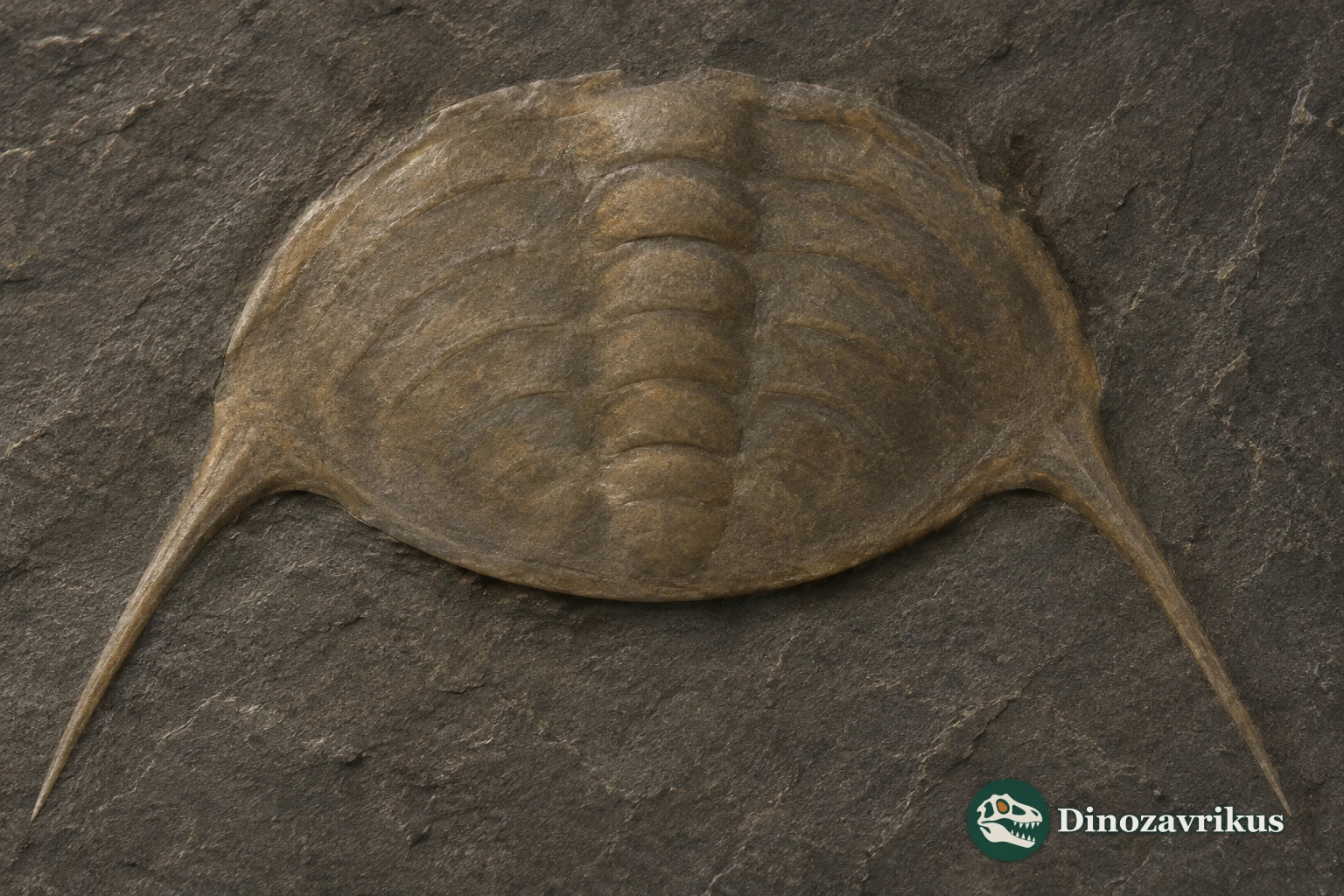
Albertella was a Cambrian trilobite with long spines on the head, trunk and tail shield. In the type species the extra-long trunk pair projects from the third segment. Where that pair begins helps identify articulated fossils, while the changing species in successive beds help geologists divide rock sections into intervals.
Quick facts
| Group | Trilobites |
|---|---|
| Age | Cambrian |
| Genus named | Charles Walcott, 1908 |
| Type species | Albertella helena |
| Trunk segments | Seven in the type species |
| Fossil occurrences | United States and Canadian Rockies |
What can the fossils tell us?
The spines extend from the sides of the third segment in the type species. Their attachment sets them apart from the cheek spines that project back from the head.
The direction of the spines and the shape of the shield are useful on isolated material, even when the rest of the animal is missing.
The upper interval is named for Albertella highlandensis. Its position is established from the sequence of fossils in the section.
The Walcotts' finds
Charles Walcott established Albertella in 1908. In his first account of A. helena he recorded finds made in 1904 along Gordon Creek in Montana. He named the species for his wife Helena, who discovered comparable fossils at Mount Bosworth in the Canadian Rockies in 1907.
Charles Resser later reidentified several of the specimens figured in the original publication. His reassessment applies to particular fossils, so the early illustrations need to be read alongside later identifications.
Seven trunk segments and a spined tail shield
In the type species, the trunk consists of seven movable segments. The third carries longer spines than its neighbours, and a separate, widely divergent pair projects from the tail shield. Walcott compared this arrangement with Zacanthoides, which has nine trunk segments and typically carries several pairs of pygidial spines.
Allison Palmer and Robert Halley separated the group typified by the former Albertella bosworthi as Paralbertella. The similar head shields of some forms are less informative by themselves than the combinations of trunk and tail characters. For A. longwelli the holotype is a tail shield from the Spring Mountains in Nevada, USNM 208098.
Three intervals in the Pioche Shale
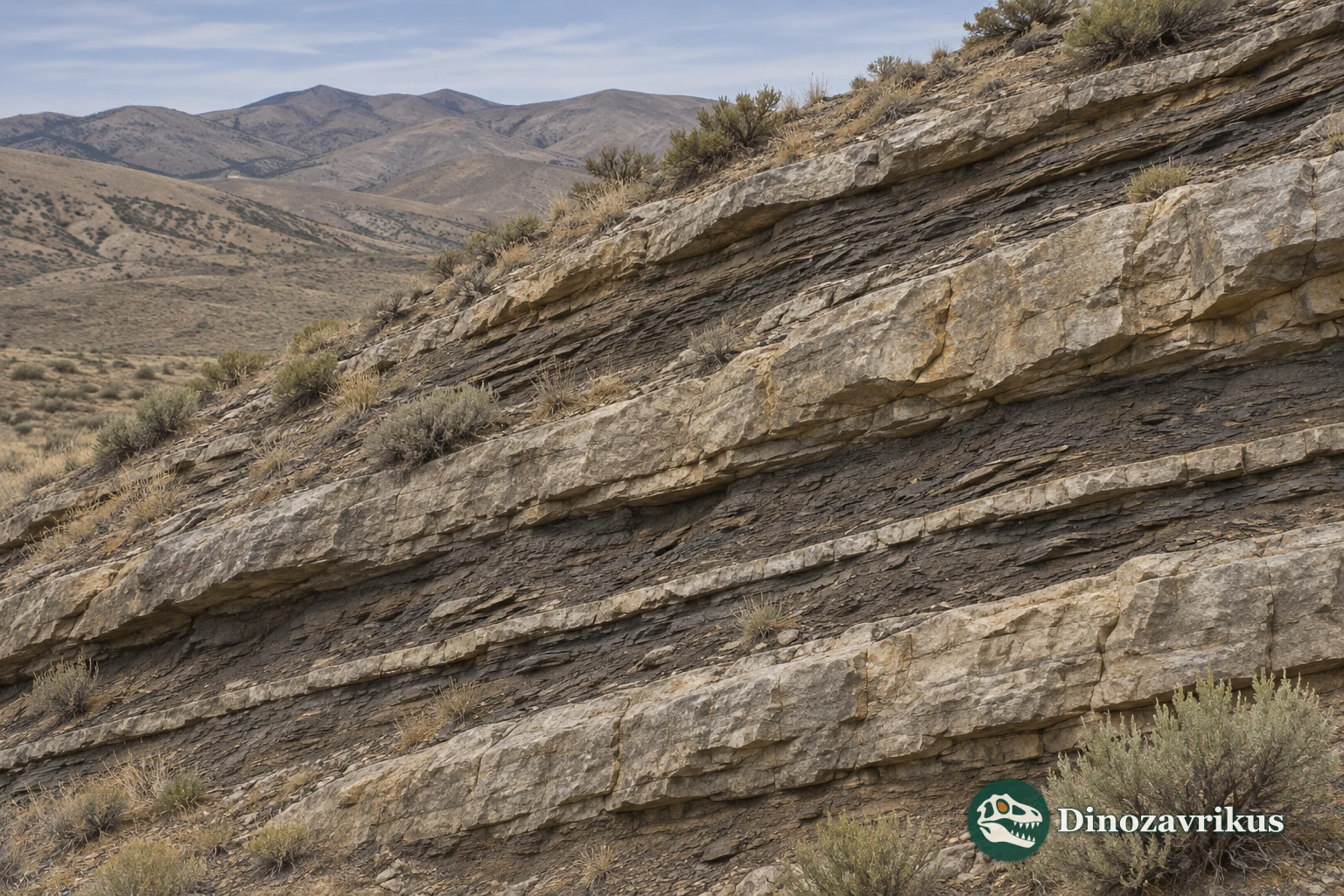
In southeastern Nevada, Frederick Sundberg and Linda McCollum divided the Albertella Biozone into three parts. The lower part is named for Albertellina aspinosa and the upper part for Albertella highlandensis. They left the middle interval unnamed.
Trilobite assemblages also change with the depositional setting. In the Carrara Formation, Palmer and Halley documented Albertella with Mexicella in some of the more landward shelf deposits. Correlation between sections depends on the order of beds and the full assemblage as well as the presence of a named species.
Frequently asked questions
Who is Albertella helena named after?
Helena Walcott, who found comparable fossils on Mount Bosworth in the Canadian Rockies in 1907.
Which segment of the type species bears the longest trunk spines?
The third of its seven movable trunk segments.
What part of the animal is the Albertella longwelli holotype?
It is a tail shield from Nevada's Spring Mountains, catalogued as USNM 208098.
Which species gives its name to the upper Pioche subbiozone?
Albertella highlandensis. That interval overlies the unnamed middle subbiozone.