

Alexeyisaurus karnoushenkoi was named in 2010 from an incomplete skeleton found on Wilczek Land in the Russian Arctic. Its describers classified it as an elasmosaurid plesiosaur, a remarkable claim for a Norian fossil. Later work called the material poorly preserved and undiagnostic, so its position among sauropterygians remains uncertain. The specimen is important as a disputed name, not as a securely identified early plesiosaur.
Quick facts
| Type species | Alexeyisaurus karnoushenkoi |
|---|---|
| Original placement | Elasmosaurid plesiosaur, proposed in 2010 |
| Current caveat | Sauropterygian affinity uncertain; plesiosaur identification disputed |
| Age | Lower to middle Norian, in the original account |
| Formation | Wilczek Formation |
| Locality | Wilczek Land, Franz Josef Land, Russian Arctic |
| Holotype | SGU 104a/36; earlier collection number PMGRE 3658 |
| Preserved material | Partial vertebral column, ribs, girdle and limb bones, fragmentary skull material |
| Body length | Not reliably established |
Evidence guide
The fossil was first catalogued as PMGRE 3658 and is now SGU 104a/36. Reported material includes parts of the vertebral column, ribs, a coracoid and pubis, a humerus and femur, plus unidentified skull fragments. It is not a complete articulated skeleton.
Sennikov and Arkhangelsky assigned the fossil to the Lower–Middle Norian of the Wilczek Formation. The age describes the enclosing rock and does not establish an exact date for an individual animal.
The describers compared the complex shape of the coracoid with elasmosaurids. Much of the skeleton is missing or fragmentary, so this resemblance does not by itself demonstrate a close relationship.
The 2010 paper proposed an elasmosaurid. Wintrich and colleagues later described the Russian Arctic specimen as a partial, poorly preserved and undiagnostic sauropterygian skeleton. Its identification as a plesiosaur therefore remains disputed.
A fossil from Wilczek Land
The specimen came from Wilczek Land in the Franz Josef Land archipelago, north of Cape Ganza and near a glacier margin. The 2010 account says the fossil had been found about a year before it was transferred to the Department of Historical Geology and Palaeontology at Saratov State University. Only part of the skeleton had been recovered from dense siltstone. The first collection number was PMGRE 3658; it is now catalogued as SGU 104a/36.
The type locality lies in the Wilczek Formation, which the original authors assigned to the Lower–Middle Norian. This gives the fossil a Late Triassic context. The age of the rock and the anatomical identity of its animal are separate questions: a well dated layer can contain a fossil that is too incomplete for a confident classification. For a broader explanation, see how palaeontologists date fossil-bearing rocks.
What the bones can show
The description lists an incomplete vertebral column, ribs, a coracoid, a pubis, a humerus and a femur, along with fragments identified only as skull bones. The fossil record is too incomplete to reconstruct a whole skeleton directly. It also does not provide a secure total body length or a reliable set of proportions for the neck, trunk and limbs.
The describers highlighted the complex shape of the coracoid and compared it with elasmosaurids. That observation explains the original classification, but a single resemblance can be shared through ancestry or evolve independently. A robust placement normally depends on a suite of characters that can be compared across informative parts of the skeleton. The better represented Thalassomedon illustrates how a broader anatomical sample can support a more detailed diagnosis; it is not evidence that the two animals were close relatives.
Why the plesiosaur identification is disputed
Sennikov and Arkhangelsky named Alexeyisaurus karnoushenkoi as an elasmosaurid in 2010. The proposed age made the claim notable because the fossil would extend the known record of the group far back into the Triassic. But the named material is incomplete, and several elements needed for comparisons are absent or difficult to identify.
In 2017, Wintrich and colleagues referred to the Russian Arctic skeleton as partial, poorly preserved and undiagnostic sauropterygian material. They did not treat it as a conclusive Triassic plesiosaur record. This reassessment does not prove that the animal could not have been a plesiosaur; it says that the known bones do not establish that identity. The distinction matters when discussing the origin and early history of the group.
An uncertain name, not a complete portrait
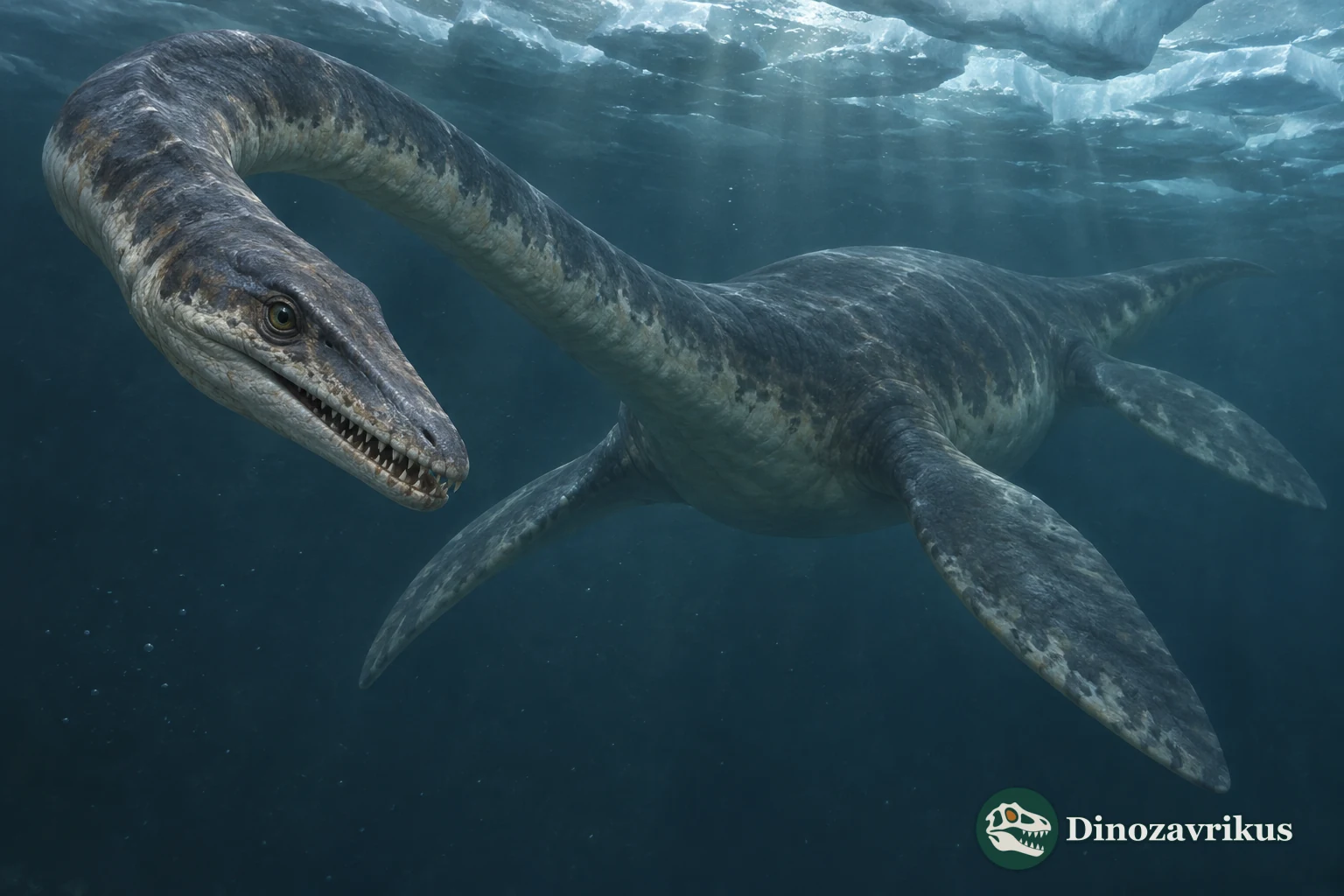
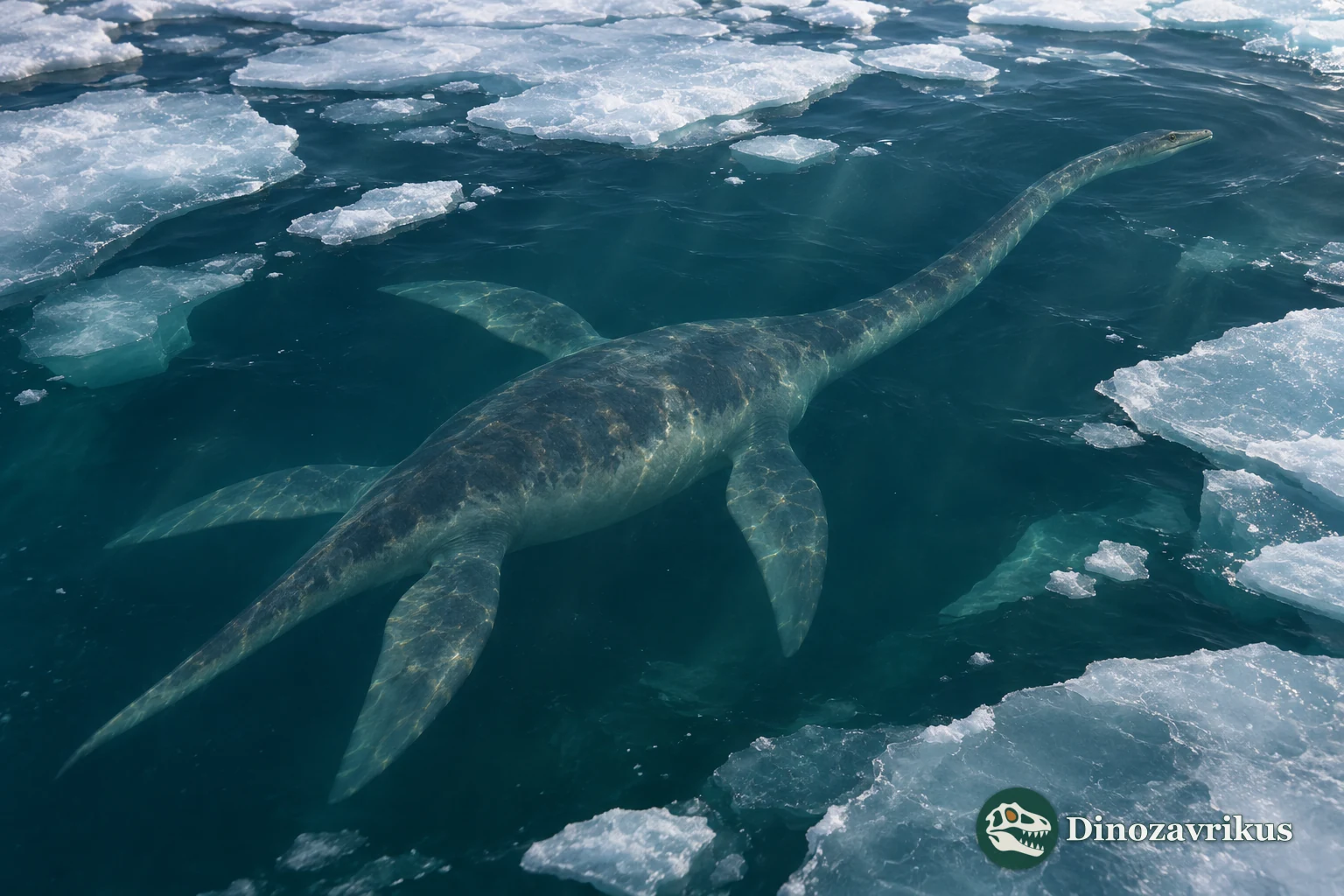
The fossil supports a limited set of observations: marine reptile bones came from Norian rocks on Wilczek Land, and the published specimen preserves several axial and limb elements. Its diet, body size, movement, colour and exact body outline are not securely known. The article image is palaeoart based on a possible plesiosaur-like plan; it is not a view of the holotype or evidence that its classification is settled.
Further study of the original material, or new diagnostic fossils from the same region, could clarify the question. Until then, Alexeyisaurus is best presented with its taxonomic history and uncertainty visible. Comparisons with Jurassic plesiosaurs such as Muraenosaurus can provide context, but cannot fill in bones that are missing from this Triassic specimen.
Frequently asked questions
Was Alexeyisaurus definitely a plesiosaur?
No. The 2010 description proposed an elasmosaurid placement, but later researchers regarded the incomplete skeleton as undiagnostic for Plesiosauria. Its affinity remains disputed.
Where was Alexeyisaurus found?
The holotype came from Wilczek Land, north of Cape Ganza in the Franz Josef Land archipelago of the Russian Arctic.
How old is the fossil?
The original description assigned it to the Lower–Middle Norian of the Wilczek Formation, in the Late Triassic.
How large was Alexeyisaurus?
No reliable total length has been established. The known skeleton is incomplete and the body plan used in illustrations is uncertain.