

The earliest published remains of Alnashetri cerropoliciensis chiefly preserved the legs. A nearly complete second skeleton from La Buitrera, Río Negro Province, provided its first good record of the skull and hands. It shows how the anatomy of this diminutive alvarezsauroid differed from the highly specialised forms described elsewhere.
Quick facts
| Group | Theropods, alvarezsauroids |
|---|---|
| Age | Early Cretaceous (Albian under revised formation dates) |
| Region | South America (Río Negro Province, Argentina) |
| Diet | Exact diet unknown |
| Type species | Alnashetri cerropoliciensis |
| Holotype | MPCA Pv 477, articulated hindlimbs |
| Referred skeleton | MPCA Pv 377, nearly complete |
| Size | About 0.7 kg estimated for the second specimen |
| Deposits | Candeleros Formation, La Buitrera |
What can the fossils tell us?
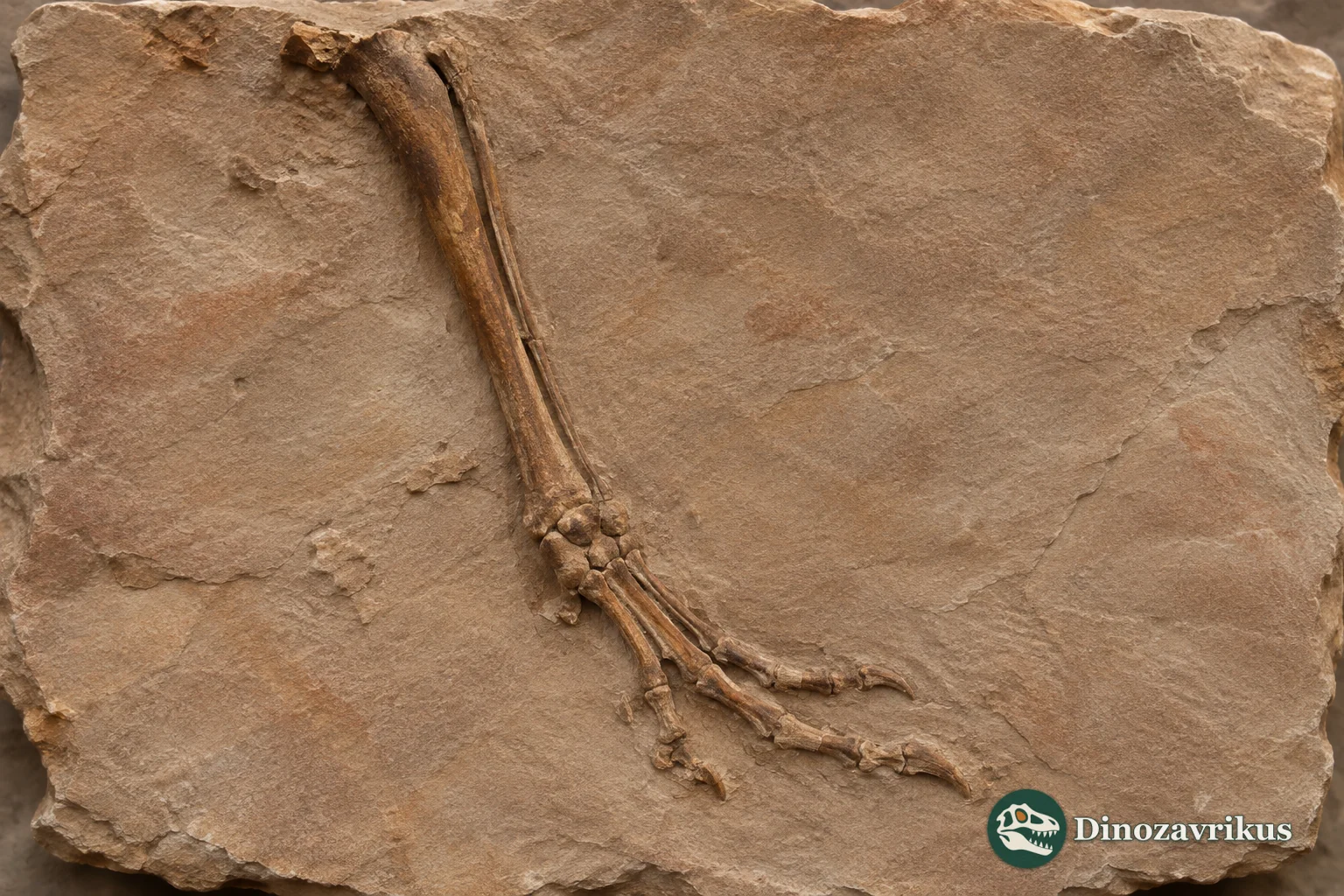
The type specimen preserves bones together at the ankle. Details in their shape help distinguish Alnashetri from other small dinosaurs at La Buitrera.
The second specimen shows a short arm with more of the hand retained than in later specialists. It does not show how often the hand was used or which prey it helped catch.
The analyses date mineral grains from volcanic ash beds. The results bracket deposition of the fossil-bearing formation.
From articulated legs to a second skeleton
Peter Makovicky, Sebastián Apesteguía and Federico Gianechini described Alnashetri in 2012. The lower leg and ankle helped distinguish it from Buitreraptor, another small theropod from La Buitrera. In Alnashetri the fibula reaches the ankle, where the shape and arrangement of the ankle joint surfaces also differ.
The skeleton described in 2026 is MPCA Pv 377. It includes the front of the skull, parts of the backbone and shoulder girdle, and bones of the forearm and hand. The estimated body mass of about 0.7 kg for this individual places it among the smallest known South American non-avian dinosaurs. That figure is an estimate from a fossil skeleton.
Small size and a less specialised hand
The hand combines a broad first metacarpal with much thinner lateral elements. Later-branching alvarezsaurids frequently had a strongly reduced hand dominated by one digit. Alnashetri preserves a different set of proportions. The surviving teeth are compatible with small prey, but the skeleton offers no direct evidence for a particular kind of prey.
The 2026 phylogenetic analysis puts Alnashetri on an early branch of Alvarezsauroidea outside Alvarezsauridae. Models tested in the same study favour repeated changes towards small body sizes across different branches. The Jurassic Haplocheirus provides an older point of comparison for changes in forelimb anatomy.
A new age for the sands of La Buitrera
The Candeleros Formation was long assigned to the beginning of the Late Cretaceous. In 2026, uranium–lead dates from zircons in volcanic layers put its deposition at roughly 111–106 million years ago, within the Albian Stage of the Early Cretaceous. These dates constrain the formation. They do not provide a precise age for the point at which the animal died.
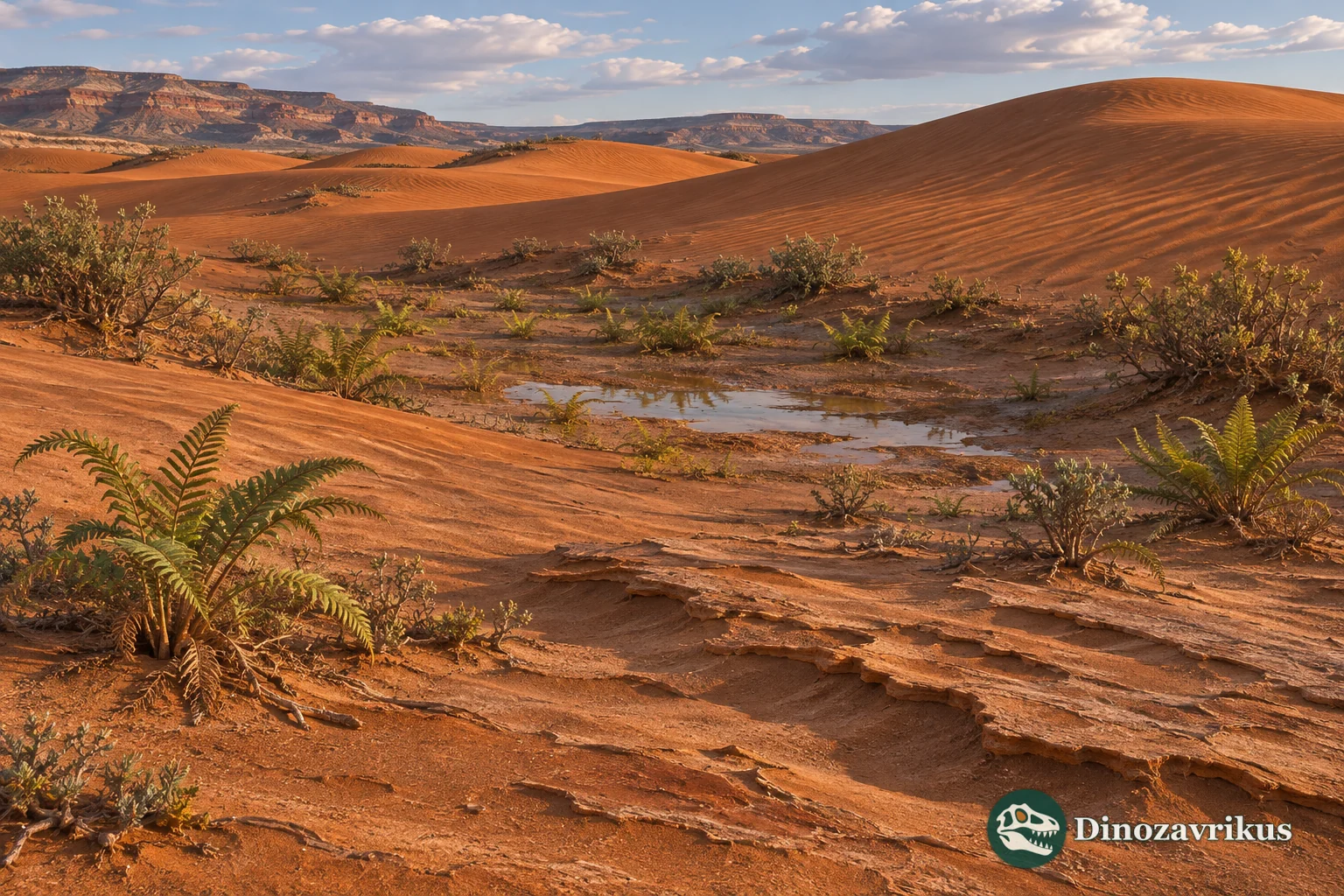
Wind-blown sand and layers created in interdune hollows preserve evidence of a dune-field margin. The La Buitrera beds also preserve snakes, rhynchocephalians and small mammals. In a 2026 preliminary report, researchers compared field and preparation photographs of the nearly complete skeleton. They interpreted the folded limbs and recurved neck as consistent with a resting posture.
Frequently asked questions
How much did Alnashetri weigh?
Researchers estimated about 0.7 kg for MPCA Pv 377. The estimate comes from one fossil skeleton.
Which bones distinguish the two specimens?
The 2012 type is known chiefly from the legs. The second specimen also preserves the jaws, parts of the spine and the forelimbs.
Did its hand consist of one digit?
Reduced lateral bones are present beside a much thicker first ray. The preserved elements show that the hand retained more than the single dominant digit.
Why do accounts give different ages for Alnashetri?
Early descriptions used the age then accepted for the Candeleros Formation. New zircon dates from ash beds place the formation in the Albian towards the end of the Early Cretaceous.