

Amblyolacerta was a true lizard from Miocene Europe. It is known from isolated jaw bones. Broad, blunt crowns provide one feature for comparing its jaws with those of other lizards that evolved similar teeth.
Quick facts
| Group | True lizards (Lacertidae) |
|---|---|
| Age | Early and Middle Miocene |
| Region | Europe, Czech Republic, Germany and France |
| Type species | Amblyolacerta dolnicensis |
| Scientific name | Amblyolacerta |
| Diet | No direct evidence |
What can the fossils tell us?
The type species was described from Early Miocene deposits in the western Czech Republic. Fossils from Germany and France have also been assigned to the genus.
The teeth of Amblyolacerta are moderately broad. Some other fossil lacertids had much wider blunt teeth relative to the length of the tooth row.
The crowns show the structure of the tooth row. The material preserves no direct evidence of what the lizard ate.
The Czech fossils
Zbyněk Roček described Amblyolacerta dolnicensis in 1984 from Early Miocene material at Dolnice near Cheb. The species is named for that locality. The same deposits yielded Miolacerta. In that genus the lower jaw shows a change from two to three cusps along a tooth row. Comparisons involving Amblyolacerta instead focus on the broad, blunt tips.
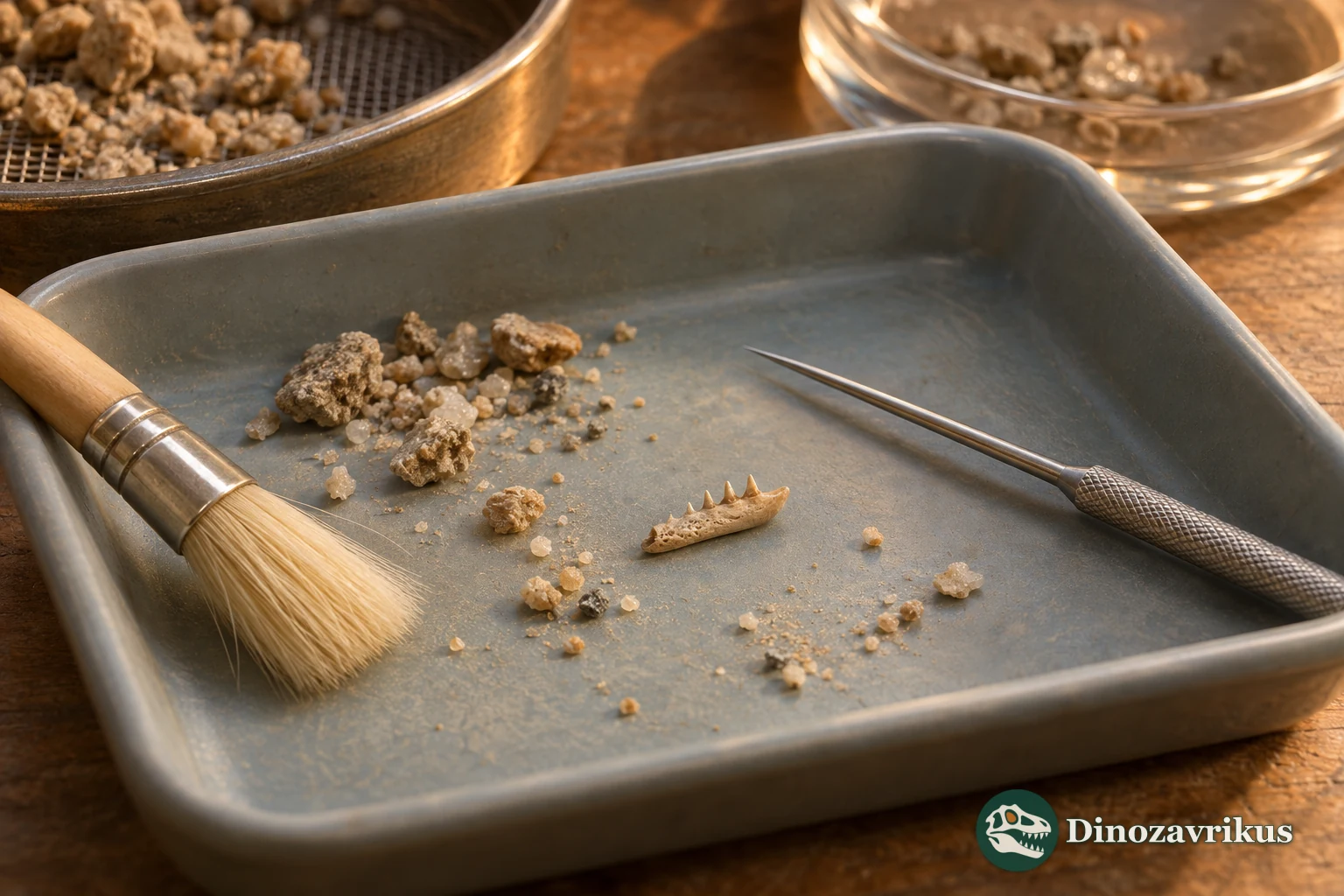
What the lower jaw reveals
Broad teeth with blunt crowns are described as amblyodont. This tooth form occurs in several fossil lacertid genera. Comparative studies treat the expansion of the crowns in Amblyolacerta as moderate. The dentary itself also matters for identification, including its shape behind the final tooth and the surface where it meets the coronoid bone.
Age and distribution
In addition to Czech sites, Miocene jaws from Germany and France have been assigned to the genus. Together they document a range from the Early to Middle Miocene. Records from several countries provide material for comparison, although identification depends on which portions of the jaw are preserved.
Frequently asked questions
Where does the species name dolnicensis come from?
It refers to Dolnice, the Czech locality that yielded the type material.
What does amblyodont mean?
It describes teeth with relatively wide, blunt crowns.
Which family does Amblyolacerta belong to?
It belongs to Lacertidae, the family of true lizards.
Do blunt teeth establish that it ate molluscs?
The crowns show how the tooth row was built. No direct fossil evidence of such prey is known in this genus.