

Miolacerta was a true lizard from Miocene Central Europe. The genus was described from Dolnice in the Czech Republic. Lower jaw bones from Gratkorn in Austria show how tooth shape changed along the tooth row.
Quick facts
| Group | True lizards (Lacertidae) |
|---|---|
| Age | Miocene |
| Region | Europe, Czech Republic and Austria |
| Type species | Miolacerta tenuis |
| Scientific name | Miolacerta |
| Diet | No direct evidence |
What can the fossils tell us?
The holotype comes from Dolnice. Eight dentaries in varying condition were referred to the species at Gratkorn.
Researchers compare tooth crowns with the structure of the dentary. Other lizards have three-cusped teeth too.
The fossils show how the tooth row was built. The described material preserves no direct evidence of specific foods.
Dolnice, Gratkorn and Kohfidisch
Zbyněk Roček named Miolacerta tenuis in 1984. The holotype, DP FNSP 3785, is the front part of a left dentary with fourteen tooth positions. It comes from Early Miocene deposits at Dolnice near Cheb. In Austria, Gratkorn dates to the end of the Middle Miocene, and Kohfidisch to the Late Miocene. These sites provide dated records at different points in the history of the genus.
How the teeth change along the jaw
The right dentary UMJGP 204.031 from Gratkorn preserves 23 teeth. The front teeth carry two cusps and the rear teeth carry three. On the three-cusped teeth, the central cusp is higher and bulkier than its two neighbors. That feature alone cannot securely identify a fossil to genus. Researchers also compare the shape and articulating surfaces of the dentary. In Edlartetia, another Miocene European lizard, a constriction beneath the crown is a useful point of comparison.
The floodplain at Gratkorn
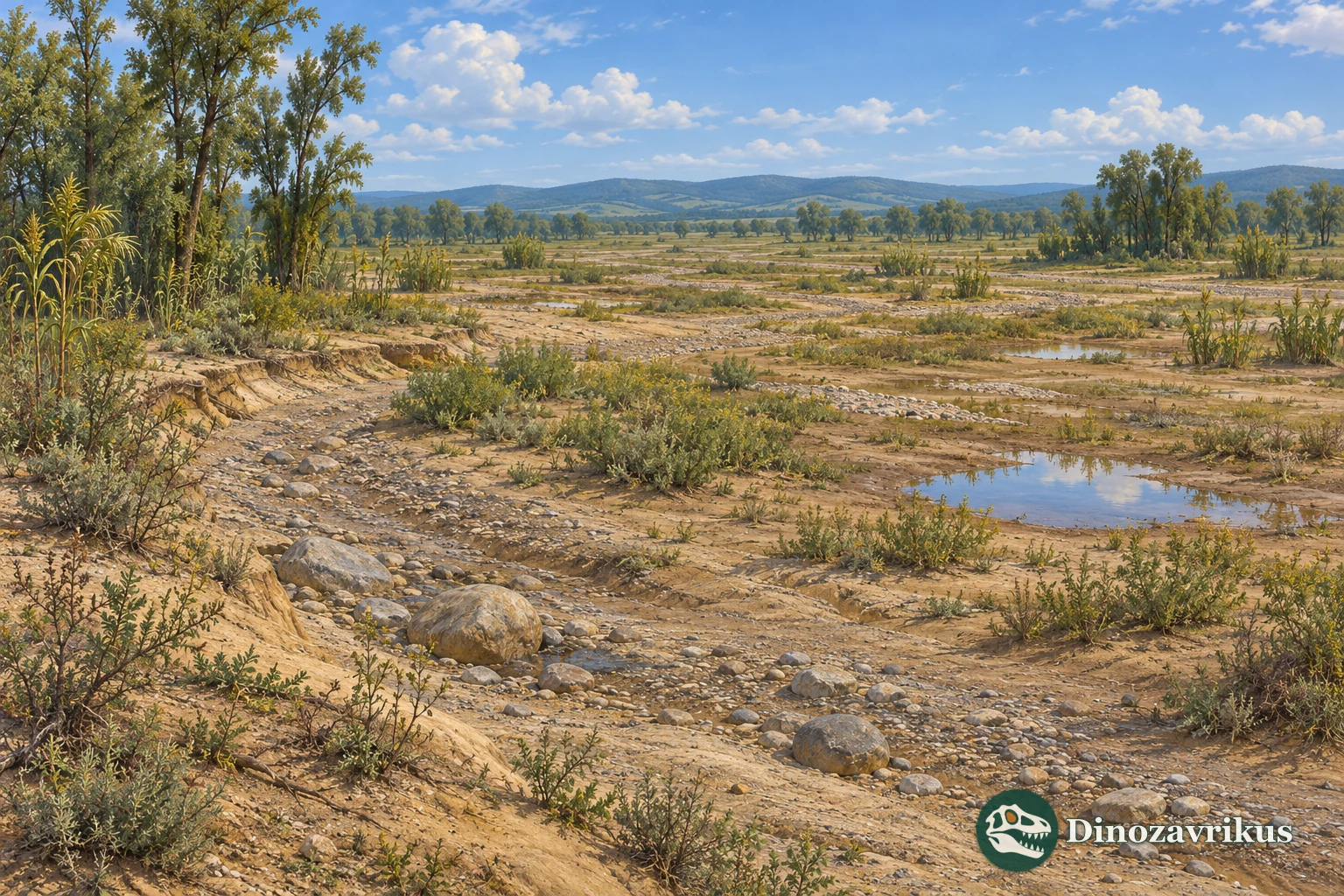
The sediments at Gratkorn yielded fish, amphibians, snakes and turtles alongside lizards. The assemblage led researchers to reconstruct a sandy floodplain with patches of open ground, small streams and temporary pools. This describes the surroundings where the fossils accumulated. Which parts of that floodplain Miolacerta preferred remains unknown.
Frequently asked questions
Where was the Miolacerta holotype found?
It comes from Early Miocene deposits at Dolnice near Cheb in the western Czech Republic.
How many teeth does the most complete Gratkorn jaw preserve?
The right dentary UMJGP 204.031 preserves 23 teeth.
Are all three cusps on the rear teeth the same size?
The central cusp is taller and thicker. The two accessory cusps are smaller and roughly equal in size.
Which of the three localities is youngest?
Kohfidisch in Austria, where the Miolacerta fossils date to the Late Miocene.