

Anhuichelys was a small Paleocene turtle from China. Some species had joints that allowed parts of the lower shell to move. New shell material made it possible to compare those joints and reassess the genus’s relationship to tortoises.
Quick facts
| Group | Turtles, stem tortoises |
|---|---|
| Age | Early and middle Paleocene |
| Region | Asia: Anhui and Hubei, China |
| Type species | Anhuichelys siaoshihensis |
| Holotype | IVPP V 5598, shell |
| Scientific name | Anhuichelys |
| Diet | No direct evidence |
What can the fossils tell us?
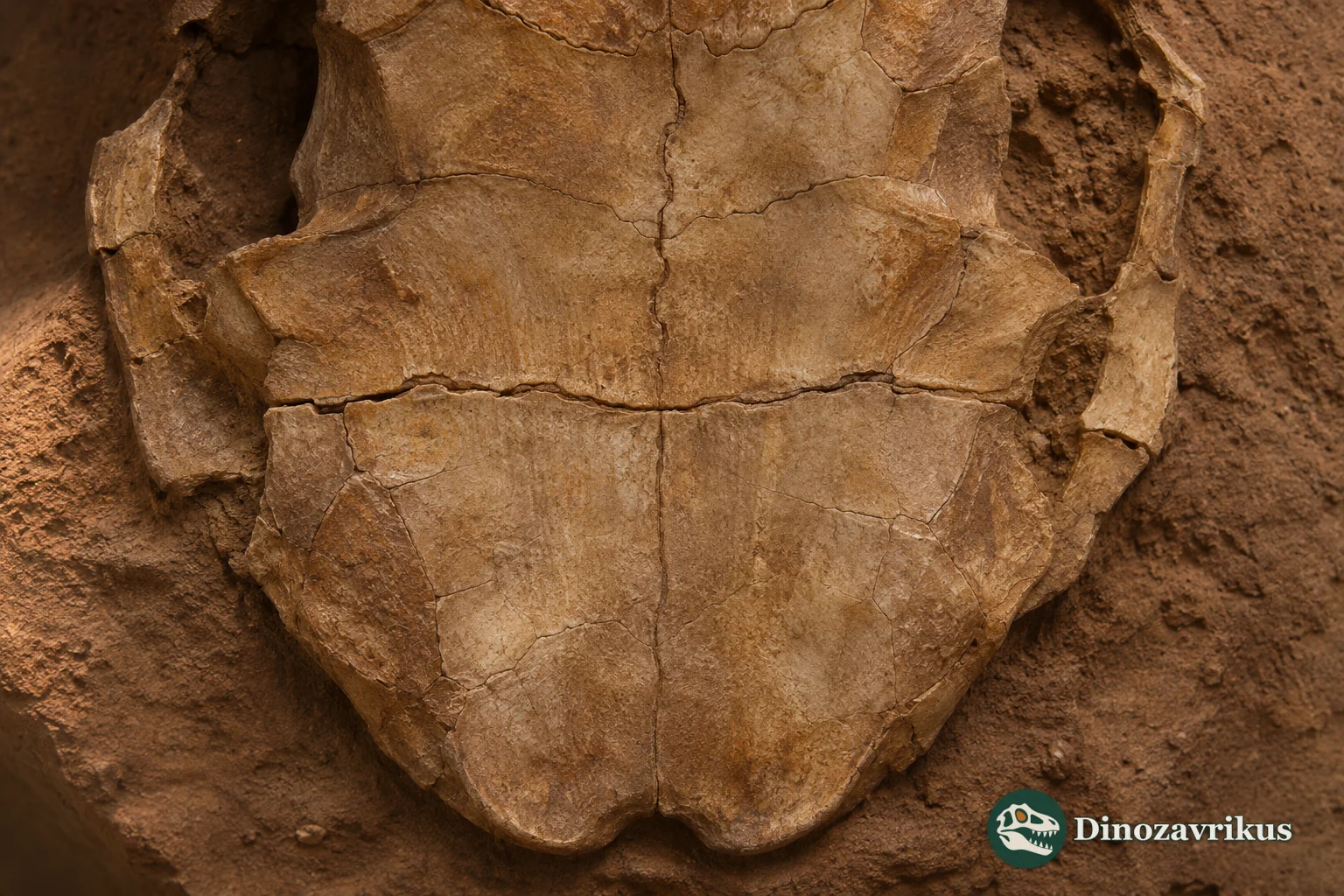
Sutures and scute impressions are visible on the fossil shell. The bones record the boundaries of the exterior scutes. The scutes themselves are gone.
An anterior hinge occurs in A. siaoshihensis and A. doumuensis. The examined A. tsienshanensis shells lack it. A preserved joint gives limited information about its full range of motion.
The type species occurs in the early Paleocene Wanghudun Formation. A. doumuensis was named from the middle Paleocene Doumu Formation.
Three species in the Qianshan Basin
The genus was described in 1979 from material in Anhui Province. Its type specimen IVPP V 5598 preserves a shell accessible from above, below and the side. Hai-Yan Tong and colleagues included additional Qianshan specimens in a 2016 revision.
The Wanghudun Formation yielded A. siaoshihensis and A. tsienshanensis. The latter also occurs in the Doumu Formation, where holotype IVPP V 5599 documents A. doumuensis. The revision referred earlier material from Hubei, named A. xinzhouensis, to A. tsienshanensis.
How the lower shell could move
An anterior hinge occurs in A. siaoshihensis and A. doumuensis. The same region is rigid in the examined specimens of A. tsienshanensis. In most specimens an open posterior suture indicates some movement at the rear of the plastron.
Researchers compare these joints with the grooves left by the scutes. The North American Planetochelys had a transverse hinge between a different set of lower shell bones. Similar functions could develop in different parts of the plastron.
Evidence for life on land
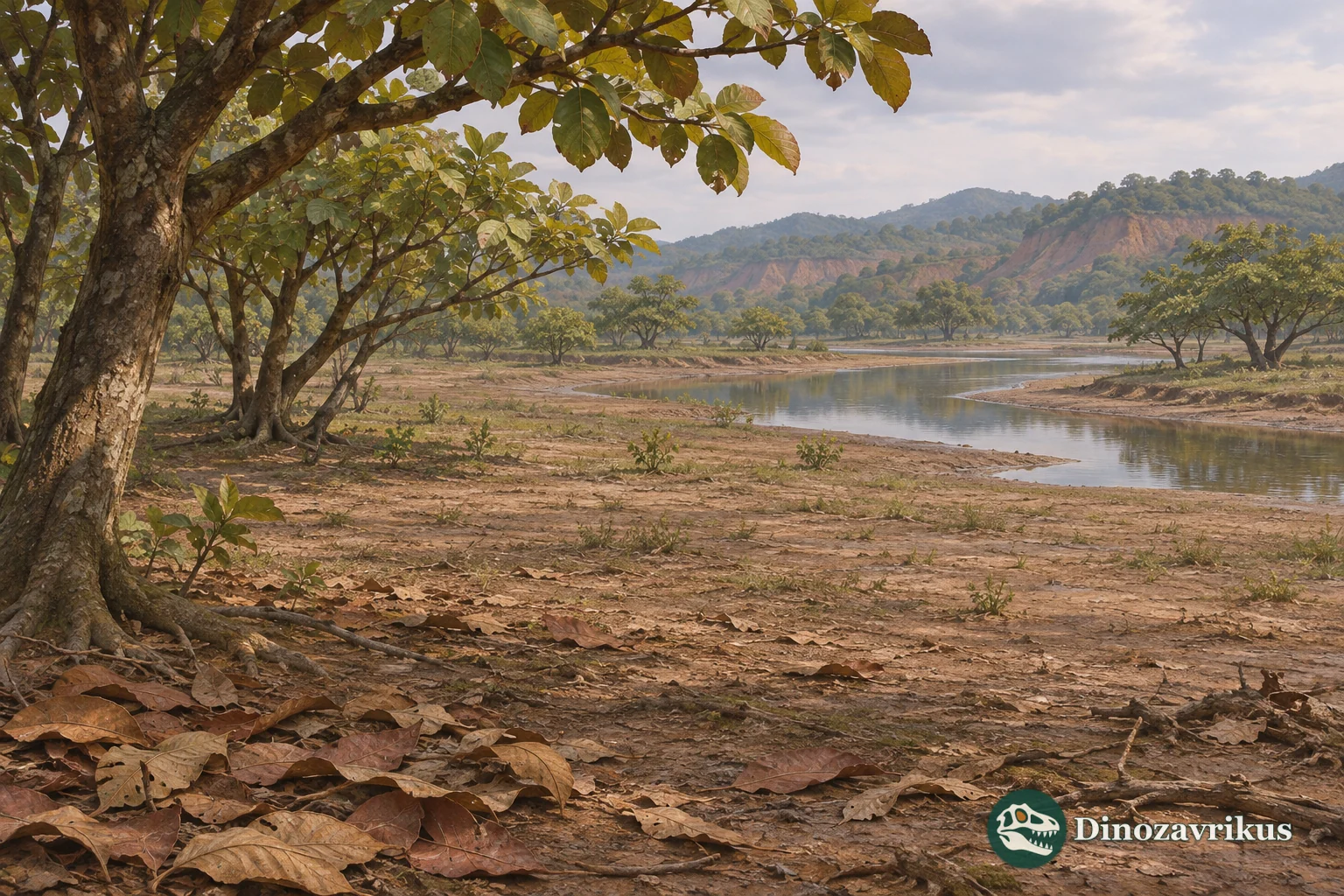
The 2016 revision placed Anhuichelys on the stem of tortoises using characters of both parts of the shell. Its association with terrestrial vertebrates is consistent with life on land. The fossils leave uncertain how often the turtles entered water.
Frequently asked questions
Where were its fossils found?
The main series comes from the Qianshan Basin in Anhui Province. Material from Hubei was also referred to one species.
When did Anhuichelys live?
Its documented species occur in early and middle Paleocene deposits.
Did all species have the same hinge?
A. siaoshihensis and A. doumuensis had an anterior hinge. Evidence of that hinge is absent in the examined A. tsienshanensis material.
What did Anhuichelys eat?
Direct evidence of diet is unavailable. The fossils chiefly document the shell.